
Speed limiter removal benefits for NI drivers: top speed and tradeoffs

Removing a vehicle’s speed limiter can unlock a higher top speed and noticeably sharper throttle response, especially when the work is paired with a professional ECU remap. What you actually gain depends heavily on the vehicle, its gearing and whether a remap accompanies the change, so outcomes vary from car to car. Before going ahead, check the legal position for your vehicle category and confirm how the work affects your manufacturer warranty.
TL;DR:
Goods and passenger carrying vehicles may be legally required to retain a sealed, functioning limiter, so check your vehicle category before authorizing any change.
European trials found lower limiter settings cut CO2 emissions by 4% to 5% on nonurban roads; faster cruising or harder acceleration can reverse those savings.
Before booking, request a diagnostic report, a copy of the original ECU file, and postwork datalogs or dyno charts to verify changes and support reversibility.
A hatchback with short gearing may hit its practical speed ceiling before a motorway car with taller gearing, depending on engine power and aerodynamic drag.
Ask the tuner whether the modification affects your manufacturer warranty and get the answer in writing before authorizing work, especially on a newer vehicle.
Table of Contents
Primary benefits: higher top speed and sharper driving performance
Fuel and emissions: what field studies and models actually show
Safety, legal and warranty checklist before you alter a limiter
Cost, resale and ownership impacts: what to expect in practice
How Performance Tuning NI performs limiter removals and proves results
How Performance Tuning NI can help you get these benefits safely
What a speed limiter actually is and how ECUs enforce it
A speed limiter is software (sometimes backed by hardware) that caps how fast an engine will let a vehicle travel, distinct from Intelligent Speed Assistance (ISA), which actively reads road signs or GPS data to adjust speed in real time rather than enforcing one fixed ceiling, according to the European Commission’s road safety research. Most passenger cars have the cap written into the ECU’s fuel and ignition maps, while many goods vehicles carry a separate, sealed limiter unit that UK regulations require to stay tamper-proof.
A professional ECU reprogramme typically follows these steps:
Full diagnostic scan to confirm the ECU type and existing software version
Backup of the original file, so the factory settings can always be restored
A bespoke reflash that removes the speed cap and, where requested, retunes fuelling and timing for better drivability
Primary benefits: higher top speed and sharper driving performance
Lifting the cap raises the achievable top speed, but that gain only matters where it is legal and safe to use, such as derestricted motorway sections abroad or track days. For most road driving, the more noticeable change is how the car behaves below that new ceiling.
When a limiter delete is combined with a tailored remap, drivers typically notice quicker throttle response and smoother power delivery through the mid-range, because the remap adjusts fuelling and timing rather than just deleting a number in the software, a point our ECU remapping benefits overview covers in more detail. A limiter delete on its own, without a supporting remap, tends to produce a smaller improvement in everyday drivability.
Real-world speed gains are also bounded by gearing, the engine’s usable power band and aerodynamic drag, which rises sharply at higher speeds. A hatchback with short gearing will hit its practical ceiling long before a long-geared motorway cruiser does.

Pro Tip: Ask your tuner for a datalog comparison before and after the remap so you can see the actual change in throttle response rather than relying on how the car feels.
Fuel and emissions: what field studies and models actually show
Evidence on fuel and emissions is more nuanced than marketing claims suggest. Analysis from CE Delft’s evaluation of light commercial vehicle speed limiters found that limiters set at lower speeds can cut CO2 emissions by around 4-5% on non-urban roads, meaning removal or raising the cap can work in the opposite direction depending on how the vehicle is then driven.
A European field evaluation found that speed limiters can reduce CO2 output by roughly 4-5% at certain settings, according to CE Delft’s analysis, which underlines that economy effects run in both directions depending on how the vehicle is used after the change.
Outcomes depend heavily on two factors:
Whether the remap is tuned for economy or outright performance, since these pull in opposite directions
How the car is actually driven afterwards, since higher cruising speeds and harder acceleration both increase consumption
To measure the real effect on your own vehicle, ask for before-and-after datalogs and run a few controlled trips over the same route at a steady speed, rather than judging from the fuel gauge alone.
Safety, legal and warranty checklist before you alter a limiter
Some vehicle categories, particularly goods and passenger-carrying vehicles, are required by law to carry a sealed, functioning speed limiter, and using one with a disabled or tampered limiter can put the vehicle outside the rules set out in UK construction and use regulations. Field research also shows that in-car limiters reduce speed variability and smooth approach speeds at junctions, an effect that is strongest in free-flowing traffic rather than congestion, according to VTT’s field trials on in-car speed limiters.
Before changing anything, work through this checklist:
Confirm whether your vehicle category is legally required to carry a functioning limiter
Ask your tuner whether the work affects your manufacturer warranty and get that answer in writing
Request a pre-work diagnostic report and a backup of the original ECU file
Get post-work verification, such as a datalog or dyno chart, confirming what was changed
If you run a fleet, check our guidance for fleet managers before touching a van’s limiter, and see our notes on van limiter removal for what is realistically possible
Our article on the legality of ECU tuning covers the warranty and compliance questions in more depth.
Cost, resale and ownership impacts: what to expect in practice
Professional limiter removal and remapping work varies in price depending on the vehicle, the ECU type and whether anti-tamper protections need to be worked around, a pattern CE Delft’s industry interviews also noted when documenting typical remapping and removal price ranges.
A few practical points worth weighing:
Newer vehicles with more sophisticated anti-tamper ECUs tend to cost more to work on than older models
A documented remap with original file backups and datalogs reassures a future buyer that the work was done properly and can be reversed
Routine servicing and occasional datalogging after the work helps confirm the engine is running as expected over time
How Performance Tuning NI performs limiter removals and proves results
We approach every limiter removal the same way we approach a remap: with a full pre-diagnostic check, a backup of the original file, and a bespoke reflash rather than a generic, off-the-shelf file. That backup means your vehicle’s factory settings can always be restored if needed.
A professional remap should leave you with proof, not just a promise: datalogs or dyno charts that show exactly what changed.
We apply a consistent standard of verification to limiter removal work, whether it is a standalone Vmax delete or a full performance or economy remap. Before any work starts, we talk through compliance considerations relevant to your vehicle category, and once the job is done, we provide datalog or dyno evidence so you can see the result rather than take our word for it.
Who sees the biggest benefit and what to do next

Enthusiasts, track-day drivers and certain fleet operators with long-geared vehicles tend to see the clearest benefit from a limiter delete, particularly when paired with a remap. If your driving rarely approaches the factory cap, or your vehicle is legally required to carry a functioning limiter, it is worth holding off.
The sensible next step is a diagnostic check: ask for datalogs or a dyno sheet before committing, and confirm your warranty position first.
— Mark
How Performance Tuning NI can help you get these benefits safely
We offer onsite and mobile appointments for performance remapping, economy remapping and speed limiter removal, built around the same bespoke process described above: diagnostic check, original file backup, custom reflash and post-work datalog or dyno proof.
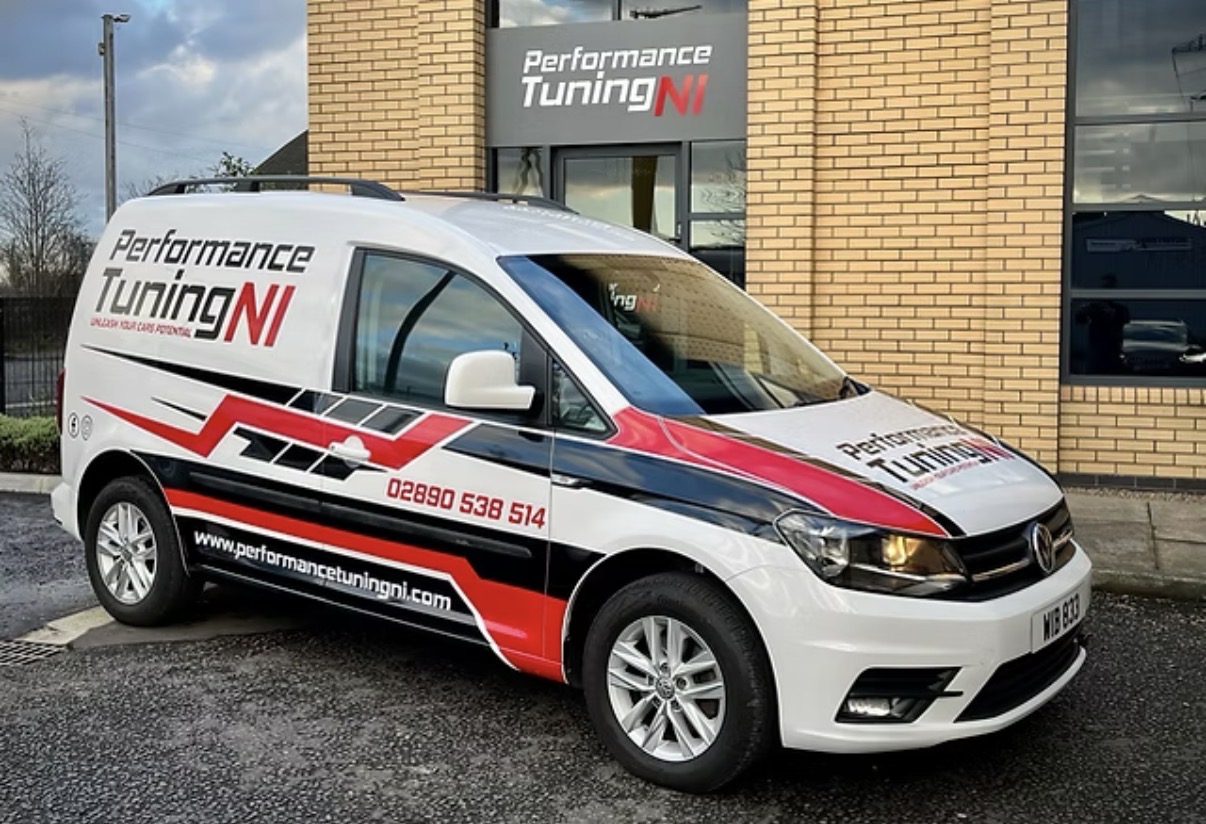
When you book with us, expect:
A pre-work diagnostic to confirm your ECU type and current settings
A remap tailored to your goals, whether that is outright performance or better economy
A post-work report showing exactly what changed, so you have evidence rather than a feeling
If you would like an estimate first, our remap calculator gives a quick starting point before you book.
FAQ
What happens if you remove the speed limiter?
Removing a speed limiter raises or eliminates the vehicle’s top-speed cap, and when paired with a remap it often also improves throttle response and power delivery. The practical gain in top speed is still limited by gearing, engine power band and aerodynamic drag.
Does a speed limiter use more fuel?
A limiter itself does not use fuel; it restricts top speed, and lower limiter settings have been shown to reduce CO2 output by around 4-5% in European light commercial vehicle trials. Removing or raising the cap can increase consumption if it leads to higher cruising speeds or harder acceleration.
What are the benefits of using a speed limiter?
Speed limiters reduce speed variability and smooth driving behaviour, particularly in free-flowing traffic, according to VTT’s field research. Modelling also suggests that even small reductions in average speed can bring disproportionate falls in fatal crashes, as outlined by the European Commission.
Do cars pollute more at 20mph than 30mph?
This depends heavily on the vehicle and driving pattern rather than a fixed rule, since very low, stop-start speeds can sometimes increase emissions compared with a steady 30mph. Broader evidence on speed and emissions points to lower, well-managed speeds generally reducing both fuel use and pollutant output on non-urban roads, as found in CE Delft’s analysis.
Sources
Recommended