
ECU remapping benefits: what you actually gain!

For most turbocharged petrol and diesel owners in the UK, ECU remapping is worth doing. A quality Stage 1 remap typically costs £250–£400 and delivers genuine, noticeable improvements in power, torque and everyday drivability.
Quick summary:
Turbocharged petrol engines typically gain noticeable improvements in power and torque; turbo-diesels can see significant gains
Stage 1 remaps in the UK generally run £250–£400 for a standard OBD flash
Remapping is legal in the UK but must be declared to your insurer; failure to do so can void a claim
Manufacturer warranty on affected components is commonly voided
Naturally aspirated engines see far smaller gains and are rarely worth remapping
Who should read on: daily commuters with turbo-diesels, high-mileage motorway drivers, anyone towing regularly, and enthusiasts wanting sharper mid-range response. If your car is naturally aspirated and still under full manufacturer warranty, the case is much weaker.
Table of Contents
What ECU remapping benefits can you realistically expect?
The headline figures are compelling, but the gains that actually change how a car feels day-to-day are not always the ones in the brochure. Research into ECU remapping performance gains confirms that turbocharged petrol engines typically pick up significant increases in both power and torque, while turbo-diesels can gain noticeably more torque. Those are industry-wide figures across a range of vehicles and tuning approaches.

Peak bhp is the number people quote, but torque is what you feel. Specifically, mid-range torque — the pull available between roughly 1,500 and 3,500 rpm — is what determines how a car behaves in real traffic. A remapped diesel that pulls cleanly from low revs means fewer downshifts on a dual carriageway, easier overtaking without flooring it, and less fatigue on a long motorway run. For daily-driven cars, that mid-range improvement is the principal benefit, not the peak power figure.
Secondary benefits worth knowing:
Fuel economy: — turbo-diesels doing consistent motorway miles can see 5–15% economy improvements under a well-calibrated economy-biased map
One honest caveat: naturally aspirated engines have far less headroom to exploit. Without a turbo or supercharger, the gains from adjusting fuel and ignition timing alone are modest, usually single-digit percentages. The cost-benefit case is much harder to make.
Pro Tip: Tell your tuner how you actually use the car. An economy-biased map for a high-mileage commuter and a performance map for a weekend enthusiast are genuinely different files. The best tuners will ask before they touch anything.
How does ECU remapping actually work?
The ECU (engine control unit) is the brain of your engine. It governs fuel injection quantity and timing, ignition advance, turbo boost pressure, cam timing on variable-valve-timing engines, and rev limiters. Every parameter is set at the factory within a conservative range designed to tolerate poor maintenance, variable fuel quality across global markets, and strict emissions targets.
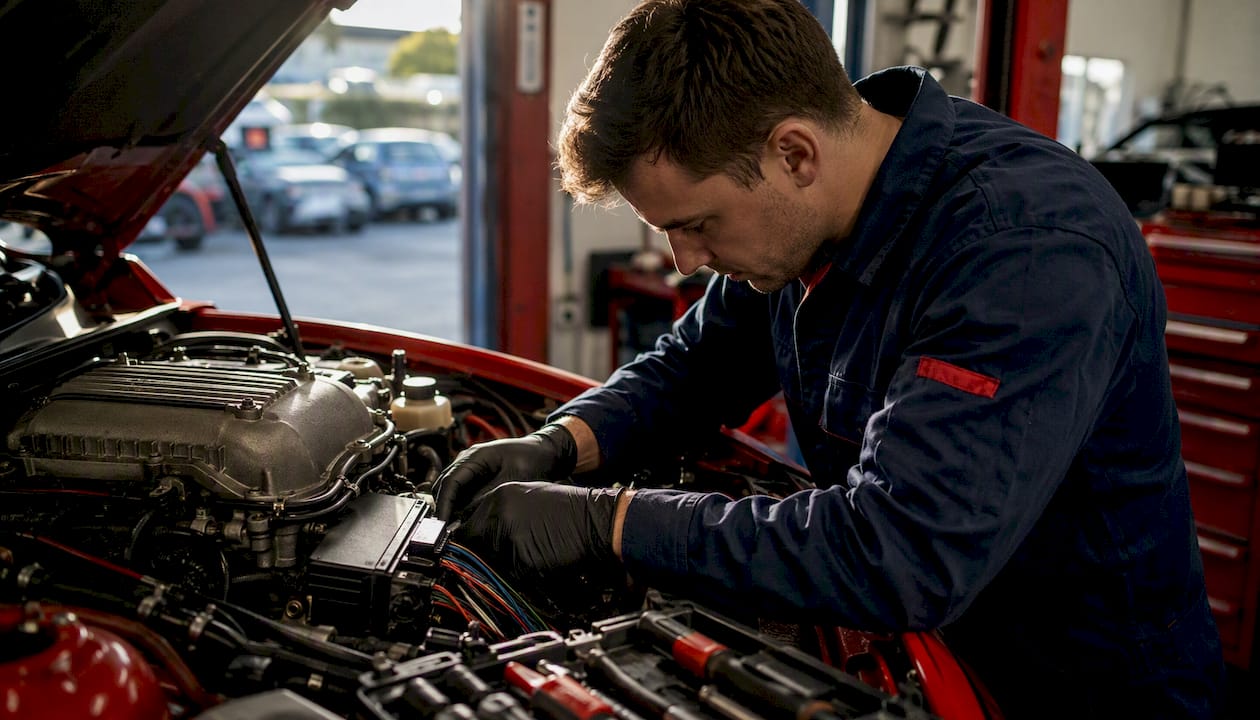
Manufacturers deliberately detune their ECUs to protect reliability across a wide range of conditions. That conservatism leaves genuine headroom in most turbocharged engines. A remap adjusts those parameters to recover that headroom, pushing boost, fuelling and timing closer to what the hardware can safely sustain.
Stage 1, Stage 2 and Stage 3: what they actually mean
Stage 1: software only, no hardware changes required. Works through the OBD port in most cases. This is the sweet spot for most road cars.
Stage 2: requires supporting hardware modifications, typically an upgraded intercooler, sports exhaust or induction kit. More power, but more cost and more stress on the drivetrain.
Stage 3: significant hardware upgrades, often including turbo replacement. Track and competition territory; not suitable for a daily driver.
How the remap is applied
OBD port flashing is the most common method: a laptop connects to the car’s diagnostic port and writes the new map directly. It is quick, usually taking under an hour. Bench flashing involves removing the ECU from the car and programming it directly, which is necessary for some vehicles where OBD access is restricted. Live or dyno tuning is the most thorough approach: the car runs on a rolling road while the tuner adjusts parameters in real time, measuring actual power output at each step.
A word of caution: an overly aggressive map that pushes boost or ignition timing beyond safe limits will accelerate wear on the turbo, injectors and engine internals. A reputable tuner always sets safety margins and will refuse to write a map that puts the hardware at risk. If a tuner promises extraordinary numbers without any caveats, that is a warning sign.
Pro Tip: Ask specifically whether your remap will be written for your car’s individual sensor readings or loaded from a generic file for your engine code. A file written to your actual vehicle will always be safer and more accurate.
Which cars and drivers benefit most from remapping?
Not every car is a good candidate, and not every driver will notice the same improvement. The vehicles that gain most are turbocharged: modern turbo-diesels (particularly common-rail units found in most European cars from the early 2000s onwards) and turbocharged petrol engines. The turbo is the mechanism that creates the headroom a remap exploits.
Driver profiles that typically see the clearest benefit:
High-mileage motorway commuters with turbo-diesels, where an economy map can reduce fuel spend meaningfully over time
Towing and family users who want stronger low-down pull without having to change down two gears every time they join a motorway
Enthusiasts looking for sharper mid-range response and a more engaging drive without full hardware modifications
Fleet drivers running the same route daily, where consistent fuel savings compound over months
Signs your car is a good candidate:
Turbocharged engine (petrol or diesel)
Mechanically healthy, with no fault codes or known injector/sensor issues
Up to date on servicing
Mileage profile that suits the map type you want (motorway miles suit economy maps; mixed driving suits a balanced map)
Naturally aspirated engines, older vehicles with worn injectors, and cars still under full manufacturer warranty are the cases where you should think hardest before proceeding.
Pro Tip: If you run a dedicated track car alongside your daily driver, you can afford to be more aggressive with the track map. For the daily driver, a balanced or economy-biased tune will serve you better long-term than chasing peak numbers.

Risks, warranty, insurance and UK MOT implications
The benefits of engine remapping are real, but so are the downsides. Understanding them before you book is not optional.
Warranty
Remapping commonly voids the manufacturer’s warranty on powertrain components. Most manufacturers can detect a remap through the ECU’s data logs, even if the original map has been restored. If you are within the warranty period and the car develops an engine or gearbox fault, the manufacturer may refuse to cover it. Some independent warranty providers take a similar stance. Discuss this with your dealer and warranty provider before remapping.
Insurance
You are legally required to declare a remap to your insurer. Failing to do so can result in a claim being refused entirely. Premiums may rise, but specialist modified-car insurers often handle remaps at a lower additional cost than mainstream providers. Adrian Flux and similar specialist brokers are worth contacting for a comparison quote before and after.
MOT and emissions
A remap that keeps the engine within its original emissions parameters will not cause an MOT failure on emissions grounds. However, tampering with emissions control systems — DPF, EGR, or catalytic converter — is a separate matter entirely. UK government guidance on modifying vehicle emissions is clear that removing or defeating emissions equipment is illegal for road use and will cause an MOT failure. A remap alone, done correctly, does not fall into that category.
Mechanical risk
More power means more stress on the clutch, gearbox, turbo and drivetrain. A responsible tuner will insist on a full diagnostic scan before touching the ECU, because remapping aggravates existing mechanical faults rather than fixing them. Worn injectors, marginal clutches or sensor faults should be addressed first.
Risk | Severity | Mitigation |
Warranty void | High (if in warranty period) | Discuss with dealer; consider timing relative to warranty expiry |
Insurance non-disclosure | High | Declare to insurer before driving remapped |
MOT emissions failure | Low (if remap only) | Avoid emissions system tampering; use reputable tuner |
Increased mechanical wear | Medium | Pre-remap diagnostic; conservative map settings |
Poor tune from bad tuner | Medium | Dyno evidence, before/after data, original map backup |
The single most important mitigation: always insist on a backup of your original map before any work begins. If something goes wrong, or you want to return the car to stock, that file is your safety net. A tuner who will not provide it should not be trusted with your car.
How much does remapping cost and how long does it take?
A standard Stage 1 OBD remap in the UK typically costs £250–£400. That covers the vast majority of turbocharged petrol and diesel road cars. Price varies based on vehicle complexity, whether a custom map is written to your car or a calibrated generic file is used, and whether dyno time is included.
Service type | Typical cost (UK) | Time required |
Stage 1 OBD flash (standard) | £250–£400 | 1–2 hours |
Stage 1 with live/dyno tuning | higher (typically above £400) | 3–5 hours |
Bench flash (ECU removal required) | moderate (£350–£500) | 2–4 hours |
Remap + engine carbon clean bundle | moderate (£350–£500) | Half day |
Stage 2 (with hardware changes) | higher (from £500+) | Full day+ |
Factors that push the price up:
Bespoke map written to your specific car on a rolling road rather than a calibrated file
Dyno hire time, which varies by facility
Additional hardware changes required for Stage 2 or above
Mobile service, which adds convenience but may cost slightly more than a workshop visit
Vehicle complexity (some modern cars with multiple ECUs or encrypted software require bench work)
For a commuter diesel, a Stage 1 OBD remap with an economy bias is typically the most cost-effective option. You can estimate potential gains and costs for your specific vehicle using the free remap calculator before committing to an appointment.
How do you choose a reputable remapper?
The quality of the tune matters as much as the quality of the hardware. A poor map on a healthy engine can cause more damage than no remap at all.
What to look for:
A full diagnostic scan as standard before any tuning begins
Clear policy on original map backup
Transparent stance on warranty and insurance implications
Customer reviews with specific, verifiable outcomes
Post-remap support if issues arise
Questions to ask before you book:
Will you back up my original map and can I have a copy?
Is the remap written specifically to my car or loaded from a generic file?
What is your policy if I experience issues after the remap?
Can you advise on how this affects my insurance and warranty?
Do you run a pre-remap diagnostic as standard?
Red flags:
Generic maps with no diagnostic check
Pressure to buy additional hardware without clear justification
Unusually low prices with no explanation of what is included
No mention of emissions compliance or warranty implications
Real-world results from Performance Tuning NI
Performancetuningni specialises in custom engine remapping for petrol and diesel vehicles across Northern Ireland, with both workshop and mobile service available. The team also offers engine carbon cleaning as a complementary service, often bundled with a remap to ensure the engine is in the best possible condition before tuning begins. You can read more about typical outcomes and customer experiences on the Performancetuningni blog.
In practice, the results that customers notice first are rarely the peak power numbers. The most common feedback is about mid-range pull: a turbo-diesel that previously felt sluggish below 2,000 rpm suddenly feels composed and responsive at motorway speeds. Overtaking becomes a decision rather than a commitment. On economy-biased maps, regular motorway drivers often report fuel consumption improvements consistent with the 5–15% range seen in turbo-diesel remaps under steady-speed conditions.
Vehicle type | Typical power gain | Typical torque gain | Common driver feedback |
Turbo-diesel (Stage 1) | noticeable percent increase typical | noticeable significant increase typical | Stronger mid-range, fewer downshifts |
Turbocharged petrol (Stage 1) | typical significant improvement | typical improvement | Sharper throttle, better overtaking |
Turbo-diesel (economy map) | modest to moderate increase | modest to moderate increase | Improved mpg on motorway runs |
Performancetuningni has tuned thousands of vehicles and holds a five-star Google rating. Every remap begins with a full diagnostic scan, and customers receive a copy of their original map as standard.
The services available include Stage 1 and Stage 2 remapping, mobile remap appointments, AdBlue solutions, EGR and DPF work, as well as engine carbon cleaning. For drivers who want to understand what their specific vehicle might gain before booking, the remap calculator gives a vehicle-specific estimate based on registration.
Is remapping right for your car and needs?
A quick decision framework:
Yes, remapping is likely worth it if:
Your car has a turbocharged petrol or diesel engine
It is mechanically healthy and up to date on servicing
You are past the manufacturer warranty period, or the warranty has already been voided
You do high mileage, tow regularly, or want a more engaging daily drive
Proceed with caution if:
You are still within the manufacturer warranty period and the car is fault-free
Your insurer has not yet been consulted
The car has known mechanical issues (address those first)
Remapping is probably not right if:
Your engine is naturally aspirated and the car is primarily used for short urban trips
You are about to sell the car and have not factored the modification into the sale price
Recommended next steps:
Run your registration through a remap calculator to see estimated gains for your specific vehicle
Call your insurer and get a modified-vehicle quote before booking
Book a pre-remap diagnostic to confirm the engine is in good health (a tune-up check is a sensible starting point if you are unsure of the car’s current condition)
Choose a tuner who offers dyno evidence and original map backup as standard
Collect before/after data and keep it with the car’s service records
Key takeaways
ECU remapping delivers real, measurable gains for turbocharged engines, but the value depends entirely on vehicle type, driving habits, and how carefully the tuner is chosen.
| Performance gains are substantial | Turbo-diesels can gain significant torque; turbocharged petrol engines typically gain noticeable power and torque. | Stage 1 costs £250–£400 in the UK | Standard OBD remap takes 1–2 hours; dyno tuning costs more but gives documented proof. | | Declare to your insurer | Failing to disclose a remap can void a claim; specialist brokers often handle it at lower cost. | | Warranty and diagnostics matter | Pre-remap diagnostic is non-negotiable; always keep a copy of the original map. | | Performancetuningni | Offers custom remaps, mobile service and carbon cleaning, with a five-star Google rating and thousands of cars tuned. |
The case for tuning with your eyes open
There is a version of the ECU remapping conversation that goes: “it’s just software, what could go wrong?” That framing undersells both the upside and the risk. The upside is genuine. A well-mapped turbo-diesel genuinely transforms the driving experience in ways that are hard to appreciate until you have felt a flat torque curve replaced with something that pulls cleanly from low revs. The risk is also genuine, but it is almost entirely concentrated in one place: the quality of the tuner.
The people who end up with problems after a remap almost always share one thing in common: they chose on price alone, got a generic map loaded without a diagnostic check, and had no before/after data to fall back on when something went wrong. The map itself was not the problem. The process was.
The manufacturers’ conservative factory settings exist for good reasons: global fuel quality variation, deferred servicing, emissions compliance across dozens of markets. When a skilled tuner removes that conservatism carefully and methodically, with a healthy engine and documented results, the outcome is a car that feels like it was always meant to drive this way. When an unskilled tuner does it quickly and cheaply, the outcome is unpredictable.
The decision is not really “should I remap?” It is “have I found someone I trust to do it properly?” Get that part right and the rest follows.
Performancetuningni: custom remapping done properly
Performancetuningni gives turbo-diesel and turbocharged petrol owners in Northern Ireland a direct route to a properly documented, diagnostics-first remap, without the guesswork of choosing between generic map files and no proof of what was actually achieved.
[
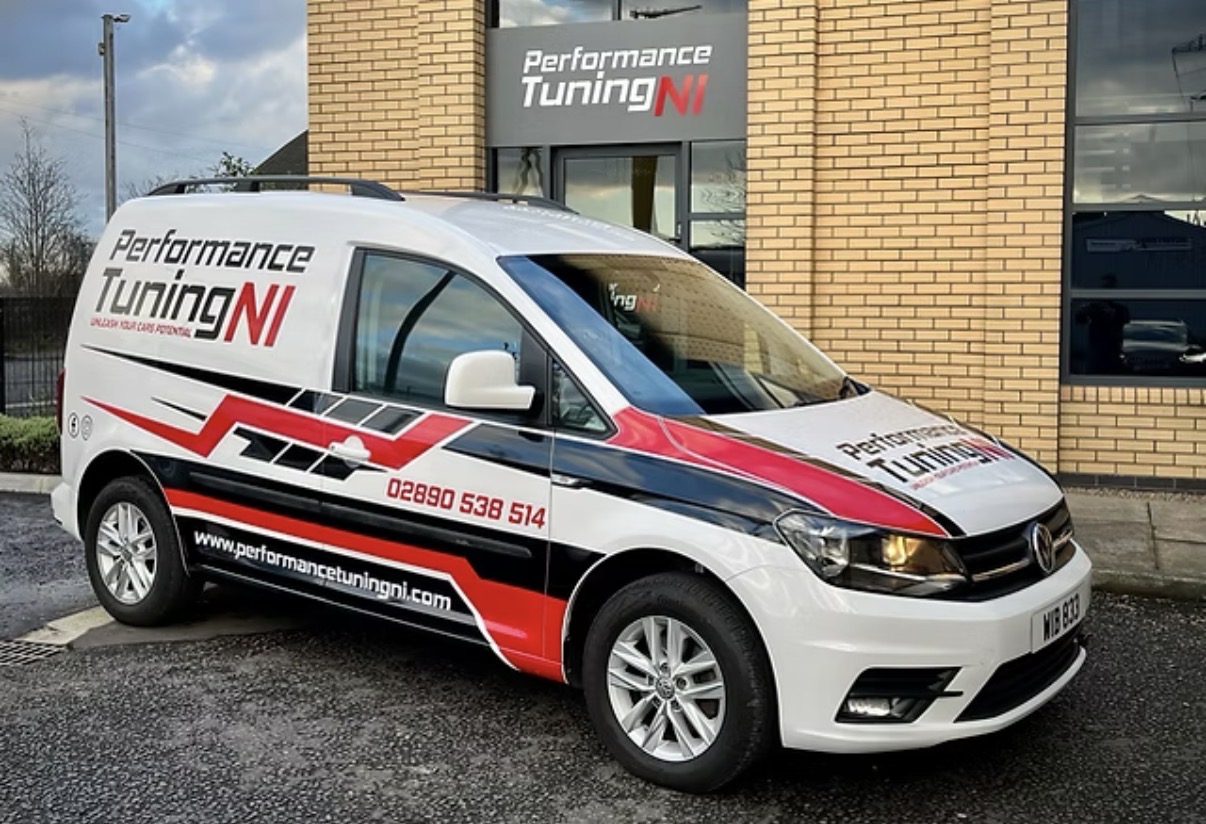
Every job starts with a full diagnostic scan. You get a copy of your original map before anything is written. And you leave with before/after data you can actually verify. The service covers Stage 1 and Stage 2 remapping, mobile appointments at your location, and engine carbon cleaning as a pre-remap bundle when the engine needs it. Thousands of vehicles tuned, five-star Google rating.
To see what your specific vehicle could gain, enter your registration in the free remap calculator. When you are ready to book, the remapping service page has everything you need to get started. Bring your vehicle registration, a note of your current mileage and any existing modifications, and the team will handle the rest.
Useful sources and further reading
What is ECU remapping? | Fast Car — clear technical explanation of why factory maps are conservative and what remapping actually changes in the ECU.
ECU remapping for daily driving | Mechalex — focused on real-world drivability improvements for everyday drivers rather than peak power figures.
Engine remapping explained | Carwow — accessible overview of OBD flashing versus live/dyno tuning and why the method matters for accuracy and safety.
Modifying your vehicle’s emissions: legal, safety and health implications | GOV.UK — the primary UK government source on the legality of emissions system modifications and MOT compliance.
Recommended