
Sealed Speed limiters
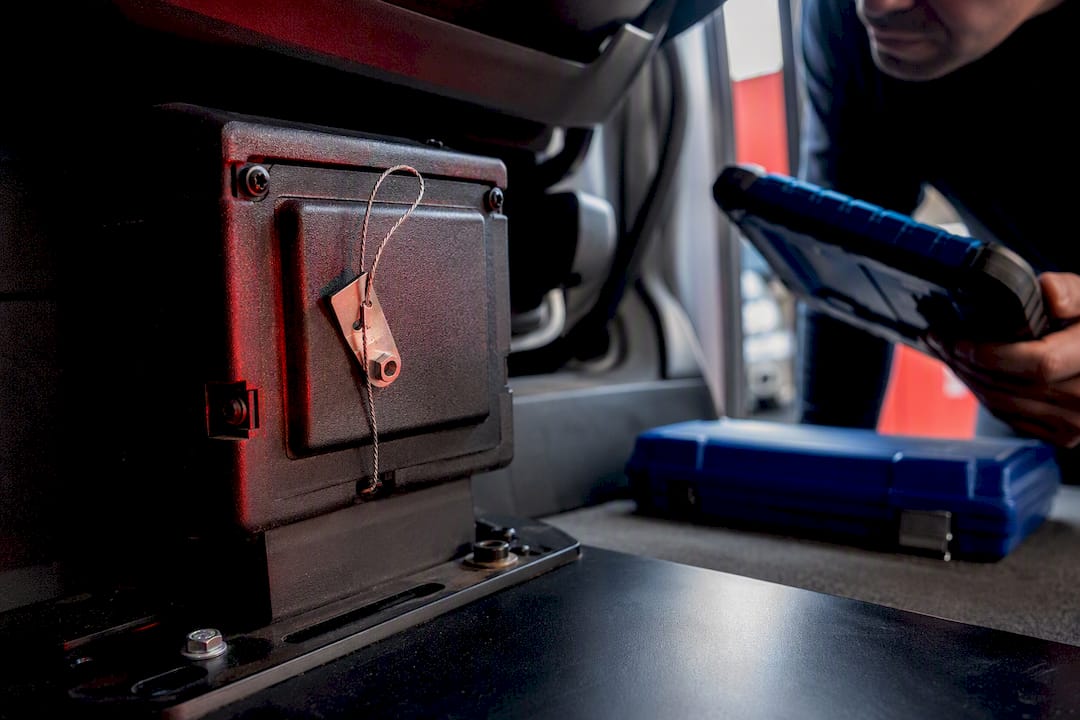
Private car owners in Northern Ireland can generally override or remap a speed limiter without breaking the law, but goods vehicles are a different story entirely. Regulation 43 of the Motor Vehicles (Construction and Use) Regulations (Northern Ireland) 1999 forces many commercial vehicles to run sealed limiters, and tampering with those seals is a regulatory breach. Insurance and roadworthiness rules apply either way, so read on before you touch anything.
TL;DR:
Private cars can usually be remapped to remove or override speed limiters without legal issues, provided the vehicle remains within type-approval standards.
Commercial goods vehicles are restricted by sealed limiters calibrated at 85 km/h, and only authorised sealers can legally unseal or adjust these limiters.
From 2024, new EU vehicles in Northern Ireland must be fitted with Intelligent Speed Assistance, which warns or gently resists exceeding speed limits, but cannot be permanently disabled.
Modifying a vehicle’s ECU or safety features without proper documentation can void insurance and pose safety, MOT, and legal risks.
Drivers should verify vehicle category, inform insurers, keep detailed records, and check for required plates or permits before adjusting any limiter.
Table of Contents
What Northern Ireland law actually says about speed limiters
Goods vehicles: sealed limiters, authorised sealers and what’s off-limits
What are the safety, MOT and insurance risks of removing a limiter?
What steps should NI drivers take before removing or adjusting a limiter?
Do you need a plate or a Vehicle Special Order for a modified vehicle?
Where compliance and performance actually meet in Northern Ireland
What Northern Ireland law actually says about speed limiters
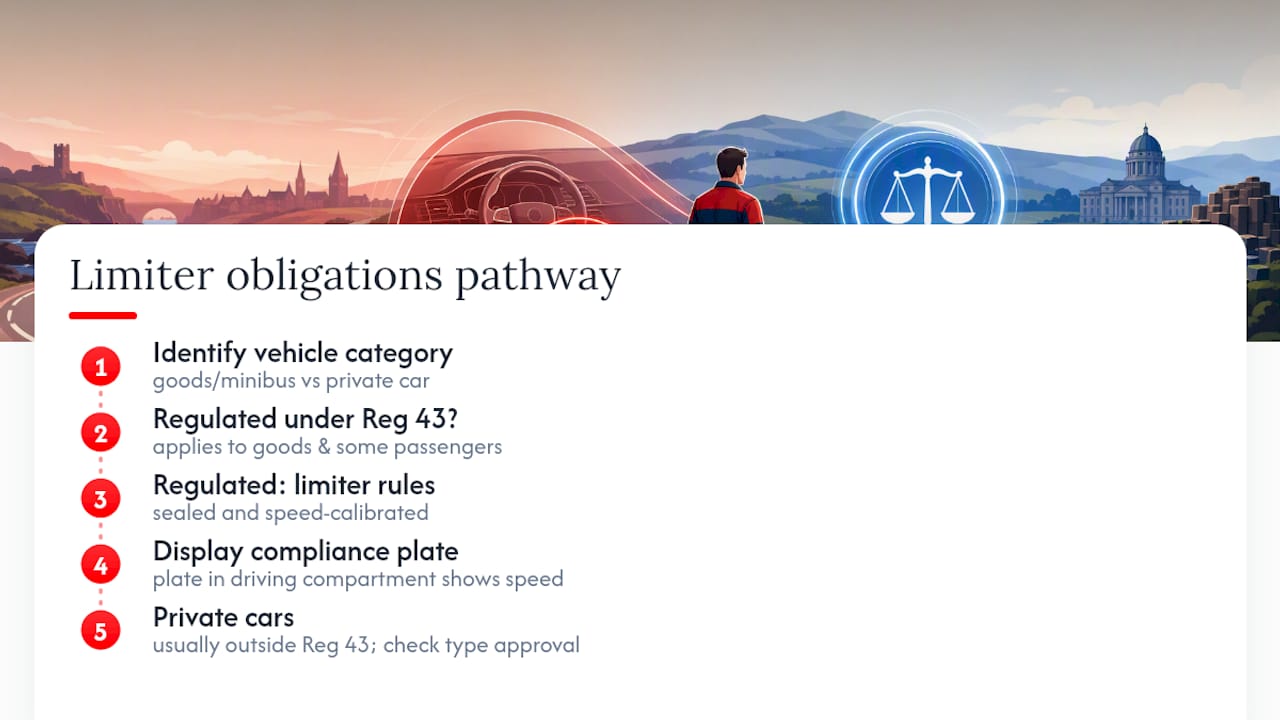
Northern Ireland’s rules on speed limiters sit inside the Motor Vehicles (Construction and Use) Regulations (Northern Ireland) 1999, and two specific provisions matter here. Regulation 43 sets out which vehicles must carry a limiter at all. It applies primarily to goods vehicles and certain passenger-carrying vehicles above set weight thresholds, requiring the limiter to be sealed against tampering and calibrated so that the vehicle cannot exceed the legal speed limit.
Regulation 83 covers what happens once a limiter is fitted. Any vehicle carrying one must display a plate in the driving compartment showing the speed at which it’s set. That plate isn’t decorative. It’s a compliance document, and an enforcement officer checking a lorry or minibus will expect to see one that matches the actual limiter setting.
Private cars sit outside regulation 43’s core scope, which is why remapping a family hatchback or a hot hatch to remove a factory-fitted speed limiter (where one even exists) doesn’t trigger the same statutory obligation. Northern Ireland’s vehicle standards still trace back to the wider UK and EU type-approval framework overseen by the Vehicle Certification Agency, and any modification has to leave the vehicle within the bounds of that approval. Change the wrong system and you risk invalidating type approval, which is a separate problem from the limiter question but one worth knowing about before any ECU work begins.
The practical takeaway: check which category your vehicle falls into before assuming the rules that apply to a courier van also apply to your car. They usually don’t, but the paperwork obligations for anything that is regulated are strict and unforgiving.
Does the 2024 ISA rule apply to cars in Northern Ireland?
Yes, and this catches a lot of drivers out. From 2024, new cars sold in the EU must be fitted with Intelligent Speed Assistance (ISA), and because EU vehicle rules continue to apply here under the Northern Ireland Protocol arrangements, Autotrader reports that Northern Ireland is affected while Great Britain is not. That’s a genuine regulatory split across the UK, and it means a new car bought in Belfast can carry ISA hardware that an equivalent model sold in Manchester never had fitted.
ISA isn’t a hard limiter in the traditional sense. It uses GPS and sign-recognition cameras to warn you, and often to apply gentle resistance through the throttle, when you exceed the posted limit. Most systems let you switch ISA off for the current journey, but Autotrader notes it typically re-enables the next time you start the engine. Permanently disabling it isn’t something the average driver can do through the dashboard menu, and the European Commission’s own analysis frames the system as a safety aid, not a substitute for driver judgement. Switching ISA off for a journey never removes your legal duty to stay within the posted limit.
Goods vehicles: sealed limiters, authorised sealers and what’s off-limits
Commercial operators face a much tighter regime, and the numbers matter. Regulation 43 requires many goods vehicles to run a sealed limiter calibrated so stabilised speed doesn’t exceed 90 km/h, with the limiter typically set at 85 km/h, to build in a safety margin. That seal is the whole point. It stops anyone quietly nudging the setting upward without leaving evidence.
Only someone acting as an authorised sealer can lawfully break or replace that seal. Schedule 3 of the same Regulations defines who qualifies, sets the conditions they must meet, and gives the Department the power to withdraw that authorisation if standards slip. There’s no route for a driver or an unauthorised garage to legally unseal a limiter for convenience.
Limited exceptions exist, mainly covering a vehicle travelling to a sealer for repair or where the seal has failed accidentally rather than through interference. Outside those narrow circumstances, tampering with a sealed limiter is a direct regulatory breach, and enforcement can mean prosecution rather than a quiet word. For goods vehicle owners, the lawful path to adjusting a limiter always runs through an authorised sealer, never a DIY fix.
What are the safety, MOT and insurance risks of removing a limiter?
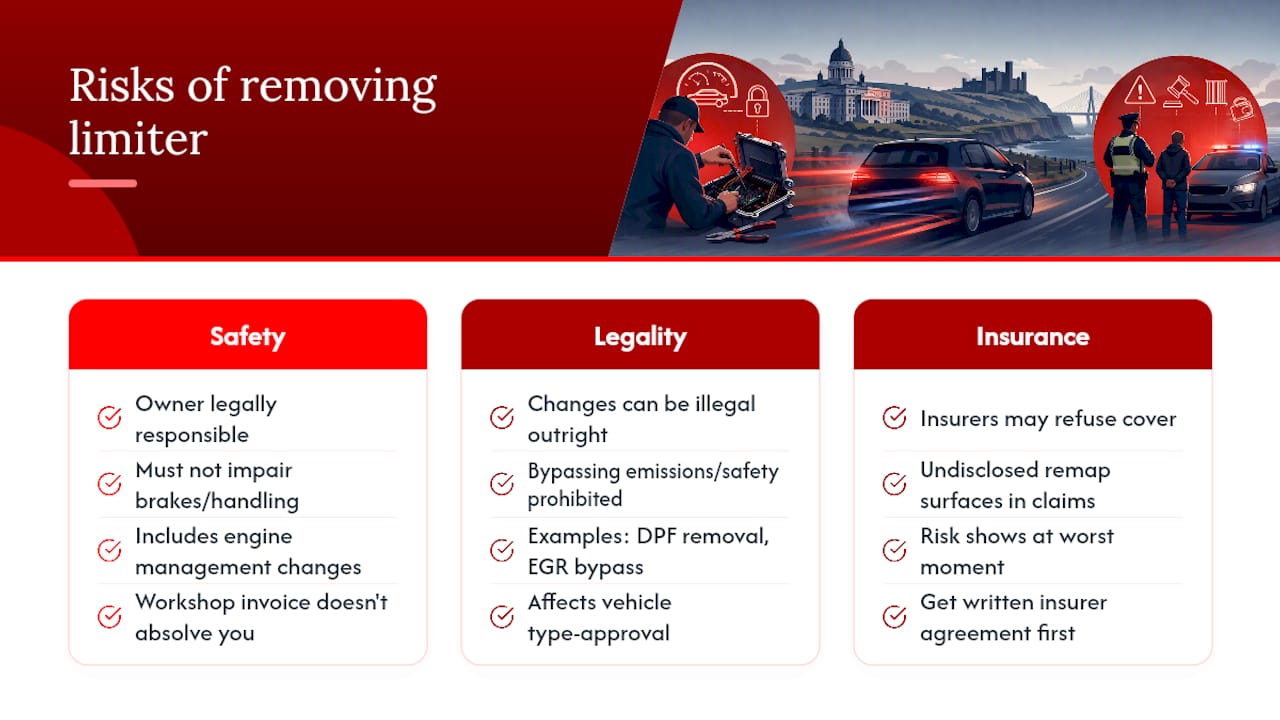
PSNI is clear that the responsibility for a modified vehicle’s safety sits with the owner, not the garage that did the work. Its guidance states that modifications must never impair braking, handling or other safety systems, and that includes anything touching the engine management system during a limiter removal or remap. Get it wrong and you’re the one answerable, whatever the workshop invoice says.
nidirect’s guidance on modified cars goes further, warning that changes bypassing emissions or safety equipment can be illegal outright, not just risky. It lists things like DPF removal and EGR bypasses as clear examples, and the same caution applies to any ECU change that interferes with systems the vehicle was type-approved with.
Insurance is where most drivers actually get caught out. PSNI notes that insurers may simply refuse cover where a modification wasn’t declared, and an undisclosed limiter change or remap is exactly the sort of thing that surfaces during a claims investigation, usually at the worst possible moment. Ring your insurer, explain the work, and get their confirmation in writing before anything else happens.
What steps should NI drivers take before removing or adjusting a limiter?
Getting this right isn’t complicated, but skipping a step is how drivers end up with a voided claim or a compliance headache months later. Work through these before booking anything:
Confirm your vehicle’s category first. A private car and a 7.5 tonne goods vehicle sit under completely different rules, so establish whether regulation 43’s sealed limiter requirements apply to you at all.
Contact your insurer before the work, not after. Ask them to confirm in writing that the planned remap or limiter adjustment won’t affect your cover, and keep that email.
Choose a specialist who documents everything. A reputable operator will record your original ECU map, run handling and roadworthiness checks, and hand over a written service report, which is exactly the kind of paperwork an insurer or the DVA might ask to see later.
Keep every piece of paperwork. MOT testers and enforcement officers both have the right to ask questions about a modified vehicle, and a folder of documentation settles that conversation quickly.
Ask about a plate if your vehicle needs one. If regulation 83 applies to your vehicle, the plate showing the limiter setting has to be accurate and visible.
Pro Tip: Request a written baseline of your original ECU map alongside your service report before any remap goes ahead. If a question ever comes up from your insurer or the Department for Infrastructure, having the “before” and “after” data side by side settles it far faster than a verbal explanation.
Performancetuningni’s remapping service builds this documentation into every job as standard, which matters more than most drivers realise until they actually need it.
Do you need a plate or a Vehicle Special Order for a modified vehicle?
Where regulation 83 applies, the plate in the driving compartment has to show the exact speed the limiter is set to, and it needs to stay visible and legible, not tucked away or worn illegible after years of use. Getting this plate wrong is a compliance issue even if the limiter itself is set correctly.
For vehicles that fall outside standard construction and use rules entirely, perhaps something heavily modified or non-standard, the Department for Infrastructure can issue a Vehicle Special Order permitting road use where the applicant supplies adequate safety documentation. This isn’t a quick process. Expect it to run for several months, so it’s worth starting early if your vehicle genuinely needs one. For anything unusual, DfI and the DVA are the right first call, not a guess based on a forum post.
Where compliance and performance actually meet in Northern Ireland
Most of the anxiety around limiter removal comes from treating it as a binary choice between “legal” and “illegal” when the real answer depends entirely on documentation. A private car remap done properly, with the insurer informed and the original ECU map recorded, sits in a completely different risk category to a sealed HGV limiter quietly nudged upward in a lay-by. Conflating the two is where most of the online confusion comes from, and it’s not helpful to anyone.
What tends to get underestimated is how much a paper trail protects you after the fact, not before it. Performancetuningni has worked on thousands of vehicles across Northern Ireland with a five-star Google rating, and the pattern holds every time: the drivers who never have a problem are the ones who told their insurer and kept the report. For more detail on where the legal lines actually sit, our ECU tuning legality breakdown and our van limiter piece both go further than most generic guides manage.
— Mark
Get a compliant remap done properly by Performance Tuning NI
Performance Tuning NI is the direct alternative to guessing your way through a DIY limiter tweak or handing your car to a garage that won’t put anything in writing. Every remap comes with a documented ECU baseline, a written service report, and handling checks before the car goes back on the road, exactly the paperwork you’d want in hand if your insurer or the DVA ever asks questions.
[
Mobile appointments mean the work happens at your home or workplace across Northern Ireland, without a day lost sitting in a waiting room. If you’re weighing up a remap for performance, economy, or a limiter adjustment on a private vehicle, start with the free remap calculator using your registration for an instant estimate, or head straight to the remapping service page to book a slot and get the compliance side sorted from day one.
Sources
Recommended