
20–35% Mid Range Torque Gains: 4x4 Remap for Safer Towing
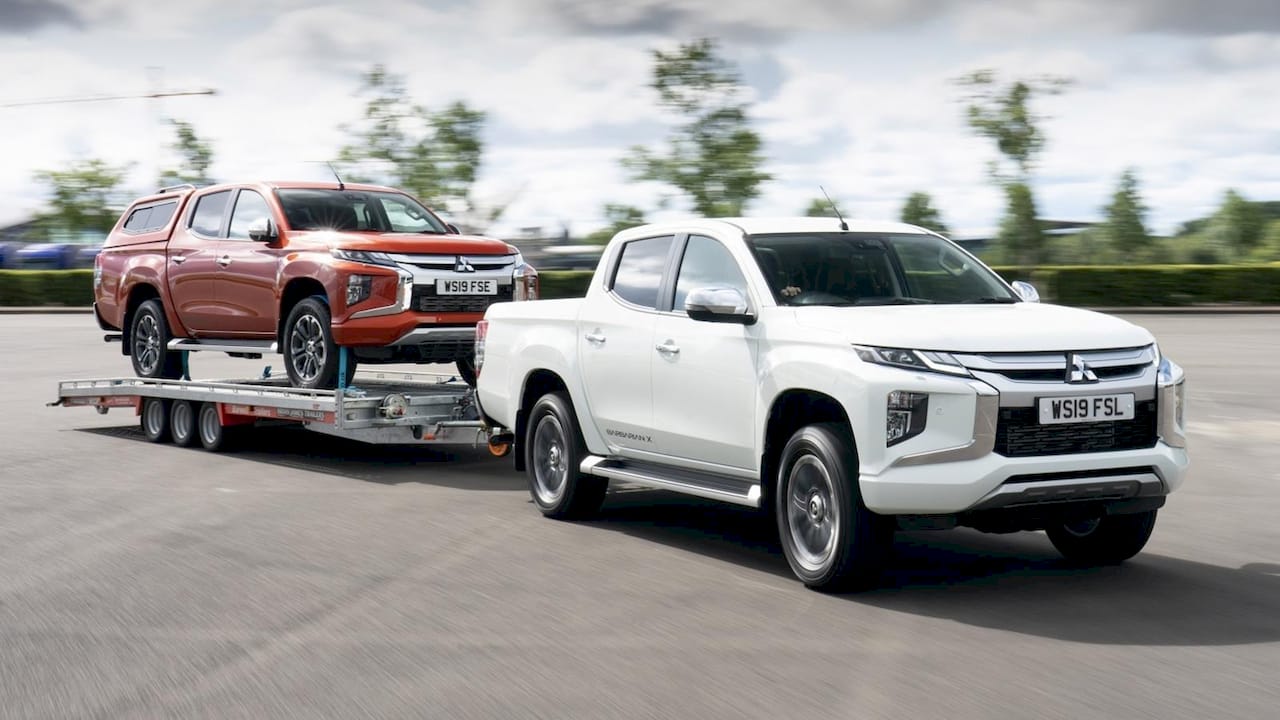
It won’t raise your vehicle’s plated towing limit, so you still tow within the legal maximum. Before booking, get your cooling system and transmission checked and tell your insurer about the modification.
TL;DR:
A towing remap adjusts boost pressure, fueling, torque limiters, throttle response, and safeguards, prioritizing steady torque delivery over peak power.
Diesel engines benefit most, often gaining 20 to 35 percent mid-range torque, while naturally aspirated engines see minimal or no benefit.
To ensure safety, always disclose the remap to your insurer and check condition of cooling, transmission, and exhaust systems beforehand.
The remap process involves diagnostics, dyno or road logging, and post-tune documentation to verify actual performance gains.
Regular maintenance and careful monitoring of EGTs and transmission fluid are essential since increased torque stresses vehicle components during long-term towing.
Table of Contents
What does a 4x4 remap towing tune actually change in the ECU?
A towing remap doesn’t chase big peak power numbers. It reshapes how the engine delivers torque across the rev range, which matters far more when you’ve got 2.5 tonnes of caravan pushing back at you on a hill start.
The ECU governs several interlinked systems, and a tow-focused tune touches most of them at once rather than isolating one parameter:
Boost pressure shape, so the turbo builds pressure earlier and holds it longer through the mid-range instead of spiking late.
Fuelling maps, adjusted to match the extra air without pushing exhaust gas temperatures into dangerous territory.
Torque limiters, which many factory ECUs cap conservatively to protect the gearbox. A remap can raise these within safe mechanical margins.
Throttle mapping, smoothed out so pedal response feels progressive rather than jumpy, which matters when you’re threading a horsebox through a narrow gateway.
EGT and knock safeguards, recalibrated but never removed, since these are what stop the engine cooking itself under sustained load.
That last point separates a proper towing tune from a lazy one. A high-power stage tune built for straight-line speed often leans hard on peak boost and ignores how the engine behaves at 2,000 RPM under continuous load, which is exactly where towing lives. A tow tune deliberately sacrifices some of that headline number in exchange for torque that arrives sooner and stays flatter, because that’s what actually moves a laden trailer up the M1 without the engine labouring.
Realistic torque gains and which 4x4s benefit most
Diesel common-rail engines see the biggest, most consistent improvements from a towing remap, typically 20 to 40% more mid-range torque depending on the base engine and how conservatively it left the factory.
Typical mid-range torque gains by engine type:
Diesel common-rail (2.0 to 3.0 litre turbo): 20 to 35%
Turbo petrol (2.0 litre and above): 15 to 30%
Naturally aspirated engines: negligible, often not worth the cost
The vehicles with the most headroom are large diesel SUVs, pickups, and turbo-diesel vans, where manufacturers deliberately under-tune the engine for emissions compliance, refinement, or to leave a gap between trim levels. If you’re driving a naturally aspirated 4x4, a remap has almost nothing to work with; without a turbo to reshape boost around, gains are minimal and rarely justify the cost.
How often you tow matters as much as what you drive. Someone hauling a horsebox every weekend through summer will feel the benefit of reduced gear-hunting and smoother overtakes far more than someone who tows a small trailer twice a year. For occasional tow use, the case for spending money on a remap is weaker; for regular heavy towing, it’s usually one of the more cost-effective upgrades available.
What are the risks, warranty and insurance implications?
A remap changes how your engine delivers power. It does not change your vehicle’s plated towing capacity, which is a legal figure set by the manufacturer. Tow within that limit regardless of how much extra torque the remap gives you.
Insurance and warranty are where owners most often get caught out. Always disclose the remap to your insurer before you tow with it, and get your remapper’s warranty position confirmed in writing, not just verbally at the counter.
Before any tuning work, these mechanical checks matter more than people assume:
Cooling system condition, including radiator, coolant level, and fan operation.
Transmission fluid level and colour, since a tired gearbox under more torque fails faster, not slower.
DPF and EGR condition, particularly on higher-mileage diesels.
Clutch or torque converter wear, especially on manuals used for frequent towing.
Exhaust gas temperature behaviour during sustained load, where relevant to the platform.
Watch for remappers who won’t discuss EGT limits, skip diagnostics entirely, or promise identical percentage gains across every model regardless of age or condition. That’s a red flag, not a selling point.
Pro Tip: Ask to see your vehicle’s transmission fluid before the remap goes ahead, not after you’ve noticed a shudder on a hill start three months later.
How is a towing remap actually carried out?
The process behind a decent towing remap follows a fairly consistent structure, whether it happens at a workshop or via a mobile visit.
Pre-map diagnostics establish a baseline: fault codes are cleared and checked, and existing performance is logged so there’s something to compare against afterwards.
Dyno-based mapping puts the vehicle on rollers and logs power and torque in real time, letting the tuner see exactly how the engine responds as boost and fuelling are adjusted. It’s the most accurate method for validating gains.
Road-based mapping uses portable logging equipment during real driving instead of a dyno, which suits vehicles that don’t fit standard rollers, such as some larger 4x4s and vans, but gives less controlled data.
Mobile remap services typically handle the software side well but may lack access to a dyno, meaning they validate torque gains through road logs rather than a full pre and post dyno run.
Post-tune documentation should include before and after figures, whichever method was used, so you’re not just taking someone’s word for it.
What does a towing remap cost and what should you expect for that price?
Costs vary by engine, vehicle age, and whether the work happens on a dyno or via mobile logging, with dyno sessions generally commanding a premium because of the equipment and time involved. Add-ons like a transmission remap, deeper diagnostics, or carbon cleaning to restore airflow before tuning typically push the price up further.
When you’re shown a percentage gain, ask what it’s a percentage of.
A fair package for towing work should include:
Documented before and after figures, not just a verbal promise.
A written warranty position covering what happens if something goes wrong.
At least one follow-up check within the first few weeks, since fault codes sometimes surface after real-world load testing that a static dyno run doesn’t replicate.
Questions to ask before booking your remap
Before handing over a deposit, run through a short checklist. It separates remappers who understand towing from those who only understand horsepower.
Have they tuned this specific model and engine before, and can they show evidence of it?
Do they provide dyno or road-logged before and after data, not just a claimed percentage?
What EGT and boost safeguards are built into the tow map, and can they explain them in plain terms?
Is diagnostic work included in the price, or charged separately if something unexpected shows up?
Do they offer post-tune validation, and what happens if the vehicle needs adjusting afterwards?
The simplest rubric is evidence first, guarantees second, price last. A remapper who can show you real logged data from a similar vehicle is worth more than one offering the cheapest quote with no proof behind it. Local convenience matters, but not at the expense of someone who genuinely understands towing-specific tuning.
Pro Tip: If a remapper’s pitch focuses entirely on top-end horsepower for a vehicle you only use to tow, that’s a mismatch between what they’re selling and what you actually need.
Steer clear of anyone who won’t show logs, makes identical gain claims regardless of your vehicle’s condition, or pushes an aggressive peak-power map onto someone who just wants a caravan to sit steady at 60mph on the motorway.
What does real-world evidence from Performancetuningni show?
Some companies have tuned thousands of vehicles across petrol and diesel platforms and have high customer ratings based on mobile and in-shop remaps alike. Diesel tow tunes documented by the company typically land in the 20 to 35% mid-range torque gain bracket, consistent with the wider industry pattern.
One anonymised case involved a diesel SUV struggling with gear-hunting under a loaded trailer on inclines. After diagnostics confirmed the cooling and transmission were sound, a tow-focused remap smoothed torque delivery through the mid-range, and the owner reported the gearbox no longer hunted for gears on the same hill it had previously struggled with.
For readers who want the deeper technical breakdown of what changes under the bonnet, the towing remap explainer covers it in more depth.
Does a towing remap improve or worsen fuel efficiency?
It depends entirely on how you drive after the remap, and this is where expectations often go wrong. A tow tune that improves mid-range torque can improve fuel efficiency while towing, because the engine spends less time labouring at low RPM and needs fewer downshifts to maintain speed on inclines.
Fewer gear changes and less throttle strain under load both reduce fuel consumption compared with an unmapped engine straining to maintain the same speed. This is the quieter benefit of a towing remap that rarely makes the headline pitch: it’s sold on power and drivability, but the fuel saving during sustained towing is often just as noticeable to owners.
That said, efficiency gains disappear quickly if the extra torque is used to drive faster or accelerate harder rather than to reduce strain. A remap gives you the option of easier, more efficient towing; it doesn’t force it. Two identical remapped vehicles can show very different fuel figures depending entirely on driving style.
Long descents and motorway cruising tend to show the clearest efficiency improvement, since that’s where the smoother torque delivery reduces the engine’s workload most consistently. Stop-start towing through town, by contrast, shows less benefit, because efficiency there is dominated by traffic and gear changes rather than sustained load.
What maintenance does a remapped tow vehicle need long term?
A remap doesn’t remove the need for regular servicing, and if anything, sustained towing under increased torque makes maintenance intervals more important, not less. The extra mid-range torque means components like the clutch, gearbox, and cooling system work harder during long tows than they did before the tune.
Transmission fluid should be checked more frequently than the standard interval if you tow heavily, since heat and load both accelerate fluid degradation. The same applies to coolant condition; a cooling system that was marginal before the remap won’t improve on its own afterwards.
Owners who tow regularly should also keep an eye on:
DPF condition, since towing patterns can affect regeneration cycles differently to normal driving.
Engine mounts and drivetrain components, which experience more repeated stress under sustained load.
Brake wear, given that a laden trailer changes stopping distances regardless of engine output.
Community feedback across owner forums repeatedly makes the same point: a remap is not a substitute for mechanical upkeep, and skipping servicing because “the tune fixed it” is how reliability problems start. Sticking to your existing service schedule, or tightening it slightly if you tow often, matters more after a remap than before one.
Which tuning stage suits your towing needs?
Not every remap package is built the same way, and picking the wrong stage for your use case wastes money either way. A basic economy-focused remap, common on daily drivers, prioritises fuel savings over torque and won’t deliver much benefit under a loaded trailer.
A dedicated towing stage sits in the middle: it targets mid-range torque and throttle smoothness specifically, with conservative EGT and boost limits built in for sustained load rather than short bursts. This is the package most 4x4 owners towing caravans, horseboxes, or work trailers should actually be looking at.
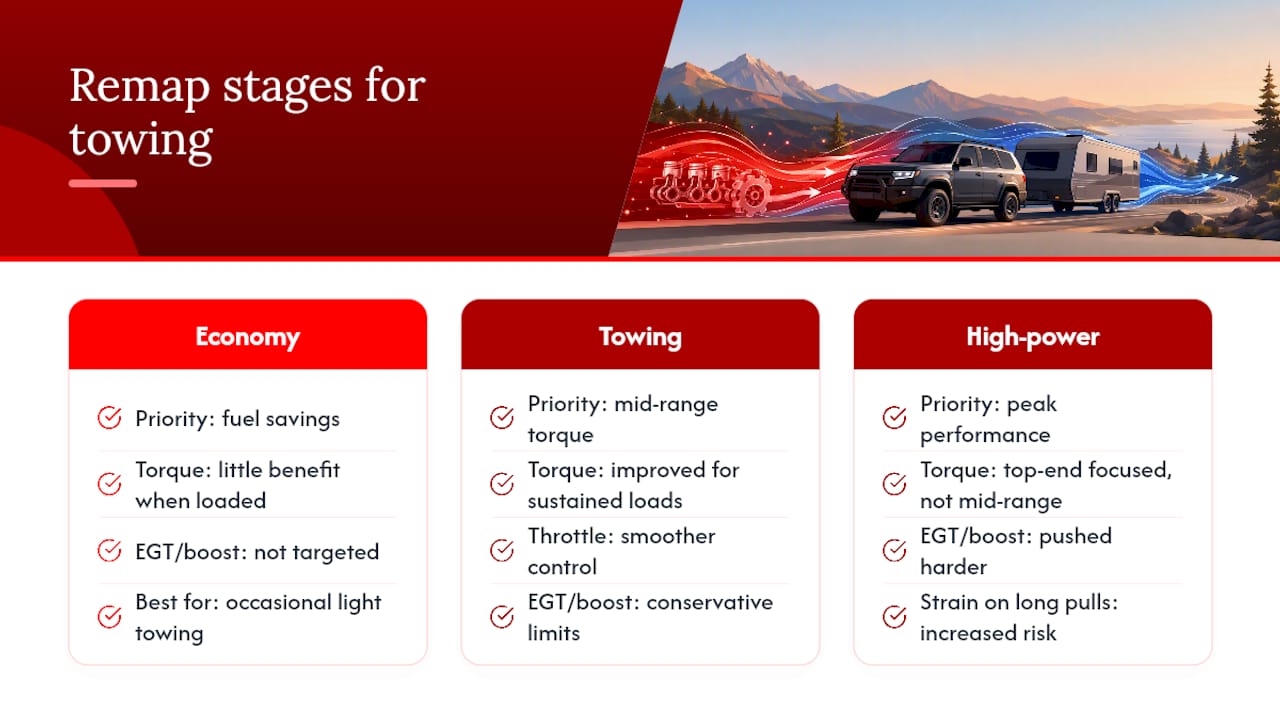
A high-power stage tune, by contrast, is built for peak performance and often pushes boost and fuelling harder at the top end, which does little for towing and can increase strain during long, sustained pulls where the engine never gets a break. Some tuners offer combined packages, bundling carbon cleaning with the remap to restore airflow that’s been choked by soot buildup, since a partially blocked EGR or DPF undermines even the best tow map.
The right choice comes down to how you actually use the vehicle. Occasional light towing rarely justifies anything beyond a standard remap. Regular heavy towing, particularly with horseboxes or twin-axle caravans, is where a dedicated tow-focused package earns its cost.
How do you check the remap actually worked?
The clearest signal is drivability, not a number on a piece of paper. Reduced gear-hunting on hills, less need to floor the throttle to maintain speed, and smoother overtakes while towing are all practical indicators that the mid-range torque gain is real and usable.
For anyone who wants harder data, a few tools help confirm the improvement rather than just feeling it:
OBD data loggers, which track boost, EGT, and torque delivery in real time during actual towing, not just on a dyno.
Before and after documentation from the remapper, ideally logged on the same route or dyno session both times for a fair comparison.
Fuel consumption tracking over a few tow trips, comparing similar routes and loads before and after the tune.
If your remapper offered dyno figures at the time of tuning, ask for the printout rather than a verbal summary; a proper before and after graph shows exactly where in the rev range the torque improved, which matters more than a single peak figure. Watch EGTs during your first few long tows after the remap too, since this is when any issue with fuelling calibration under sustained load would show up.
A practical view on when a towing remap makes sense
The reliability question gets underplayed. A remap that adds torque to a gearbox already struggling with fluid degradation or a cooling system running marginal isn’t an upgrade, it’s a stress test. Check transmission fluid condition and monitor EGTs on your first few long tows after any remap, because that’s when problems actually surface, not on the drive home from the workshop.
— Mark
Book a tow-focused remap with Performance Tuning NI
Tow-focused remaps are built around the principle of safe, sustained mid-range torque rather than a headline power figure that means nothing on a laden hill start. Every remap starts with proper diagnostics and includes documented testing so you’re not just taking someone’s word for the improvement.
[
Custom remaps cover a wide range of petrol and diesel 4x4s, pickups, and vans, with mobile or in-shop options depending on what suits your schedule. If your engine’s airflow has been compromised by carbon buildup, the carbon cleaning service is worth pairing with a remap for the full benefit. For full details on the remap process itself, including diagnostics and what’s involved before and after, visit the engine remapping page. To get started, check your vehicle’s suitability and book your remap directly.
Sources
For deeper technical detail on tow-specific tuning, see the ECU remap towing overview, the diesel towing remap guide, and the UK towing safety guide. Performancetuningni’s own remap transformation post and towing remap explainer cover the same ground with UK-specific detail. If you’re comparing towing capacities across SUV models, the SUV towing capacity list is a useful reference.
Recommended