
3 Signs Your DPF Is Blocked: 20–30 Minute Fix for Short Trip Drivers

A blocked diesel particulate filter almost always announces itself through three signs together: a steady or flashing DPF warning light, a noticeable drop in power or the car dropping into limp mode, and black smoke under acceleration. The immediate safe move is a sustained warm drive to trigger regeneration; if the light stays on, the car stays in limp mode, or you see an ECU fault code like P2002, stop and book a garage diagnostic rather than pushing on.
TL;DR:
Short trips prevent the exhaust from reaching the high temperatures needed for regeneration, increasing the likelihood of DPF blockage.
A steady DPF warning light suggests soot buildup, while a flashing light indicates regeneration failure and urgent action is required.
Combining symptoms such as reduced fuel economy, start-stop failure, and louder cooling fans strongly signals advanced DPF blockage.
Diagnostic scans measuring soot and ash load help determine whether a forced regeneration or cleaning is necessary, with high soot percentages indicating the need for professional intervention.
Continuing to drive with severe symptoms like limp mode, thick smoke, or overheating risks expensive turbo or engine damage, making prompt professional diagnosis essential.
Table of Contents
DPF blocked symptoms explained: what each one actually means
Not every symptom carries the same weight, and reading them correctly saves you an unnecessary trip to the garage, or worse, ignoring one that genuinely needs attention.
A steady DPF light means soot has built up and the car wants a longer run to burn it off through passive or active regeneration. A flashing DPF light is more urgent. It usually means regeneration has failed or been interrupted repeatedly, and the warning is a request for action, not a suggestion.
Loss of power, a limited rev ceiling, or the dreaded limp mode point to the engine management system deliberately restricting output to protect the turbo and filter from further damage. Black smoke under load, as opposed to the paler haze you sometimes see during an active regen, usually signals incomplete combustion or a filter that’s past coping with normal soot flow.
Watch for these combined signs, which typically point to advanced blockage:
Fuel economy dropping noticeably over a few weeks, often paired with more frequent active regen cycles
Start-stop no longer engaging at traffic lights, because the ECU won’t shut down an engine it’s trying to regenerate
Cooling fans running longer or louder than usual, and idle speed sitting higher than normal
A burning or acrid smell that wasn’t there before, especially after a short journey
Any one of these on its own is worth noting. Two or three together, especially the warning light plus reduced fuel economy and start-stop failure, usually means the filter is well past the point where a single motorway run will sort it.
What actually causes a DPF to block up
Most blockages trace back to one habit: short journeys that never let the exhaust get hot enough for regeneration to finish. Diesels need sustained motorway-range temperatures to burn off trapped soot, and a car doing mostly school runs or five-mile commutes rarely gets there.
Common causes include:
Repeated short trips that interrupt regeneration before it completes
Faulty EGR valves, worn injectors, or a struggling turbo, all of which increase soot production upstream of the filter
Wrong-spec engine oil, which raises ash content that the filter can’t burn away like soot
Poor fuel quality or a run of low-grade diesel
Frequent interrupted active regens, which accelerate wear on the filter and the sensors monitoring it
The tricky part is working out whether the DPF is the actual problem or just the messenger for something else. If the light keeps returning within days of a successful regen, suspect an upstream fault like the EGR or an injector rather than the filter itself. Genuine DPF failure that’s independent of another issue is less common than owners assume.
What to try first before booking a garage
If the warning light has just appeared and the car is still driving normally, a controlled drive is worth attempting before anything else.
Pick a safe, legal road where you can hold a moderately high engine speed for a sustained period, typically around twenty to thirty minutes, without slowing for junctions or traffic. A dual carriageway or motorway works best.
Watch the dashboard for signs that active regeneration has started: a slightly higher idle beforehand, a change in exhaust note, or a specific regen indicator lighting up on some models.
Once regeneration begins, keep driving at that speed. Stopping midway interrupts the burn cycle and can leave the filter worse off than before you started.
Check the warning light after the drive. If it’s gone, you’ve cleared it. If it’s still on, or the car has entered limp mode at any point, stop attempting DIY fixes and book a diagnostic.
Pro Tip: Don’t attempt the motorway run if the light is flashing or the car is already in limp mode. At that stage the ECU has usually decided the risk of continuing outweighs the benefit, and pushing on can turn a filter problem into a turbo problem.
Cleaning additives poured into the fuel tank have a place, but treat them as a supplement to a proper drive cycle, not a replacement for one. They can help loosen light soot deposits, but they won’t fix an underlying EGR fault or reverse ash build-up. A forced regeneration, run through a diagnostic tool by a technician, is the next step when a normal drive doesn’t clear the light, and it isn’t something to attempt without the right equipment.
What a garage will actually do about it
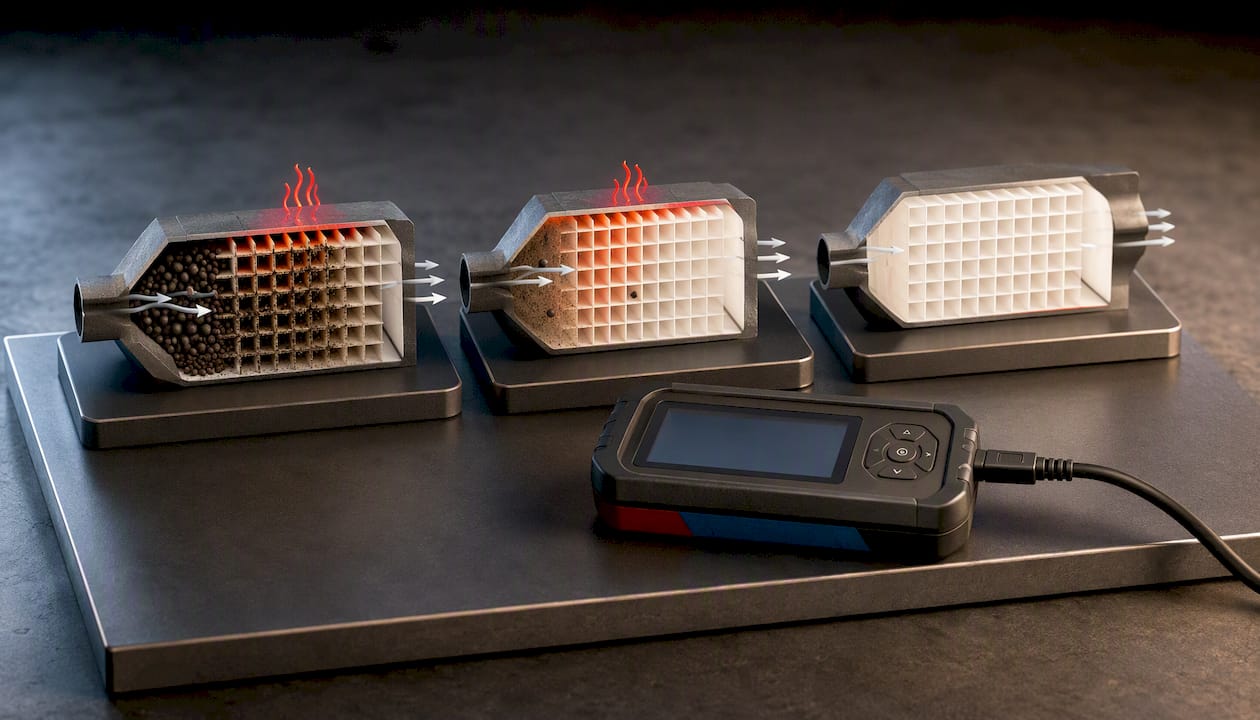
A workshop starts with a diagnostic scan rather than guesswork. That scan pulls soot load percentage, ash load, and the pressure differential across the filter, alongside any stored fault codes such as P2002 (DPF efficiency below threshold) or P244A (DPF differential pressure too low).
Soot load readings above roughly 80% commonly point toward the need for a forced regeneration carried out under supervision, rather than another attempted motorway drive
Ash load, unlike soot, doesn’t burn off. High ash usually means professional cleaning or replacement rather than another regen cycle
Technicians look for pressure differential normalising after a forced regen as proof the filter actually cleared, not just partially burned
A quick note on cost and time: diagnostics typically take under an hour, forced regeneration can add another hour if the filter responds well, and full replacement is a bigger job both in cost and downtime. The right outcome depends entirely on what the scan shows rather than how the car feels from the driver’s seat.
If the codes point to the EGR valve, an injector, or turbo wear rather than the filter itself, fixing that fault first is essential. A forced regen on a filter that’s still being fed excess soot from a failing EGR valve will only buy a few days before the light returns.
When to stop driving and call for recovery
Some signs mean the conversation moves from “try a drive” to “get it looked at now.”
A flashing DPF light combined with limp mode
Thick black or grey smoke that doesn’t clear, or a burning smell from the engine bay
Overheating signs, or any hint of turbo distress such as a whining or rattling noise
Several warning lights appearing together, or a sudden and severe loss of power rather than a gradual one
Continuing to drive through these signs risks turning a filter problem into an expensive turbo or engine repair. The cost difference between a diagnostic visit now and a rebuilt turbo later is not close.
How technicians read a blocked DPF, and where remapping fits in
Soot load isn’t guesswork on a proper scan tool. Technicians log the percentage in real time and watch how it responds during a forced regen, backed by a pressure-differential graph rather than a dashboard light alone.
A datalog showing pressure normalising after a regen tells a technician the filter genuinely cleared. A light going off on its own tells you very little, because some regens only partially finish before the drive ends.
That distinction matters when deciding between a forced regen, professional cleaning, or a DPF-focused service. Carbon cleaning can help where soot deposits are widespread through the intake and exhaust tract, not just in the filter itself.
Pro Tip: Ask any workshop for the before-and-after datalog on a forced regen. If they can’t show soot percentage or pressure figures, they’re likely going on the dashboard light alone.
What I’d actually do if this were my car
If your car does mostly short trips, get into the habit of one proper 25 minute run at motorway speed every week or two, before a warning light forces the issue. It costs nothing and prevents most of the blockages I’ve seen described in workshop diagnostics. Where the light keeps returning despite a clear drive, get a scan done. Chasing the symptom with repeated regens while an EGR fault quietly gets worse is the expensive way to learn this lesson.
— Mark
Getting a professional diagnosis and fix in Belfast
A dashboard light and a hopeful motorway run only get you so far. When the code points to genuine filter blockage rather than a passing fault, Performancetuningni’s EGR and DPF solutions start with a proper diagnostic scan rather than a guess, so you get a recommendation based on soot and pressure readings, not just a light on the dash.
[
Depending on what the scan shows, that might mean a supervised forced regeneration, or it might point toward carbon cleaning where deposits have spread beyond the filter itself. Every job includes the pre-diagnostic checks and original file backups that make the process transparent, with datalogs available so you can see what changed. Book a diagnostic slot and get a quote before any work starts, whether that’s a straightforward clean or a full DPF solution.
Sources
FAQ
How can I unblock my DPF?
A sustained drive at a moderately high engine speed for around 20 to 30 minutes on a motorway or dual carriageway often triggers regeneration and clears light to moderate blockage. If the warning light stays on after that drive, a garage will need to run a forced regeneration using diagnostic equipment.
Can you still drive with a blocked DPF?
You can drive with a steady warning light and no other symptoms, but a flashing light or limp mode means you should stop and arrange recovery rather than continue. Pushing on through severe symptoms risks turbo or engine damage that costs far more than a diagnostic visit.
How much does it cost to fix a blocked DPF?
Costs vary depending on whether the fix is a forced regeneration, a professional clean, or a full filter replacement, since each involves different parts and labour time. Performancetuningni provides a quote after diagnostics rather than before, since the right fix depends on soot and ash readings from the scan.
How long will a car run with a blocked DPF?
A car can run for weeks with a steady light and mildly reduced performance, but symptoms usually worsen progressively as soot load climbs. Once limp mode or a flashing light appears, continued driving risks turning a filter issue into a turbo or engine repair.
Recommended