
Before You Replace a DPF: 3 Causes and the Diagnostic Checks to Try
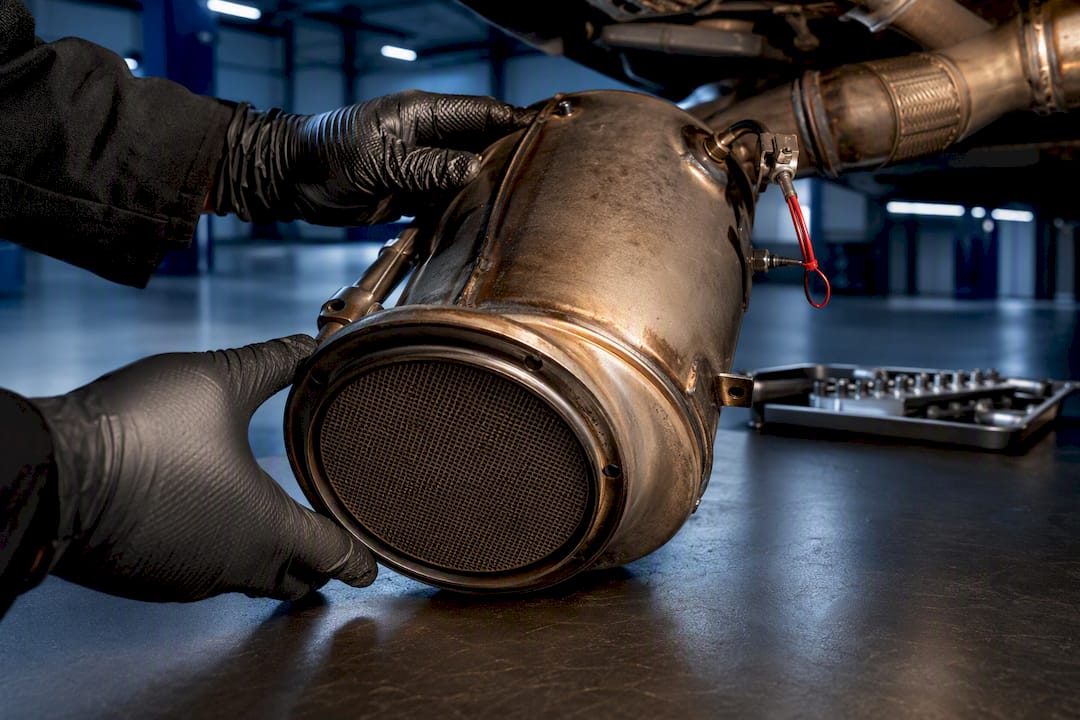
Most failed regenerations trace back to one of three things: a filter that’s genuinely too clogged, a sensor or ECU logic issue blocking the cycle, or driving habits too short to burn off soot. If your car still drives normally and the DPF light is steady, try a sustained motorway drive. If the light flashes or the car drops into limp mode, stop driving hard and book a diagnostic check instead of forcing repeat regens, which can permanently damage the filter.
TL;DR:
The primary causes of failed DPF regeneration include a clogged or ash-saturated filter, faulty sensors, engine faults, or inconsistent driving habits that prevent reaching needed exhaust temperatures.
Monitoring live data such as soot percentage and differential pressure helps determine if the filter is genuinely blocked or if sensor issues are falsely signaling a problem.
Attempting a sustained motorway drive can help initiate active regeneration if the system is healthy and the warning lights are steady, but interrupting the cycle risks damaging the filter.
Repeated forced regenerations or attempting drives with unresolved issues can accelerate ash sintering and cause permanent damage to the ceramic filter.
A proper diagnosis involves a combination of scan tool readings, backpressure tests, borescope inspections, and controlled regeneration attempts to identify and fix upstream faults.
Table of Contents
Why DPF regen fails: the common mechanical and electronic causes
A diesel particulate filter traps soot, then burns it off during regeneration once exhaust temperatures climb high enough. That’s the passive and active cycle working as designed. When it stops working, the cause usually falls into one of a few categories.
Soot is the fine black particulate that regen burns away. Ash is different: it’s the incombustible residue left behind from engine oil additives, and no regeneration cycle removes it. Once ash builds up enough to sinter (fuse into a hardened mass), the filter physically can’t clear itself no matter how long you drive.
The ECU also runs safety logic that will refuse or abort a regen if inputs look wrong, sometimes triggering limp mode as a protective measure rather than a sign of catastrophic failure.
Common culprits include:
Blocked or ash-saturated filter — too much material for burn-off to clear.
Faulty differential pressure or exhaust temperature sensors, or blocked sensor tubing, feeding the ECU bad data.
Upstream engine faults — a sticking EGR valve, worn injectors, or a turbo issue that pushes extra soot into the system.
Interrupted regen cycles, where the engine is switched off mid-burn before completion.
Short-trip driving, which never lets exhaust temperature reach the levels regeneration needs.
Faulty differential pressure sensors and blocked sensor tubes are among the most frequent causes of a regen that simply won’t start, which is why a scan tool session should always come before assuming the filter itself is the problem.
What signs and OBD-II codes should you record first?
Before calling a workshop, note whether the DPF warning light is steady or flashing. A steady amber light usually means the system wants a regen soon. A flashing light, often paired with limp mode (reduced power and a capped rev limit), means the ECU has flagged something serious enough to protect the engine.
Common fault codes worth writing down include P2463 (soot accumulation exceeds threshold), P246C (particulate matter too high), and P2459 (regeneration frequency fault), alongside related pressure and EGT sensor codes.
Watch for:
Black or grey smoke on acceleration
Rising engine oil level (diesel fuel leaking past rings during failed regen attempts)
Unusual burning smells or excessive fan running
A sudden jump in fuel consumption
A single code rarely tells the full story. Live-data readings, soot percentage, differential pressure, and inlet/outlet exhaust gas temperatures, give a technician a far clearer picture during a controlled attempt than a code alone ever can, since monitoring these values in real time shows whether the system is actually reaching the thresholds a regen needs.
How do you safely attempt a DPF regen at home?
If your car is driving normally, no flashing light, no limp mode, a sustained drive is worth trying before booking anything.
Check your fuel level first. Many ECUs won’t initiate or will abort an active regen if the tank drops below roughly a quarter full.
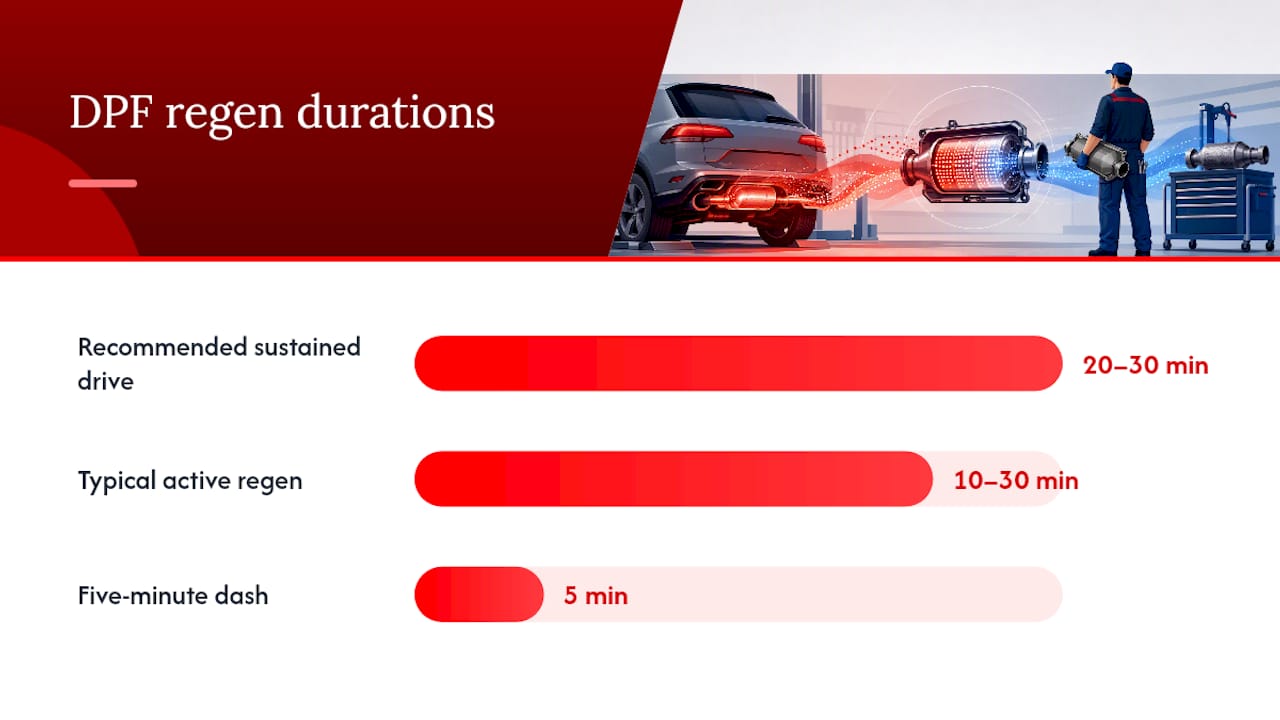
Get the engine to full operating temperature, then find a stretch of road where you can hold 55mph or higher (40 to 50mph works for busier dual carriageways) for 20 to 30 minutes without stopping.
Keep the revs up rather than short-shifting. A steady higher engine speed helps exhaust temperature climb and stay there.
Watch for signs regen has started, a change in engine note, the cooling fan running harder than usual, and a noticeable dip in fuel economy during the drive.
Don’t switch off mid-cycle. Interrupting an active regen partway through is one of the most common reasons a “quick fix” drive doesn’t work.
Bottled DPF cleaners poured into the fuel tank can help with mild soot loading, but they do nothing for ash build-up or a mechanically blocked filter, so treat them as a minor assist, not a fix.
Pro Tip: If you can access a scan tool, check the soot percentage before and after your drive. A meaningful drop confirms the regen worked; no change tells you the problem sits elsewhere, in sensors, EGR, or the filter itself.
Active regeneration typically needs 10 to 30 minutes of sustained driving to complete, so a five-minute dash to the shops won’t cut it even on a good day.
When should you stop trying and call a workshop?
Some situations call for stopping immediately rather than trying another drive.
The DPF light is flashing, not steady.
The car has dropped into limp mode or lost noticeable power.
The same fault code returns after a completed drive cycle.
You’ve already attempted two or three long drives with no improvement.
Repeated forced regen attempts don’t just fail quietly. They can accelerate ash sintering inside the filter and, in worse cases, crack or melt the ceramic substrate, turning a sensor fault into a filter replacement bill. Before booking in, photograph any warning lights or codes, jot down your recent driving pattern (mostly short trips? recent motorway run?), and note your last oil change, since the wrong oil grade accelerates ash build-up. That information cuts diagnostic time significantly.
What does a proper professional DPF diagnosis involve?
A competent workshop doesn’t start by whipping the filter off the car. It starts with a scan tool session: pulling stored and pending codes, reading current soot percentage, and watching differential pressure and exhaust gas temperatures during a controlled regen attempt.
If the electronic data suggests a real blockage rather than a sensor fault, the next step is a physical backpressure test alongside a borescope inspection to see the filter’s internal condition directly, the only reliable way to distinguish a genuinely blocked DPF from a plumbing or sensor issue. From there, technicians check sensor wiring and tubing, run a monitored forced regeneration where it’s safe to do so, or send the filter for off-car cleaning if soot and ash have gone beyond what an on-road burn can shift.
Diagnostic step | What it reveals |
Scan tool soot % and pressure reading | Whether the filter load is genuinely high |
Differential pressure sensor check | Whether readings match physical backpressure |
Backpressure test | Confirms a true mechanical blockage |
Borescope inspection | Shows cracking, melting, or ash saturation |
Monitored forced regen | Confirms EGTs and pressure reach burn thresholds |
Once the filter is cleaned or the fault fixed, a proper service ends with DPF adaptation resets and a monitored test drive, not just clearing a light and handing the keys back. Where an upstream fault such as poor fuelling or carbon build-up is contributing to soot production, carbon cleaning or EGR and DPF work addresses the root cause rather than the symptom.
What maintenance habits prevent future regen failures?
A DPF that keeps failing to regenerate is often telling you something about how the car is used, not just what’s wrong with it. A few habits make a real difference over time.
Do one longer run a week if most of your driving is short trips, one sustained 30-minute motorway drive prevents the majority of owner-level DPF problems for cars stuck in stop-start use.
Use low-SAPS (low ash) oil and stick to manufacturer service intervals, since the wrong oil grade adds ash faster than normal use would.
Fleet and high-mileage vehicles benefit from periodic live-data scans, catching a failing pressure sensor before it triggers a full regen failure.
Keep records, oil type, recent work, and mileage patterns, so any future diagnostic starts with useful context rather than guesswork.
Pro Tip: If you manage several vehicles doing similar short-trip work, a shared logging system such as OperatorCompliance makes it far easier to spot a pattern of DPF issues across a fleet before it becomes a pattern of expensive repairs.
A technician’s short perspective: treat the cause, not just the filter
A DPF that won’t regenerate is rarely the whole story. It’s usually the symptom of something upstream, a leaking injector, a sticking EGR valve, a sensor feeding bad data, and swapping the filter without fixing that cause just buys a few months before it clogs again. Diagnose first.
— Mark
How a specialist can help with a failed DPF regen
If you’ve tried the safe fixes and the light’s still on, or you’d rather skip the guesswork entirely, many specialist remapping services offer a diagnostic-first route instead of a guessed parts swap. Every check starts with diagnostic tools, live soot and pressure readings, backpressure testing where needed, and a monitored regen attempt, backed by file backups and datalogs so you can actually see what was found and fixed.
[
That approach applies across the EGR and DPF solutions Performancetuningni offers, alongside carbon cleaning for vehicles where upstream soot production is part of the problem. Once the underlying fault is resolved, some owners also look at Performance and Economy Remapping to get the engine running as it should. Use the remap calculator to check pricing for your registration, or get in touch to book a proper diagnostic session before the next forced regen does more damage than good.
Sources
FAQ
How many times can a DPF be regenerated?
There’s no fixed limit for normal regeneration cycles, a healthy DPF regenerates repeatedly over its working life without issue. Repeated forced regens attempted to fix an underlying fault are the real risk, since they can accelerate ash sintering and permanently damage the filter rather than resolve it.
How can I force a DPF regen?
A forced regen is typically triggered through a diagnostic tool while the car is stationary, and it’s best left to a technician if any fault codes or limp mode are present. Attempting a driving-based regen instead, a sustained 20 to 30 minute run at 55mph or higher, is the safer owner-level option when the car otherwise drives normally.
Can I drive while DPF regeneration is in progress?
Yes, normal active regeneration happens while you’re driving and shouldn’t affect how the car feels beyond slightly higher fuel use and fan noise. Switching the engine off partway through interrupts the cycle and is one of the more common reasons regen attempts don’t finish.
Why is my regen not working?
The most common reasons are a filter too heavily loaded with soot or ash, faulty pressure or temperature sensors feeding the ECU incorrect data, or driving patterns too short to reach regen temperature. A scan tool check of live soot percentage and differential pressure usually identifies which of these applies to your car.
Recommended