
What is a car remap: a practical guide for Northern Ireland drivers
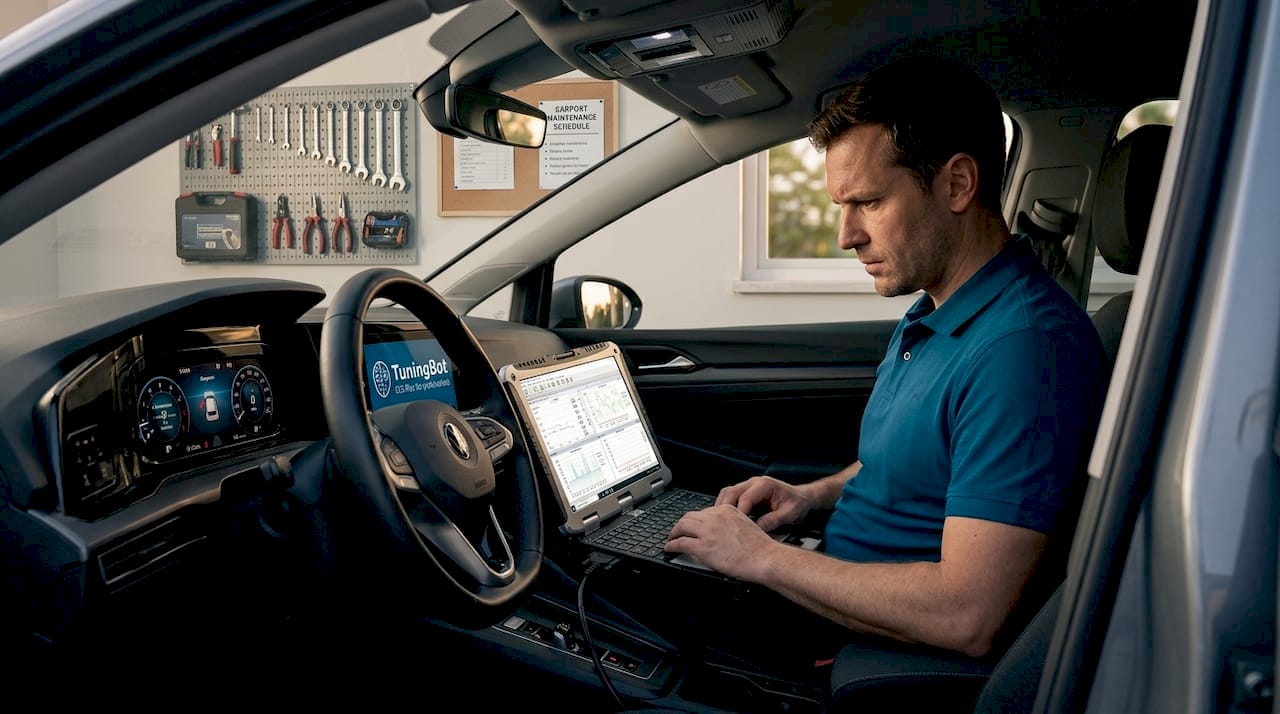
A car remap rewrites the software inside your engine’s electronic control unit (ECU) to change how the engine behaves. Fuel delivery, ignition timing, turbo boost pressure, and throttle response are all governed by that software, and the factory settings are rarely optimised for your specific car, your fuel, or your driving style.
The immediate upside: more power, sharper throttle response, and sometimes better fuel economy when the map is tuned for efficiency rather than outright performance.
Pro Tip: Insist that the tuner saves your original stock file before touching anything. If you ever want to return to factory settings, that file is the only way back. No stock backup means no safe exit route.
Table of Contents
What does engine remapping actually change?
Your ECU is the brain of the engine. It reads data from dozens of sensors and makes thousands of decisions per second: how much fuel to inject, when to fire the spark plugs, how much boost pressure to allow from the turbocharger, and where to cap torque output. Manufacturers programme conservative maps to cover a wide range of fuel qualities, climates, and reliability requirements across global markets. That conservatism leaves performance on the table.
Remapping, also called ECU tuning, means a technician reads the binary data stored in your ECU, modifies the relevant parameters, and writes the new file back. The result is a different set of instructions governing how the engine runs. Nothing physical changes inside the engine itself during a software-only remap.
Stage 1 vs higher stages
Stage 1 is a software-only modification, no hardware changes required. It is the most common type and the safest starting point. Stage 2 and beyond typically require supporting hardware upgrades such as an uprated intercooler, exhaust, or fuelling system before the software changes are safe. Generic maps are pre-written files applied to a broad range of vehicles; custom maps are written or refined specifically for your car, often verified on a rolling road. Custom maps cost more and take longer, but they are safer and better calibrated.
The software change is technically reversible by restoring the stock file. However, the warranty and insurance consequences of having had a remap may not disappear just because you restore the original map.
How a remap is performed: what to expect
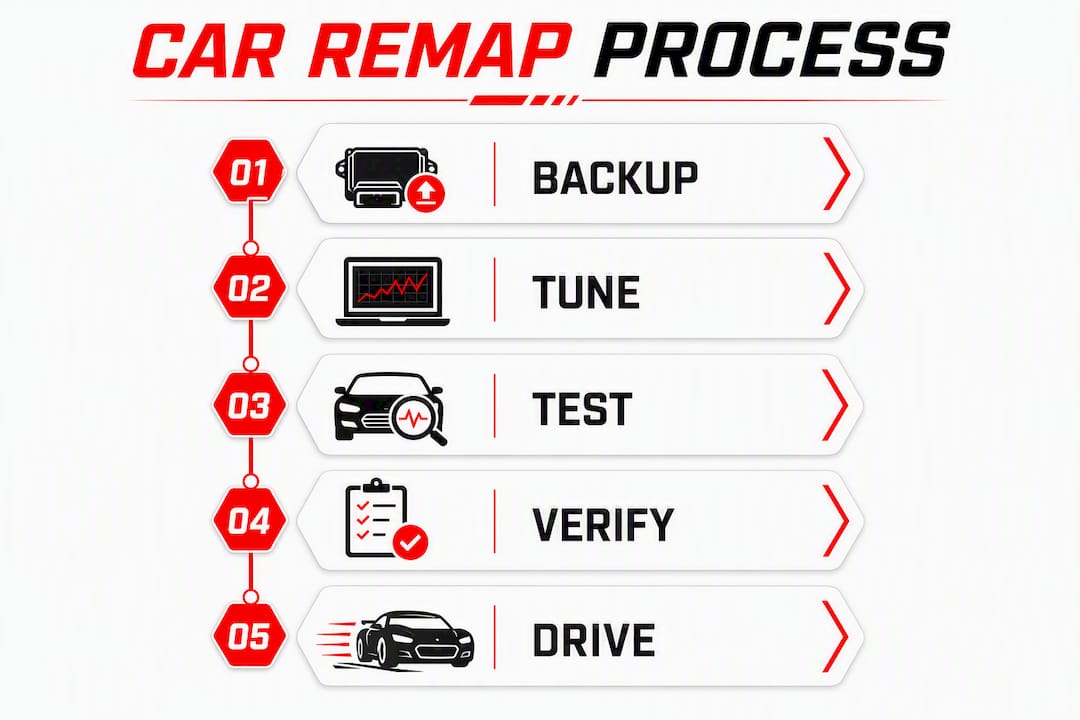
A professional remap follows a clear sequence. Knowing it helps you spot a tuner who is cutting corners.
Diagnostic health check. The tuner connects a diagnostic tool and reads any stored fault codes. A professional workflow always begins here — applying a new map to an engine with underlying faults is unsafe and can cause damage.
Save the stock file. Before any modification, the original ECU file is read and saved. The RAC confirms this is standard practice so the vehicle can be returned to factory settings if needed.
Apply the modified file. The new map is written to the ECU via the OBD-II port (the most common method), or by removing and bench-reading the ECU directly for vehicles where OBD access is restricted.
Final checks and handover. Any anomalies are corrected, a final log is saved, and the customer receives confirmation of what was changed and what the car should now produce.
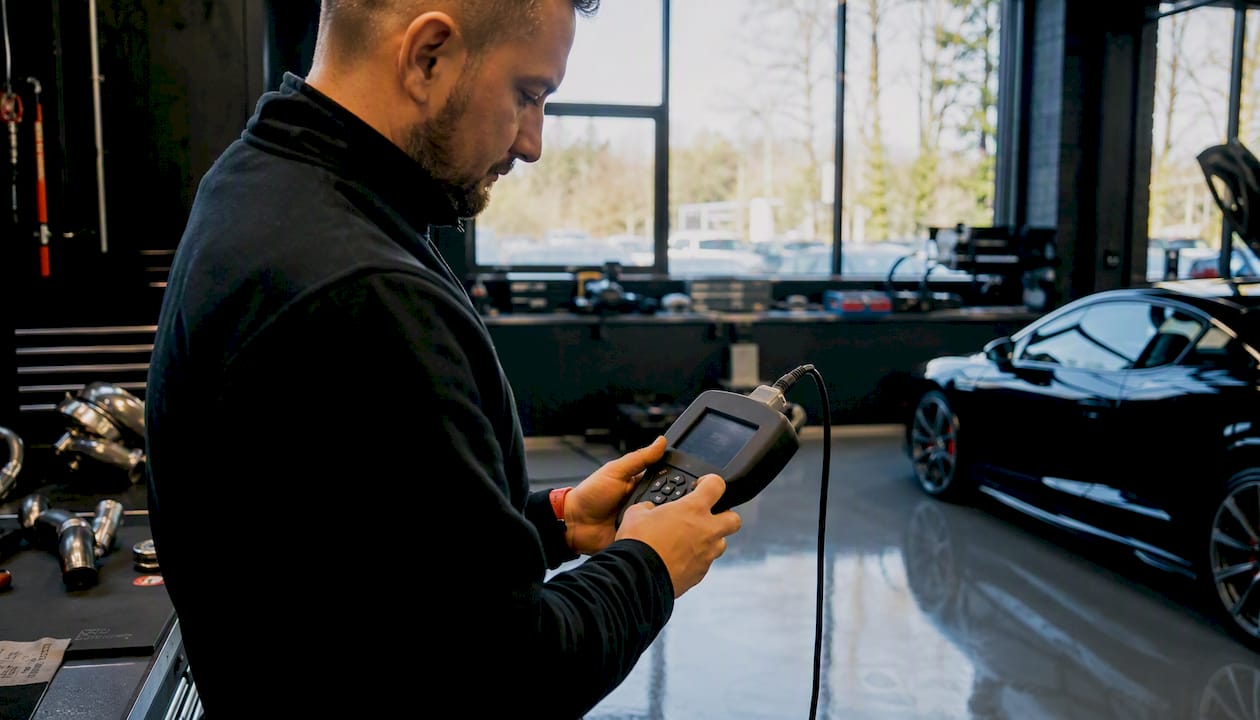
ECU mapping tools read and write binary files via the OBD-II port or by bench-reading the ECU; live mapping on a rolling road allows bespoke tuning verified with real data. The dyno method is the gold standard because it confirms actual power output, not just a theoretical figure.
Turbocharged engines deliver the largest percentage gains because boost pressure is a high-leverage parameter the ECU controls directly. Adjusting the boost map, fuel map, and ignition timing together is where the meaningful gains come from.
Remapping methods at a glance
Method | How it works | Best suited to |
OBD-II flashing | Reads/writes ECU via the diagnostic port | Most modern cars; quickest method |
Bench read/write | ECU removed and programmed directly | Vehicles with locked or protected ECUs |
Live rolling-road tuning | Map refined in real time on a dyno | Custom maps; highest accuracy |
Piggyback module | Intercepts ECU signals without rewriting | Limited gains; not a true remap |
What a remap can realistically deliver for you
The gains depend heavily on what your engine started with and what goal you set for the map.
More power and torque. Stage 1 remaps on turbocharged engines are commonly reported to add in the order of more power and torque, though results vary by vehicle and how aggressively the map is written.
Sharper throttle response. The delay between pressing the accelerator and the engine reacting is often reduced noticeably, which makes the car feel more alert in everyday driving.
Smoother power delivery. A well-written map removes flat spots and makes the torque curve more linear, which is particularly useful for towing or motorway driving.
Potential fuel economy gains. An economy-focused map can improve miles per gallon, particularly for diesel drivers who do long motorway runs. The gains are real but modest; do not expect dramatic savings.
Tailored to your use case. A fleet manager wanting economy, a driver who tows a caravan, and an enthusiast chasing performance will all benefit from different map priorities.
Manufacturers detune engines to create reliability margins and product differentiation, which is why the headroom for gains exists in the first place. The more power you chase, the more trade-offs you accept. Extra power puts additional stress on tyres, clutch, gearbox, and fuel system. Naturally aspirated engines, those without a turbo or supercharger, have far less headroom for software gains because there is no boost pressure to adjust. If your car is naturally aspirated, temper your expectations significantly.
For more detail on how remapping affects both power output and running costs, the Performancetuningni blog on power and fuel economy is worth reading before you book.
Risks, MOT implications and UK legal position
This is where many drivers get caught out, so read it carefully.

Software-only remaps and the law
A software-only remap is not inherently illegal in the UK provided the vehicle still meets legal emissions standards. The remap itself does not appear on an MOT test directly. What does appear is whether your emissions output falls within legal limits. A well-written Stage 1 map on a healthy engine should pass an MOT without issue.
The situation changes entirely when emissions hardware is removed or disabled. Deleting a diesel particulate filter (DPF), disabling an EGR valve, or removing AdBlue systems will cause MOT failure and makes the vehicle illegal for road use on public roads. See the EGR and DPF delete service page for a clear explanation of what these modifications involve and the legal context in Northern Ireland.
Non-negotiable checks before you proceed
Insurance disclosure. You must tell your insurer about any modification, including a software remap. Failing to do so can invalidate your cover entirely.
Finance agreements. If your car is on a PCP or HP agreement, check the terms. Many finance agreements prohibit modifications without the lender’s consent.
Manufacturer warranty. Most manufacturers will void the powertrain warranty if they detect a remap. Some aftermarket tuners offer their own warranty on the remap work itself, which is not the same thing.
MOT and emissions. A software-only remap on a well-maintained engine should not cause an MOT failure, but emissions hardware deletions will.
Understanding why car insurance inspection and disclosure matter is worth doing before you book, not after. Insurers treat declared software modifications differently from undeclared ones; declaring typically results in a premium increase, but it keeps your cover valid.
Typical Stage 1 gains on turbocharged engines: 20–35% more power, 25–40% more torque. These are the ranges commonly quoted by professional tuners, not guaranteed figures for every vehicle.
How much does a remap cost in the UK and how long does it take?
Prices vary by engine type, tuner, and method. As a general guide for the UK market:
A Stage 1 OBD remap on a common turbocharged diesel or petrol typically costs between £200 and £400 at a reputable workshop. Custom dyno-verified maps, where the tuner refines the file on a rolling road specific to your car, usually start from £400 and can reach £700 or more depending on complexity and the number of dyno runs required.
Mobile remapping, where the tuner comes to you, often sits at a similar price to workshop OBD work but removes the need to travel. It is a practical option for straightforward Stage 1 jobs.
Time expectations
An OBD flash on a standard vehicle takes 1–2 hours including the diagnostic check and a short road test. A dyno session adds time: allow a half-day or a full day for a custom map with multiple rolling-road passes. If the pre-remap health check uncovers a fault, the job will need to be postponed until the mechanical issue is resolved.
What the price should include
A fair quote covers the diagnostic check, the stock-file backup, the remap itself, and a post-map road test or dyno run. Follow-up tweaks within a reasonable period should also be included. If a tuner quotes a price that excludes the diagnostic check or cannot confirm the stock file is saved, that is a red flag, not a bargain.
Use the free remap calculator at Performancetuningni to get an estimate for your specific vehicle before committing to any appointment.
Which cars and drivers benefit most from a remap?
Strong candidates
Turbocharged petrol or diesel engines, particularly common-rail diesels and direct-injection petrols.
Well-maintained vehicles with a full service history and no outstanding fault codes.
Drivers who tow regularly and want more mid-range torque without flooring the accelerator.
Fleet drivers or high-mileage motorway users seeking genuine fuel economy improvements from a diesel economy map.
Enthusiasts who want a more responsive, engaging drive without hardware modifications.
Poor candidates
Naturally aspirated engines. The gains from software alone are modest at best.
Vehicles with existing mechanical issues: worn turbos, failing injectors, coolant leaks, or high-mileage engines with unknown service history.
Cars under a finance agreement that prohibits modifications.
Vehicles where the owner is unwilling or unable to notify their insurer.
Quick self-check before booking
Ask yourself: Is the car fully serviced? Are there any warning lights on the dashboard? Do I know the turbo and injector condition? Can I notify my insurer without the premium becoming unacceptable? If you can answer yes to all four, your car is likely a good candidate for a pre-remap inspection.
How to choose a reputable remapping service in the UK
The difference between a good remap and a damaging one often comes down to who does it, not what software they use.
Questions to ask any tuner
Do you run a diagnostic health check before starting?
Do you save the original stock file, and can I have a copy?
What warranty do you offer on the remap work itself?
What is your policy if I want the car returned to stock?
Trust signals vs what they actually prove
Trust signal | What it proves |
Dyno before-and-after figures | The gains are real and measured, not estimated |
Road data-logging (boost, EGT, fuel trims) | Safety margins were verified, not assumed |
Written remap warranty | The tuner stands behind the work |
Transparent, itemised pricing | No hidden charges; stock backup is included |
Documented customer reviews | Consistent real-world results across different vehicles |
Willingness to restore stock map | The tuner has the file and the competence to reverse the work |
Red flags to walk away from
Generic files sold cheaply online with no vehicle-specific verification.
Refusal to run a pre-remap diagnostic check.
No ability to restore the stock map or no record of the original file.
Vague claims about power gains with no data to back them up.
Cheap generic maps can lack safety margins and may push engines beyond safe thermal or mechanical limits.
A rolling-road verification is the most reliable confirmation of both gains and safety. Reputable tuners offer dyno before-and-after figures or, at minimum, recorded road-logging showing temperatures, boost, and fuel trims. If a tuner cannot provide either, keep looking.
What to do before you book a remap
Getting the car ready is not optional. Remapping should never replace mechanical maintenance; a healthy engine is a prerequisite for a safe map.
Complete a full service. Fresh engine oil, a clean air filter, and a functioning cooling system are the baseline. Old oil under increased boost pressure is a problem waiting to happen.
Check tyres and brakes. More torque means more demand on tyres and brakes. If either is worn, sort them first.
Scan for fault codes. Use an OBD reader or ask a garage to check. Any stored codes need to be investigated and cleared before remapping.
Verify turbo health. Listen for unusual noises, check for oil in the intake, and confirm there is no excessive shaft play. A worn turbo will not survive an aggressive boost map.
Check recent major repairs. If the car has had a head gasket, injector, or fuel pump replacement recently, confirm the repair is fully bedded in before adding more stress.
Gather your service history. Bring it to the appointment. A good tuner will want to see it.
Note any hardware changes. Aftermarket exhausts, intercoolers, or air intakes affect how a map should be written. Tell the tuner upfront.
Pro Tip: If your engine has high mileage or shows signs of carbon build-up (rough idle, loss of power, excessive smoke), consider engine carbon cleaning before the remap. Deposits on intake valves and injectors affect how the engine responds to a new map, and cleaning first gives the tuner a cleaner baseline to work from.
What a professional remapping service looks like in practice
A reputable tuner’s process is transparent from the first call to the final handover. Here is what that looks like, using Performancetuningni as an example of how a professional Northern Ireland remapping service operates.
Service flow
Pre-booking: vehicle details are taken and a health check is recommended or required before any mapping work begins.
On arrival: a full diagnostic scan is run, fault codes are reviewed, and the stock ECU file is saved and backed up.
Mapping: a bespoke map is written or selected for the specific vehicle, engine variant, and customer goal (performance, economy, or towing).
Handover: the customer receives confirmation of what was changed, the before-and-after figures, and details of the remap warranty and restore policy.
What customers should insist on
Written confirmation that the stock file has been saved.
A clear statement of what the remap warranty covers and for how long.
A documented restore policy: if you want the car returned to factory settings, the tuner should be able to do it.
Performancetuningni has tuned thousands of vehicles and holds a five-star Google rating. The service covers both petrol and diesel engines, with onsite workshop appointments and mobile remapping available. For drivers who want to understand the full range of services, the engine remapping and ECU tuning page covers the complete offering.
Key takeaways
A car remap rewrites your ECU software to change how your engine behaves, and the decision to proceed should rest on engine health, insurer disclosure, and choosing a tuner who provides verified before-and-after data.
Point | Details |
Definition | A remap rewrites ECU software governing fuel, boost, ignition, and throttle behaviour. |
Realistic gains | Stage 1 turbocharged remaps typically add more power and torque. |
Non-negotiable actions | Check engine health, notify your insurer, and insist on a stock-file backup before any work starts. |
Legal position | Software-only remaps are not illegal in the UK; DPF, EGR, or AdBlue deletions cause MOT failure. |
Performancetuningni | Offers custom petrol and diesel remapping in Northern Ireland, with diagnostic checks, stock-file backup, and verified before-and-after data as standard. |
The part most drivers overlook
Most of the conversation around remapping focuses on the headline power figure. That is understandable, but it is also where drivers make the most expensive mistakes.
The real question is not “how much power can I add?” It is “is my engine in good enough condition to handle it, and have I covered the legal and insurance ground properly?” A remap applied to a tired engine with a worn turbo or failing injectors does not produce a faster car. It produces a faster route to an expensive repair bill.
The other thing that gets underestimated is the quality gap between a generic file and a custom map. An off-the-shelf file written for a broad range of vehicles of your model will not account for your specific mileage, your fuel, your hardware condition, or your driving goals.
Choosing a tuner based on price alone is the single biggest mistake drivers make in this process. The cheapest remap is rarely the safest one, and the consequences of a poorly written map are not always immediate. They show up months later, when a turbo fails or an engine runs lean under hard acceleration. By then, the connection to the remap is easy to miss and harder to prove.
Performance Tuning NI: custom remapping for petrol and diesel engines in Northern Ireland
If you have read this far and your car is a turbocharged petrol or diesel in good mechanical health, a professional remap is a straightforward upgrade with measurable results. Performancetuningni delivers exactly that, without the guesswork of generic files or the risk of an unverified map.
[
Every booking includes a diagnostic health check, a stock-file backup, a bespoke map written for your specific vehicle, and verified before-and-after data. Mobile remapping is available if you cannot get to the workshop. Carbon cleaning can be bundled if the pre-remap check shows deposit-related issues. Warranty and insurance implications are addressed honestly at the point of booking, not glossed over.
To see what your vehicle could gain, use the free remap calculator to get an estimate by registration number. When you are ready to book, the engine remapping service page covers everything you need to know about the appointment and what to expect on the day.
Useful sources and further reading
For drivers who want to go deeper on the legal, technical, and insurance side of remapping, these are the most authoritative references:
What is car remapping? — Uswitch car insurance guide: clear guidance on insurance disclosure obligations.
What is remapping a car? — RAC: the RAC’s overview of the process, stock-file backup, and warranty implications.
Engine remapping — Admiral: Admiral’s consumer-facing explanation of ECU tuning and what it means for your cover.
Engine remapping — Carwow: covers the UK legal position on software-only remaps versus emissions hardware deletions.
ECU remapping guide — Fast Car: technical detail on why turbocharged engines respond best and how manufacturers create tuning headroom.
Car engine remapping guide — Blackcircles: practical overview of the professional workflow, generic versus custom maps, and the risks of cheap online files.
Performancetuningni remapping questions answered: common questions about the remapping process, what to expect, and how the service works.
Recommended