
MAF vs MAP for Tuning

MAF measures actual air mass entering the engine, while MAP measures manifold pressure and lets the ECU calculate air mass from it. For most road cars, MAF is the practical choice, and MAP or speed density is favoured for high boost builds where airflow restriction matters more than everyday drivability. Read on for how they work, the tuning implications and what to check before you touch either sensor.
TL;DR:
MAF sensors measure air mass directly inside the intake pipe, supporting precise fueling but can restrict airflow and become contaminated, especially on high boost builds.
MAP sensors estimate airflow using pressure and temperature outside the intake path, offering minimal restriction and better performance in high boost or cammed engines but require a detailed VE table for accurate tuning.
Converting from MAF to speed density involves ECU remapping, including refining the volumetric efficiency table and adjusting boost and fuel trims, based on comprehensive datalog analysis.
For daily drivers, maintaining or cleaning the MAF is usually sufficient unless logs indicate restriction or damage, whereas high boost or cammed engines benefit from a switch to MAP in terms of reliability and airflow headroom.
Proper sensor identification and diagnostics can be done by visual inspection and checking live data, with faulty sensors showing symptoms like rough idle or erratic boost, and cleaning methods vary for MAF and MAP sensors.
Table of Contents
How a MAF sensor works and how a MAP sensor works
A mass air flow sensor sits in the intake tract between the air filter and the throttle body, measuring air as it physically passes through. Most modern MAF units use a hot wire or hot film design, sensing the temperature drop across a heated element as air flows over it. That temperature change converts directly into a gram per second reading, which is why tuners describe MAF as a direct measurement rather than an estimate. Bosch’s hot film designs also add digital filtering and sometimes humidity compensation, which sharpens accuracy but does not remove the fact that the sensor still sits inside the airflow path.

A manifold absolute pressure sensor works differently. It uses a pressure sensitive membrane that flexes with intake manifold vacuum or boost, paired with a temperature reading, so the ECU calculates air mass from pressure and temperature rather than measuring flow directly. This approach is called speed density, and it means the MAP sensor itself sits outside the main airflow path, usually on the intake manifold or firewall rather than in the intake pipe.
Both approaches are common on the road:
Many factory petrol and diesel engines from the last two decades rely on MAF as the primary load sensor.
Older systems and many aftermarket standalone ECUs favour MAP and speed density instead.
Some turbocharged production cars run both, using MAP as backup or for boost control while MAF handles fuelling.
Pros and cons: accuracy, restriction and driveability
Each sensor brings genuine trade-offs, and the right one depends on what the engine needs to do.
MAF measures air mass directly, which supports precise fuelling, strong fuel economy and straightforward emissions compliance on unmodified engines.
MAF sits inside the intake path, so it becomes a physical restriction once airflow demands rise, and a stock unit can run out of scale on a heavily boosted engine.
MAF is sensitive to contamination from oil, dust or aftermarket filter oils, and to reversion pulses from cammed engines, both of which throw off the reading and cause rich or lean running.
MAP sensors are small, cause negligible restriction, and cope well with high boost and the pressure pulses that confuse a MAF on aggressive builds.
MAP relies entirely on an accurate volumetric efficiency table, so a speed density conversion demands far more upfront tuning work than simply swapping a MAF.
A large turbo swap is the classic case where a factory MAF maxes out and starts under-reporting airflow, leaving the ECU guessing at exactly the point where accuracy matters most. Reversion pulses on a cammed engine can do something similar at idle, confusing a MAF long before boost even arrives, a pattern well documented by HP Academy’s comparison of the two sensor types.
Pro Tip: If your build stays under moderate boost, a clean, correctly scaled MAF will usually out-tune a rushed speed density conversion.
Tuning and performance implications: remapping and speed density
Converting from MAF to speed density is a genuine ECU change, not a sensor swap. Tuners build or refine a volumetric efficiency table that maps engine speed and load to expected airflow, then validate it against real boost and fuelling behaviour rather than a single flow reading. HP Academy’s tuner guidance is clear that this route earns its keep once intake restriction or MAF scaling limits are confirmed on the datalog, not before.
A remap or aftermarket ECU touches several linked areas at once:
The VE table, which governs how the ECU interprets load under speed density.
Boost control targets, adjusted to match the turbo’s real capability rather than a factory default.
Short term and long term fuel trims, checked to confirm the new tune is not quietly compensating for an error elsewhere.
Before any of that starts, a proper tuner will want logs covering MAF grams or volts, MAP pressure, intake air temperature, fuel trims and boost targets, a checklist echoed in Walker Products’ technical literature on combined MAF/MAP systems. Tuner judgement on reading those logs matters more than which sensor happens to be fitted.
How to check your sensors and spot a fault
Working out what you have and whether it is healthy takes a few straightforward steps.
Open the engine bay and follow the intake pipe from the air filter: a MAF sensor is the cylindrical unit with an electrical connector sitting in that tube, while a MAP sensor is usually a small plastic block on the intake manifold or connected to it by a short vacuum hose.
Plug in an OBD reader and check live data for airflow in grams per second (MAF) or absolute pressure in kPa (MAP) to confirm which one your ECU is actually using for load.
Watch for MAF-specific symptoms: rough idle, hesitation, poor economy or a rich smell often trace back to a contaminated sensor, as documented in technical forums.
Watch for MAP-specific symptoms: erratic boost, flat power delivery or stored codes tied to implausible pressure readings point towards a failing membrane or a vacuum leak rather than contamination.
Clean a MAF only with a dedicated MAF cleaner, never brake cleaner or solvents that leave residue, and let it air dry fully; if cleaning does not resolve the fault, get professional diagnostics rather than guessing at a replacement.
Practitioner perspective: what tuners actually do
Tuning outcomes come down to workflow, not brand loyalty to one sensor. Some remaps typically report sharper throttle response, smoother power delivery and stronger torque on tuned vans, changes that come from careful table work rather than sensor swaps alone.
Before any remap, the checks that matter are:
Confirming no fault codes are hiding a mechanical issue that a tune would mask.
Backing up the original ECU file in case a rollback is ever needed.
Reviewing intake and sensor condition, since a dirty MAF can undermine an otherwise good tune.
Logging baseline fuel trims and boost behaviour before any changes.
Setting a plan for post-remap datalogs to confirm the result.
Datalogs and dyno charts before and after a remap give a factual basis for deciding whether the existing sensor setup is adequate or whether a speed density conversion is genuinely justified, rather than a guess dressed up as an upgrade.
Which approach suits your build
Daily drivers should keep their MAF unless a log shows real restriction or damage, cleaning it and reviewing fuel trims first. Track cars and cammed engines that suffer reversion pulses are worth discussing with a tuner about a speed density conversion. High boost projects usually gain more headroom and reliability from MAP than from a stretched MAF. Diesel vans and fleet vehicles should have their DPF and EGR interactions checked before any sensor strategy changes, since emissions hardware carries legal weight that a sensor swap alone will not fix.
— Mark
How Performance Tuning NI can help with remaps and diagnostics
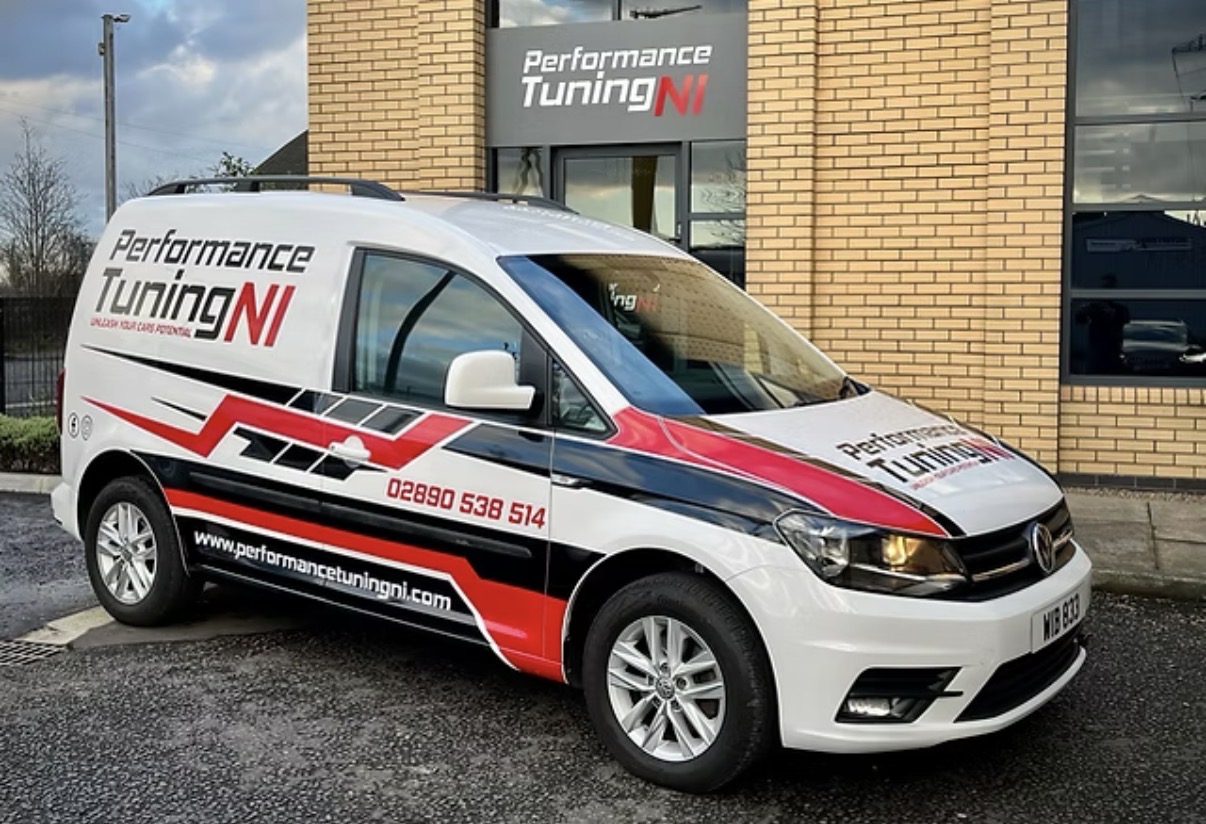
Whether your car runs MAF, MAP or both, the sensor is only half the story: the tune built around it decides how the power actually feels. Performance Tuning NI builds every remap around the vehicle in front of us, with pre-diagnostic checks, an original file backup and datalogs or dyno charts so you can see the result rather than take our word for it. That applies to standard Engine Remap work as well as combo jobs alongside AdBlue Delete, EGR Solutions, DPF Solutions or Carbon Cleaning where intake contamination is part of the problem.
For a booking, bring your registration details and a note of any warning lights or symptoms you have noticed:
Engine Remap is £229 one-off, bookable through the remap calculator.
AdBlue Delete is £299 one-off, also through the remap calculator.
Performance Remapping, Economy Remapping and Speed Limiter Removal are available with pricing on request via the remapping services page.
For diesel-specific questions around EGR and DPF interactions, our EGR delete DPF delete page covers what we check first. If a mobile appointment suits you better, get in touch through Performancetuningni to arrange a time.
Sources
Claims above draw on HP Academy’s MAF vs MAP guide, Bosch’s hot film sensor page, Bosch’s manifold pressure sensor page and GOV.UK’s DPF guidance. For independent diagnostic checks, Alternative Car Care is a useful garage resource.
FAQ
Which is better, MAP or MAF sensor?
Neither sensor is universally better: MAF suits daily driving and fuel economy because it measures air mass directly, while MAP and speed density suit high boost builds where a MAF would restrict airflow or run out of scale. The right choice depends on the engine’s power target and how the ECU is set up, not on one sensor being inherently superior.
Are MAP and MAF cleaners the same?
No, they clean different components and are not interchangeable. MAF cleaner is formulated specifically for the delicate hot wire or hot film element and evaporates without residue, while MAP sensors rarely need cleaning since they sit outside the direct airflow path and measure pressure rather than flow.
Do I have a MAP sensor or MAF sensor?
Check the intake pipe between the air filter and throttle body for a cylindrical sensor with a connector: that is a MAF. A MAP sensor is usually a smaller unit mounted on or near the intake manifold, connected by a short hose, and you can confirm which one your ECU actually uses by checking live OBD data for airflow grams or manifold pressure in kPa.
Do you need both MAF and MAP sensors?
Not always: many engines run on one or the other, though some turbocharged production cars fit both, using MAP for boost control or as a backup if the MAF signal fails. Aftermarket standalone ECUs often use MAP alone under speed density, while many factory petrol and diesel engines rely on MAF as their primary load sensor.
Recommended