
Save 5–15% on Fuel with an ECU Remap for UK Drivers

A remap can lower your fuel bills, but only under the right conditions: an economy-focused map on a turbocharged diesel or petrol engine typically brings gains of 5 to 15% on fuel, according to Performance Tuning NI’s own customer data. A performance map chases power instead of economy and can raise consumption. Your driving style decides which outcome you actually get.
TL;DR:
An economy remap typically reduces fuel consumption by 5 to 15 percent, especially on turbocharged diesel or petrol engines driven with restraint.
Adjustments to fuel maps, ignition timing, torque targets, and turbo boost are key factors in improving efficiency and lowering fuel use.
Results vary based on engine type, baseline efficiency, driving style, and route, with steady motorway driving yielding the best savings.
Proper preparation such as engine diagnostics, backup, and using quality, vehicle-specific maps can maximize savings and reduce risks.
Changes in engine behavior for better economy are often reversible if proper precautions and documentation are maintained before remapping.
Table of Contents
How an ECU remap actually changes engine behaviour
The engine control unit runs on a set of maps: tables that tell the engine how much fuel to inject, when to fire the spark, how much boost the turbo should build and how the throttle responds to your foot. Remapping rewrites those tables. Nothing physical changes inside the engine. The instructions the computer sends to the injectors, ignition coils and turbo actuator change instead.
For fuel economy specifically, the meaningful adjustments are:
Fuel maps: fine-tuned to deliver a leaner, more efficient mixture across everyday driving loads rather than only at full throttle.
Ignition timing: shifted to burn fuel more completely at lower revs, which is where most daily driving happens.
Torque targets: raised at low to mid revs so the engine produces the same pulling power without needing as many revs or as much throttle.
Turbo boost and throttle mapping: adjusted so the turbo builds pressure earlier, reducing the need to floor the accelerator to get moving.
The torque shift is the part that actually saves fuel. When an economy remap moves peak torque down the rev range, you can pull away in a higher gear, cruise at lower revs on the motorway and use less throttle to keep pace with traffic. Less throttle and fewer revs mean less fuel burned per mile, which is the entire mechanism behind the savings. An independent dynamometer and ANN modelling study found that ignition timing adjustments measurably reduced fuel consumption within specific speed bands under controlled test conditions, which lines up with what tuners see in road use.
How much of this you feel depends on engine architecture. Turbocharged diesels respond well because diesel engines already run lean and have more room in the fuel map to improve combustion efficiency. Turbocharged petrols respond similarly, since boost and ignition timing can be recalibrated to extract more work from each litre of fuel. Naturally aspirated petrol engines have far less to work with: there is no turbo map to adjust, and the factory tuning is usually already close to the engine’s efficient limit. For more detail on what a tuner actually adjusts stage by stage, see this explainer on remap stages.
Realistic savings: expected MPG and fuel-cost reductions
The honest range, based on Performance Tuning NI’s own customer results, is 5 to 15% lower fuel consumption after a dedicated economy remap, with the top end reserved for diesel and turbocharged petrol engines driven with restraint.
A remap’s fuel saving depends more on how you drive afterwards than on the percentage figure quoted before the work is done.
To put the range into pounds, take a driver covering 12,000 miles a year in a diesel averaging 45 MPG before the remap. A 10% improvement, roughly the midpoint of the typical range, brings that to around 49.5 MPG.

The gap between these outcomes comes down to baseline efficiency and load. A car that was already running well has less slack for a map to recover. A vehicle doing motorway miles at a steady speed will show the gain far more clearly than one doing short urban hops where the engine barely reaches operating temperature.
Who benefits most (vehicle and driver types)
Not every car or driver sees the same return, and knowing where you sit on that spectrum matters more than the headline percentage.
Turbocharged diesels are the strongest candidates: their fuel maps have the most room for a tuner to improve combustion efficiency without compromising drivability.
Turbocharged petrol engines follow closely, since boost and ignition adjustments can recover efficiency the factory map leaves on the table for the sake of broad compatibility.
Naturally aspirated petrol engines rarely show a meaningful fuel saving, because there is no turbo to recalibrate and the factory tune is usually already tight.
High-mileage drivers and fleet vehicles see the fastest return simply because a percentage saving compounds faster over more miles driven.
Occasional or short-trip drivers will notice smaller real-world gains, since cold starts and stop-start traffic dilute any efficiency improvement.
If your daily drive is mostly motorway or long A-roads in a turbocharged diesel or petrol, you are close to the ideal case. If you drive an older naturally aspirated petrol on short urban journeys, a remap is unlikely to move your fuel bill much, and the money may be better spent elsewhere.
Factors that determine the outcome for your fuel bills
A remap sets the ceiling for what is possible. Everything else decides whether you actually reach it.
Driving style and route mix: motorway cruising at steady revs realises far more of the saving than stop-start urban traffic ever will.
Vehicle health: a clogged DPF, faulty EGR valve, worn injectors or underinflated tyres can quietly cancel out any gain a remap delivers.
Map quality: a bespoke calibration built for your specific vehicle and driving pattern outperforms a generic off-the-shelf file, and it is far less likely to introduce rough running or fault codes.
Fuel grade: some remaps, particularly performance-oriented ones, call for higher-octane fuel, which raises the cost per litre and can offset part of the saving.
Payload and towing: extra weight or a loaded trailer increases engine load regardless of how well the map is tuned, eating into any economy gain.
Pro Tip: Ask your tuner for a pre-remap diagnostic check and a datalog. A file built on a healthy engine, with a clear before-and-after record, is far more likely to deliver the saving you were promised.
Risks, insurance and legal considerations
A remap changes how your engine behaves, and that carries obligations beyond the fuel gauge.
Insurance: most insurers treat a remap as a modification you must disclose, and failing to do so risks your policy being invalidated if you need to claim.
DVLA and V5C: Gov says you must notify DVLA of changes that affect the details on your V5C registration certificate, and advises checking whether a modification affects your MOT status.
MOT: Gov confirms your vehicle must have a valid MOT and insurance in place at all times, regardless of any tuning work carried out.
Warranty: a manufacturer warranty can be affected by a remap, so it is worth checking terms before booking any tuning work on a vehicle still under cover.
Software-only changes: DVLA guidance does not explicitly list a software-only ECU remap as something that always triggers V5C notification, which is why reputable tuners keep the original file on record and provide datalogs proving the change is measurable and reversible.
An Admiral guide to engine remapping makes the same point from the insurer’s side: economy remaps aim to improve MPG through torque delivery changes, but performance remaps can increase fuel use, and either type should be declared to your insurer before you drive on the new map.
How to keep the fuel savings after a remap
A remap only pays off if your habits and maintenance support it afterwards.
Drive to the new torque curve: change up earlier, keep revs low and let the extra low-down torque do the work instead of using more throttle.
Anticipate traffic: reading the road ahead and coasting to a stop rather than braking late uses less fuel regardless of what map you’re running.
Hold steady motorway speeds: constant cruising at a set speed lets the economy map perform closest to how it was calibrated.
Keep tyres, oil and air filters in check: underinflated tyres and a clogged air filter both increase load on the engine and quietly erode any saving.
Watch the DPF and EGR: a blocked DPF or faulty EGR valve forces the engine to work harder and can undo a remap’s benefit entirely.
Log your fuel use: track MPG for a few weeks before and after the remap using fuel receipts or a simple trip log to see the real figure for your own car.
Evidence and first-hand experience: what a reputable tuner does and real results
A remap is only as trustworthy as the process behind it. Reputable tuners run pre-diagnostic checks before touching any file, keep a backup of the original software and provide datalogs so customers can see a measurable before-and-after picture rather than taking a percentage on faith.
Economy remaps can deliver 5 to 15% lower fuel consumption, with diesel vehicles seeing 20 to 35% performance gains from a well-built map. This is a summary of results reported by some tuning specialists based on customer data.
That claim is worth treating as a realistic band rather than a guarantee, since outcomes depend on the vehicle and how it’s driven afterwards. It lines up with the direction of independent evidence: the ANN and dynamometer study found ignition timing adjustments measurably reduced fuel consumption within certain speed bands under controlled test conditions, which supports the idea that mapping changes can genuinely move the needle on economy, even if lab results won’t map exactly onto every real-world journey.
Author’s perspective: when a remap is the right investment

A remap makes the most financial sense for commuters and fleet vehicles doing regular motorway miles in a turbocharged diesel or petrol: the mileage is there to recoup the cost, and the engine type has room to improve. Occasional drivers or those in naturally aspirated petrols should think twice, since the potential saving is smaller and slower to pay back.
Fix mechanical faults first. A remap on top of a failing EGR valve or worn injectors will not deliver the promised gain and may mask a problem that gets worse. Whoever you use, ask for a datalog or dyno chart showing your car’s actual before-and-after figures, not just a quoted percentage.
— Mark
How Performance Tuning NI can help
If you’re weighing up whether a remap will actually move your fuel bill, the answer depends on your engine and your evidence, not a marketing number. A reputable tuner builds every remap around your specific vehicle rather than a generic file, starting with pre-diagnostic checks and a backup of your original software, and finishing with datalogs so you can see what changed rather than just being told.
[
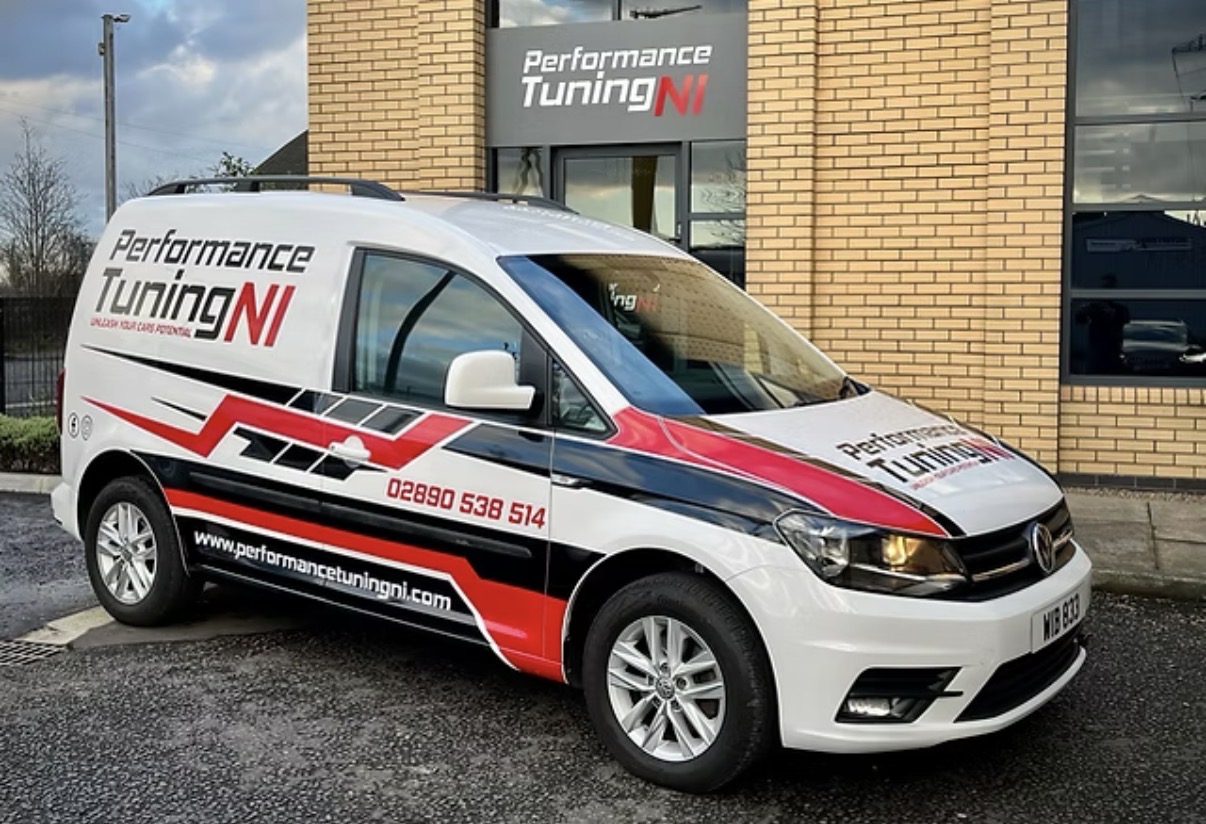
Before booking anywhere, ask for the same three things: a pre-check on your engine’s health, confirmation the change is reversible, and a written estimate of what saving to expect for your specific vehicle.
What to ask for | Why it matters |
Pre-diagnostic check | Confirms the engine is healthy enough to show a real saving |
Original file backup | Makes the remap reversible if you ever need to revert |
Datalog or dyno chart | Gives you a measurable before-and-after figure, not a guess |
An Engine Remap from Performance Tuning NI is £229 as a one-off cost, with the remap calculator giving you a starting point for what to expect from your own vehicle. If your DPF or EGR is already causing problems, it’s worth sorting that first through EGR and DPF solutions or a carbon clean before a remap, since a struggling engine won’t show its full potential.
Sources
FAQ
Does remapping reduce fuel consumption?
An economy-focused remap can reduce fuel consumption, with Performance Tuning NI’s customer data putting typical gains at 5 to 15%. A performance remap chases power instead and can increase fuel use, so the type of map matters as much as the remap itself.
Does a stage 1 remap affect MPG?
A stage 1 remap can improve MPG when it’s calibrated for economy, since it shifts torque lower in the rev range so you use less throttle and fewer revs day to day. The actual figure varies by engine type and driving style, with turbocharged diesels and petrols showing the clearest gains.
Can insurers tell if remapped?
Insurers can identify a remap through diagnostic checks, dyno testing or by comparing performance data during a claim investigation. Regardless of detection, Gov and insurer advice both point the same way: declare any modification before you drive on it.
What is the disadvantage of remap?
The main disadvantage is that a poorly matched or performance-focused remap can increase fuel use rather than reduce it, and may require higher-octane fuel as noted in Admiral’s guide. Undisclosed remaps also risk invalidating insurance cover and can affect a manufacturer warranty still in force.
Recommended