
Keep Fleets Moving: Van Remapping That Adds 15–35% Torque
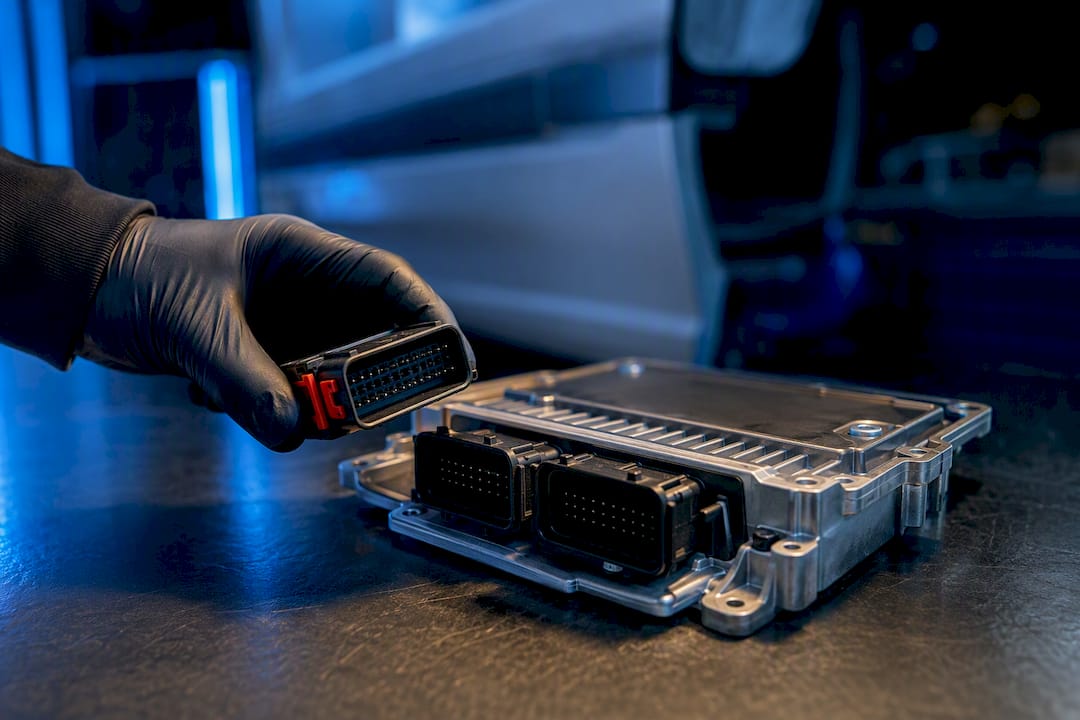
A well‑executed van remap improves low‑end torque, sharpens throttle response and, in most cases, trims fuel use. Whether it’s worth booking depends on your van’s mechanical condition and which tune you pick. This guide walks through what remapping changes, realistic gains, the risks worth checking first, and how to spot a provider that does the job properly.
TL;DR:
Proper diagnostics before remapping are essential to identify existing mechanical issues that could worsen with increased torque or load.
A bespoke tune based on your van’s specific data offers better performance gains and safety than generic maps, especially for heavier duties.
Light commercial remaps typically deliver a 15 to 35 percent improvement in low-end torque and fuel economy when the vehicle is in good condition.
Mobile remapping services are convenient for fleets, but confirm that diagnostics and post-remap support are included in the quoted price.
Selecting a provider that prioritizes diagnostics, customization, and offers a clear warranty reduces the risk of future problems or warranty voids.
Table of Contents
What is van remapping and how does it work?
Van remapping rewrites the software inside your engine control unit, adjusting how it manages boost pressure, fuelling and throttle response. Manufacturers set these parameters conservatively from the factory, partly to cope with poor fuel quality across export markets and partly to leave a safety margin for engines that might sit in service for 300,000 miles or more. That caution leaves genuine performance on the table.
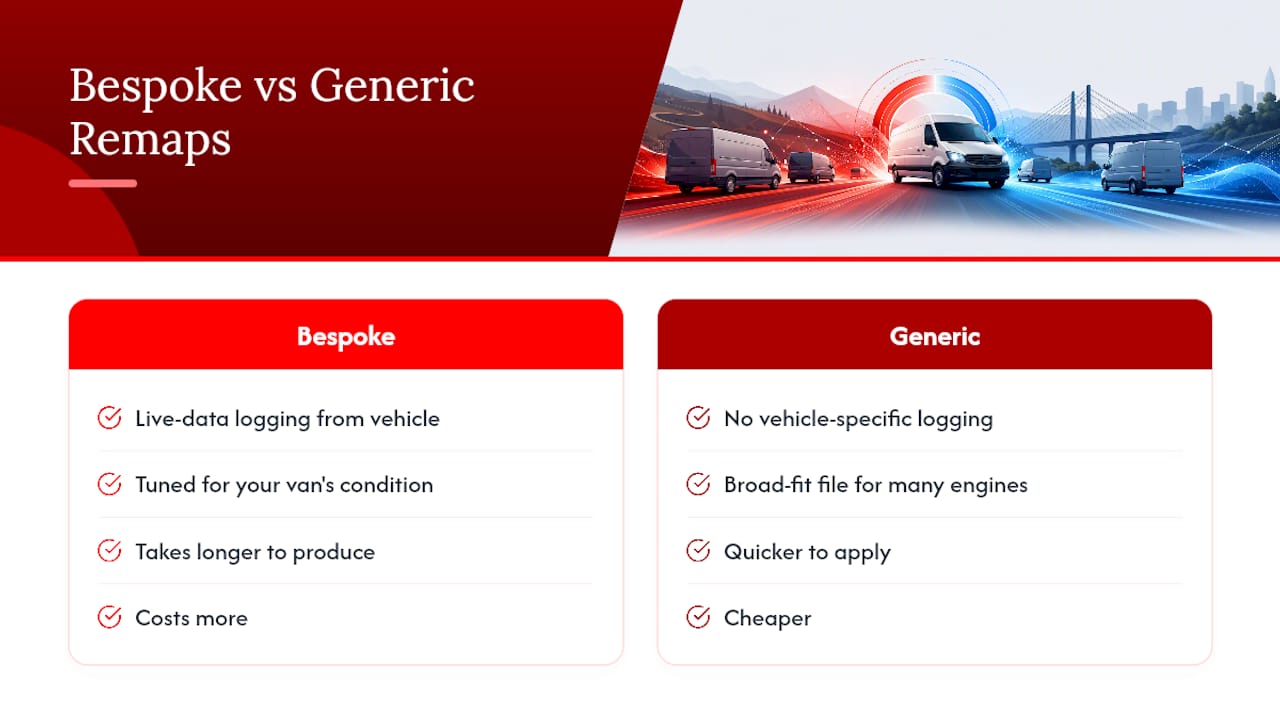
A proper remap comes in two forms: a bespoke file built from your van’s own logged data, or a generic file designed to suit a broad range of similar engines. Bespoke tuning costs more and takes longer because a technician reads live data from your specific vehicle before writing anything, but it accounts for your van’s actual condition rather than an average. Van remapping optimises the ECU by loosening those conservative torque and fuelling limits, which is precisely why the gains matter more for load carrying than outright speed.
Benefits for vans: torque, economy and drivability
For a courier or tradesperson, the headline figure that matters is torque at low revs, not top-end power. That’s what gets a loaded van off the line on a hill or holds momentum on a motorway incline without a downshift.
Loaded starts and towing: more torque from 1,500 to 2,500rpm reduces gear‑hunting and clutch strain when fully laden.
Fuel economy: many drivers see a genuine improvement because the engine spends less time labouring in the wrong gear, though gains depend on driving style and route.
Drivability: smoother throttle response reduces the jerky power delivery that makes stop‑start delivery work tiring.
Fleet economics: remapping is often framed as a cost-efficient alternative to replacing an ageing van, particularly when the vehicle is otherwise sound.
A light commercial remap that targets usable low-end torque rather than peak power can deliver gains of 15 to 35% on diesels when the work is done properly and the van is mechanically healthy beforehand.
Which type of remap suits your van?
Not every van needs the same tune. Matching the map to how you actually use the vehicle matters more than chasing the biggest number a tuner will quote you.
Eco remap — prioritises fuel efficiency and smoother fuelling with only a modest torque increase. Best for high-mileage motorway drivers and fleets tracking fuel spend closely.
Balanced remap — the middle ground most vans land on, adding meaningful torque and economy without pushing the drivetrain hard. Suits mixed courier and trade use.
Stage 1 remap — the most aggressive of the three, unlocking the largest torque and power gains the hardware allows. Best suited to vans in strong mechanical condition doing regular towing or heavy loads, where longevity matters more than headline figures.
If your van is older or has a patchy service history, prioritise a conservative tune over peak numbers. A torque-focused remap matched to the vehicle’s duty cycle beats an aggressive one that stresses parts you haven’t checked.
What should you expect after a remap?
Expect a noticeable change in how the van pulls, not necessarily a dramatic one on paper.
Verify the work with a few simple checks rather than taking a tuner’s word for it:
Note fuel consumption over a full tank before and after, using the same route type for a fair comparison.
Pay attention to throttle response at low revs during a real road test, not just a dealership car park.
Ask whether the technician logs live data during the drive to confirm the map is behaving as intended.
Check back after a few hundred miles, since some providers offer a follow-up software refinement once they’ve seen how the van settles.
Risks, limitations and checks before you book
A remap won’t fix mechanical problems, and pushing extra torque through a van that’s already struggling can expose faults faster than it would otherwise. This is the section worth reading twice before you hand over a deposit.
A blocked or heavily sooted DPF won’t clear itself because of a new map. If the van already runs rough, sort that first.
More torque puts extra load through the clutch, gearbox and turbo. If any of these are already marginal, a remap will find that out the hard way.
A fault‑code scan before any tuning work reveals problems the map would otherwise mask or worsen.
Service history and recent oil and filter changes matter. A neglected engine is a poor candidate for extra load.
Pre-remap diagnostics and maintenance checks catch most of these issues before they become expensive ones. On warranties and MOT: a remap itself doesn’t fail an MOT test, since the test doesn’t assess ECU software, but any resulting emissions or component fault would. Manufacturer warranty terms vary, so check yours before booking. For a broader look at what modifying vehicle electronics can affect around MOT compliance, this guide to MOT-related electronic modification checks is a useful reference point.
Pro Tip: Ask your tuner to run a fault-code scan before you even discuss which tune you want. If they’re happy to quote a price without seeing the van’s data first, that’s worth noting.
How do you choose a remapping provider?
The gap between a competent tuner and a mediocre one usually shows up before the remap even starts, in how much diagnostic work they insist on doing first.
Diagnostics first. A provider should scan for fault codes and review service history before quoting a tune, not after.
Bespoke files over generic ones. Ask whether the map is built from your van’s own logged data or pulled from a generic library.
Technician experience with commercial vehicles. Vans carry different loads and duty cycles to cars; ask how many they’ve tuned.
A rollback option. A reputable tuner keeps your original file and can revert it if something isn’t right.
Written warranty on the work. Verbal reassurance isn’t the same as a written commitment.
Red flags include vague promises of “guaranteed gains,” a one‑file‑fits‑all approach regardless of vehicle, or a technician unwilling to explain what diagnostics they’re running. Reputation checks on review sites are a quick way to see how a provider handles post‑service issues, which tells you more than the marketing copy ever will.
Mobile remapping or a workshop visit?
Mobile remapping suits most working vans well, since the technician comes to your yard or depot and the van doesn’t sit idle waiting for a slot. Courier-focused guidance points out this is exactly why mobile services have become the default for fleets that can’t afford downtime.
A typical appointment runs one to two hours, longer for a bespoke file than a generic one.
Mobile technicians use the same diagnostic and flashing tools as a workshop, so there’s no compromise on the process itself.
Price varies by vehicle, engine size and whether you choose a bespoke file, an off-the-shelf map, or add extras like carbon cleaning alongside the remap.
Larger, more complex commercial engines generally cost more to remap than a standard car‑derived van.
Ask upfront what’s included in the quoted price, since diagnostics and any follow-up adjustment sometimes get bundled in and sometimes don’t.
Why Performancetuningni’s approach fits this
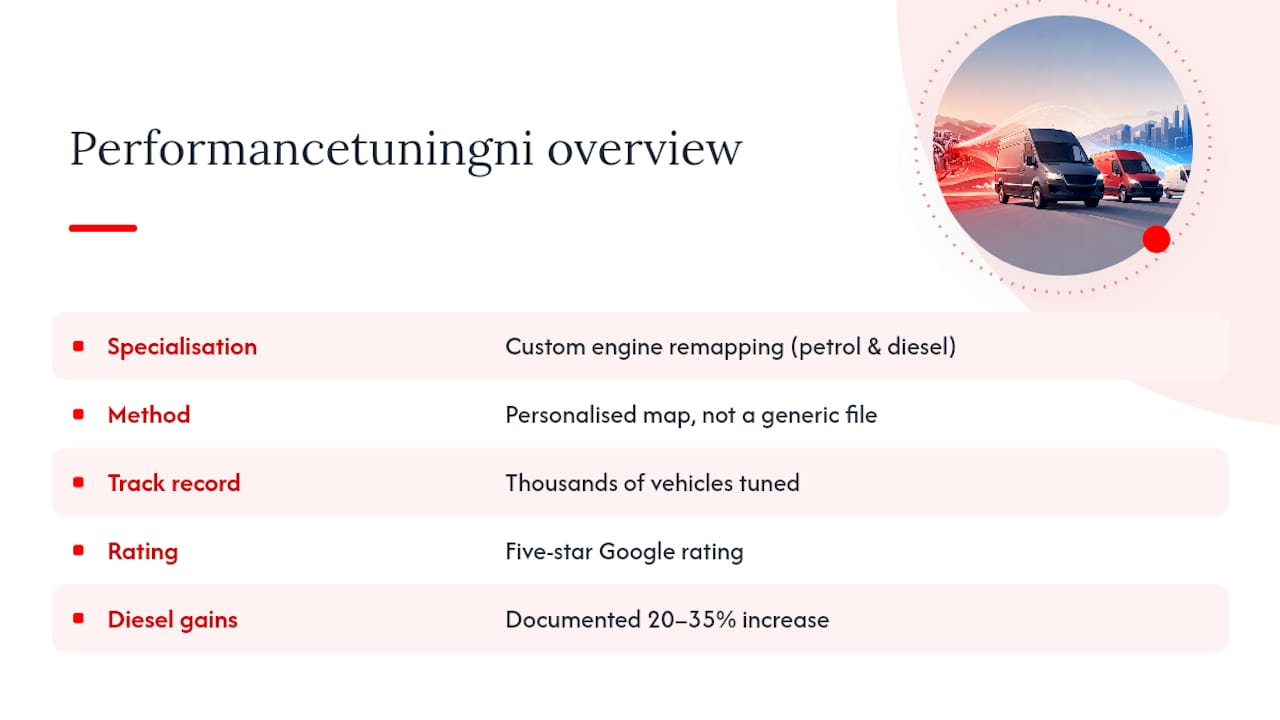
Performancetuningni specialises in custom engine remapping for petrol and diesel vehicles, using current tuning techniques to build a personalised map rather than reaching for a generic file. The team has tuned thousands of vehicles and holds a five-star Google rating. Documented cases show diesel gains of 20 to 35% when the underlying engine is in good condition, which lines up with the ranges discussed throughout this guide.
Bottom line: is it worth remapping your van?
If your van is mechanically sound and matched to the right tune, a remap is usually worth it. Before booking, check your service history, arrange a fault-code scan, and make sure the van is ready for a proper diagnostic appointment.
What fleet owners actually prioritise
Uptime and predictable running costs beat headline power figures every time in fleet decisions. Most operators I speak to care about one thing: whether the van pulls cleanly on Monday morning, not what it does on a dyno chart.
— Mark
Get your van assessed properly, not guessed at
Performancetuningni is the practical alternative to guessing whether a remap suits your van, because every job starts with diagnostics rather than a one-size-fits-all file. The team builds bespoke maps for petrol and diesel vans, offers both mobile and workshop appointments, and can bundle in engine carbon cleaning where a sooted engine needs attention before tuning goes ahead.
[
That diagnostics-first process is what separates a remap that lasts from one that causes problems six months down the line. If you’re ready to find out what your van can realistically gain, book a diagnostic assessment through the engine remapping and ECU tuning page and get a straight answer on what tune actually fits your vehicle.
Sources
FAQ
Is it worth remapping a van?
For most mechanically sound vans, yes. Owners typically see better low-end torque, smoother drivability and often improved fuel economy, though the size of the benefit depends on the van’s condition and the tune chosen.
How much does it cost to get a van remapped?
Price varies by engine size, whether you choose a bespoke or generic file, and whether you add extras like carbon cleaning. Ask your provider for a full breakdown before booking, since diagnostics are sometimes bundled in and sometimes charged separately.
Is a stage 1 remap illegal?
Remapping itself isn’t illegal, but you’re responsible for ensuring the van still meets emissions and safety standards after the work. Stage 1 tunes are best reserved for vans in strong mechanical condition, since they push the drivetrain harder than an eco or balanced map.
Will a remapped van pass its MOT?
The MOT test doesn’t check ECU software directly, so a remap alone won’t cause a fail. Any emissions or component fault that develops afterwards, such as a DPF issue that predates the remap, could still affect the result.
Recommended