
Van remap benefits for diesel vans: the honest guide

For most diesel light-commercial vans, a professionally written ECU remap delivers stronger low-end torque, noticeably better in-gear acceleration under load, and a realistic chance of improved fuel economy when you drive to exploit those torque gains rather than the throttle. That is the short answer. The longer one involves a few important caveats, a pre-remap checklist, and some honest talk about what a stage 1 remap will and will not do for your working day.
The primary van remap benefits that matter to operators are:
Usable low-end torque — the pull you feel from 1,500–2,500 rpm, which is where a loaded van spends most of its time
Improved towing and payload performance — fewer gear changes on hills, safer overtakes, easier motorway merging
Better throttle response — less lag between pressing the pedal and the turbo delivering
Potential fuel economy gains — when the extra torque lets you use a higher gear at lower revs on steady runs
Reduced driver fatigue — less gear-hunting on long routes
One caveat sits above all others: a remap cannot fix a mechanical problem, and attempting one on a van with active DPF, EGR, boost, or fuel-system faults will likely make things worse. The DVSA and MOT framework still applies after a remap, and emissions compliance is your responsibility.
Pro Tip: Before booking any remap, have a full diagnostic scan run. A clean bill of health on DPF soot load, EGR function, boost pressure, and injector balance rates is the single most important pre-remap step you can take.
Table of Contents
What is an ECU remap and how do the stages differ?
An ECU remap is a software calibration change, not a hardware swap. Your van’s engine control unit (ECU) holds a map that governs boost pressure, fuelling quantity and timing, throttle response curves, and turbo control parameters. A tuner reads that map, modifies the relevant tables, and writes a revised version back to the ECU. The engine hardware stays exactly as it was.
Manufacturers set conservative factory maps for good reasons: they need one calibration to work across dozens of markets with varying fuel quality, altitude, service intervals, and emissions regulations. That intentional headroom is what a remap unlocks — it is not exploiting a flaw, it is using margin the engineers built in.
The main tune types you will encounter:
Eco map — biases torque delivery to maximise MPG on long, steady runs; power increase is modest
Balanced map — raises torque and throttle response without creating peaky behaviour; suits mixed use (urban deliveries plus motorway)
Stage 1 — the most common performance remap; works within the safe limits of standard hardware (turbo, injectors, clutch, gearbox)
Stage 2 — requires supporting hardware changes (uprated intercooler, injectors, clutch) before the map can safely push further
A balanced tune is often the best starting point for a working van. It raises torque and response without creating peaky behaviour that can unsettle a loaded vehicle on a wet roundabout. Eco maps suit high-mileage motorway runners; stage 1 performance maps suit operators who tow regularly or carry maximum payload daily.
What a tuner adjusts: boost pressure targets, fuelling maps, injection timing, throttle response curves, and sometimes torque limiters. What stays unchanged: physical sensors, safety cut-offs, rev limiters (unless specifically requested), and the engine’s mechanical tolerances.
Pro Tip: Ask any tuner which map type they are writing and why. If they cannot explain the difference between an eco and a balanced tune in plain language, that is a red flag before you have even discussed your van.
What are the real performance and fuel economy benefits?
Torque first, horsepower second
The primary real-world benefit of a remap is usable low-end torque, not headline bhp or 0–60 times. A diesel van carrying 800 kg of tools and materials spends almost no time above 3,000 rpm. What matters is the pull available between 1,500 and 2,500 rpm — the range where a loaded van climbs a hill, merges onto a dual carriageway, or overtakes a slow-moving lorry.
A well-written stage 1 map targets exactly that band. Typical stage 1 gains for a diesel light-commercial van include noticeable improvements in torque and power, though the actual figures depend on the engine, its age, and its starting calibration. Those numbers translate into something you feel immediately: hill starts that no longer require a downshift, overtakes that complete without the van running out of breath, and a general sense that the engine is working with you rather than against the load. Those numbers translate into something you feel immediately: hill starts that no longer require a downshift, overtakes that complete without the van running out of breath, and a general sense that the engine is working with you rather than against the load.
Towing and payload performance
A well-written map targets the rev range a driver actually uses, reducing gear changes under load and improving hill starts. For anyone towing a trailer — plant equipment, a horsebox, a boat — this is the most tangible benefit. The van pulls from lower revs, so you spend less time hunting for the right gear on a gradient, and overtaking with a trailer attached becomes a more predictable, safer manoeuvre.
Remaps generally improve in-gear performance more than standing-start 0–60 figures. That distinction matters for operators: you are not drag racing, you are merging, overtaking, and climbing. In-gear improvement is exactly what a working van needs.
Fuel economy: when it works and when it does not
Fuel economy improvements are possible but conditional. The remap does not magically reduce fuel consumption. What it does is give you enough torque to use a higher gear at lower revs on a steady run, which burns less fuel per mile. A courier doing 400 miles a week on A-roads and motorways, driving sensibly, can realistically see a 5–10% MPG improvement. A tradesperson who uses the extra power aggressively in town may see no improvement at all, or even a slight increase in consumption.
The honest position: treat MPG gains as a bonus, not the primary reason to remap. The torque and drivability improvements are reliable; the fuel savings depend entirely on how you drive afterwards.
Pro Tip: If fuel economy is your main goal, ask specifically for an eco or balanced map and tell the tuner your typical route profile. A tuner who writes the same map for every van regardless of use case is not doing their job.
Courier vs tradesperson: which tune fits which use?
A courier running motorway miles daily benefits most from an eco or balanced map: the torque gains allow higher-gear cruising, and the fuel savings compound over high mileage. A tradesperson towing a trailer or carrying maximum payload on varied terrain benefits more from a balanced or stage 1 performance map, where the priority is confident pulling power across the working rev range. Neither profile needs a stage 2 remap unless hardware modifications are already in place.
What do technicians actually do when they set a map?
A competent tuner does not simply download a generic file and write it to your ECU. The process starts with live diagnostics: reading fault codes, checking live data streams for boost pressure, exhaust gas temperatures, injector balance rates, and MAF sensor readings. A boost-pipe inspection follows, because a cracked intercooler hose will undermine any remap and can cause a turbo to surge under increased boost.
Only once the engine shows clean data does the tuner proceed. The map itself is adjusted to target the rev band the driver uses daily. That means the torque curve is shaped to deliver its peak where it is most useful — not at 4,500 rpm where a diesel van rarely goes, but at 1,800–2,500 rpm where it spends its working life.
A remap is an optimisation, not a race upgrade. Sensible calibration keeps exhaust gas temperatures and torque figures inside safe operating tolerances. The goal is a van that feels effortless to drive loaded, not one that breaks traction on a wet roundabout.
Pre-remap checks a professional technician performs:
Full OBD fault-code scan (no active or pending codes should be present)
Live boost pressure check against manufacturer specification
DPF soot load reading (high soot load means the filter needs attention before any remap)
EGR function and flow rate check
Injector balance rate inspection (uneven rates indicate wear)
MAF sensor reading at idle and under load
Visual inspection of boost pipes, intercooler, and air filter
Exhaust flow also plays a role in how a remap performs in practice. How exhaust characteristics affect turbo spool is worth understanding if you are considering complementary hardware work alongside a software tune.
Pro Tip: Mobile remapping is entirely legitimate for stage 1 work — a laptop and OBD interface is all the hardware required. What matters is the tuner’s skill and the quality of the map file, not whether they do it in a workshop or on your driveway. Ask whether they use custom mapping or an off-the-shelf file.
What are the risks and UK legal considerations?
Remapping is legal in the UK. The act of modifying your ECU calibration is not prohibited. What creates legal and practical complications is what the remap does to emissions, insurance, and warranty status.
Never remap a van with active DPF, EGR, boost, or fuel-system faults. A remap applied to a faulty engine does not fix the fault — it amplifies the stress on the component that is already struggling.
MOT and emissions
A remapped van must still pass its annual MOT, including the emissions test. A stage 1 remap on a well-maintained diesel van, with the DPF intact and functioning, should not cause an MOT failure. Problems arise when a remap is applied to a van with a partially blocked DPF or a compromised EGR, or when the map itself is poorly written and pushes fuelling beyond what the exhaust system can handle cleanly.
How do you choose a tuner and avoid poor-quality work?
The pre-booking checklist
State your goals clearly: economy, towing, or general drivability. A good tuner asks before they quote.
Confirm they will run a full diagnostic scan before touching the ECU.
Ask whether they use a custom map or an off-the-shelf file. Custom is preferable for working vans with specific load profiles.
Check their rollback policy: a professional will always retain your original map and offer to restore it.
Confirm the expected appointment duration (typically 1 hour for a stage 1 remap) and whether they offer mobile service.
Red flags to walk away from
Promises of extreme bhp gains without any hardware changes on a standard van
No diagnostic check offered before the remap
Refusal to discuss DPF or EGR condition
No rollback option or original file retention
Typical costs and time frames in the UK
Stage 1 remaps for diesel vans in the UK typically cost between £200 and £400, depending on the vehicle, the tuner’s experience, and whether mobile or workshop service is used. The appointment itself usually takes 1–3 hours. Prices at the lower end of that range often reflect off-the-shelf files rather than custom mapping; the extra cost of a custom tune is usually worth it for a van doing serious mileage or towing work.
Use a remap calculator to get a quick estimate of the potential gains for your specific registration before committing.
Key takeaways
A professionally written stage 1 remap on a mechanically healthy diesel van reliably delivers stronger low-end torque and better in-gear performance, with fuel economy gains that depend on how you drive afterwards.
Point | Details |
Torque is the main gain | Usable low-end torque gains are typical for stage 1 diesel van remaps, felt most in loaded driving. |
Pre-remap health check is non-negotiable | DPF soot load, EGR function, boost pressure, and injector balance rates must all be clean before any map is written. |
Fuel economy gains are conditional | MPG improvements depend on driving style; using higher gears at lower revs is what delivers the saving, not the remap alone. |
Disclose to your insurer | A remap is a notifiable modification; failing to declare it can invalidate a claim. |
Performancetuningni for UK diesel vans | Performancetuningni offers stage 1 remaps, eco and balanced tunes, pre-remap diagnostics, and mobile service for diesel van operators across Northern Ireland. |
The case for treating your van as a working tool, not a project car
The conversation around remapping tends to get pulled towards horsepower numbers and 0–60 times, which is almost entirely the wrong frame for a working van. The operators who get the most from a remap are the ones who go in asking about torque at 2,000 rpm and fuel consumption on the A1, not about top speed.
What the evidence consistently shows is that the gains from a well-written map are felt in the mundane moments: the hill start with a full load, the motorway merge with a trailer, the long run where the engine sits comfortably in a higher gear. Those are the moments that reduce driver fatigue, protect the drivetrain from unnecessary stress, and, over a year of high mileage, add up to a meaningful reduction in running costs.
The risk side of the equation is real but manageable. Warranty, insurance, and emissions compliance are all addressable with straightforward disclosure and a competent tuner. The operators who get burned are almost always the ones who skipped the diagnostic check, used a cheap off-the-shelf file, or remapped a van that already had a fault code sitting in the ECU.
Treat a remap as an optimisation of a healthy engine, pick a tuner who asks more questions than you do, and the benefits are genuine. Treat it as a shortcut or a repair, and it will cost you more than the remap fee.
Performancetuningni: stage 1 remaps and diagnostic checks for diesel vans
If your van is doing serious work — towing, heavy payload, high weekly mileage — a remap from a specialist who understands diesel light-commercial vehicles is a different proposition from a generic tune written for a hatchback.
[
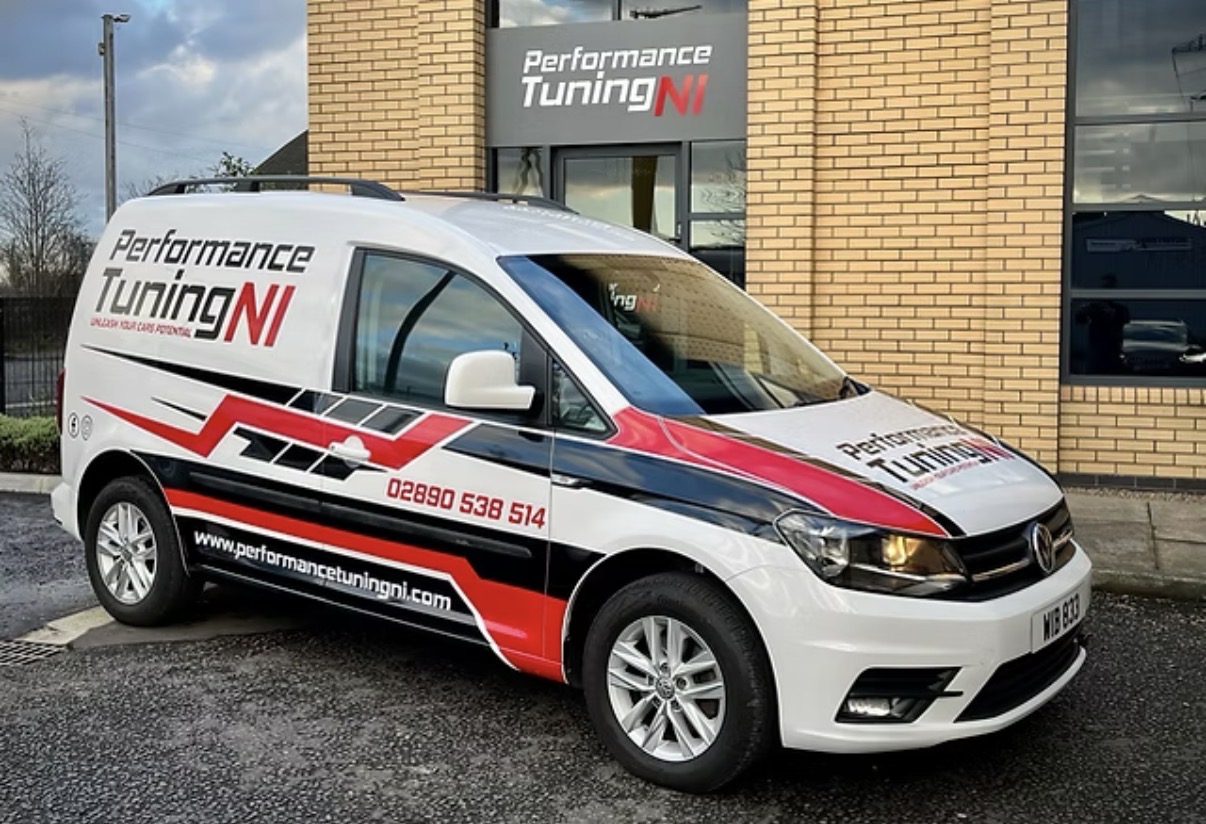
Performancetuningni offers custom ECU remapping for diesel vans across Northern Ireland, with both workshop and mobile appointments available. Every remap starts with a full diagnostic check: DPF soot load, EGR function, boost pressure, and injector balance rates are all confirmed clean before any map is written. Services relevant to van operators include:
Stage 1 remaps for diesel vans (eco, balanced, and performance tunes)
Pre-remap diagnostic scans and live data checks
Engine carbon cleaning bundled with remaps to restore airflow and maximise gains
Mobile remapping at your premises or depot
Original map retention and rollback as standard
Appointments typically take 1–3 hours. Use the free remap calculator to enter your registration and see estimated gains before you book, then get in touch to arrange a date.
Useful UK sources and further reading
For operators who want to go deeper on the technical side or check the regulatory position:
Engine remapping and ECU tuning — Performancetuningni: practical explanation of how remapping affects torque and fuel economy, from the Performancetuningni team.
Performancetuningni FAQ: answers to common questions on warranty, rollback, diagnostics, and what to expect from a remap appointment.
Resource | What it covers |
Performancetuningni remapping page | Service details, booking, and van-specific remap options |
Free remap calculator | Estimated gains by registration number |
ECU remap: worth it? (ecurmp.com) | Practitioner guidance on pre-remap checks and real-world outcomes |
Exhaust and turbo spool (valvecontrolexhaust.com) | Technical context on exhaust flow and turbo response |
This article provides general information about vehicle remapping. Always confirm the current regulatory position with the DVSA or a qualified professional before modifying your vehicle’s emissions systems.
Recommended