
Turbo diesel tuning: a practical guide for UK car owners
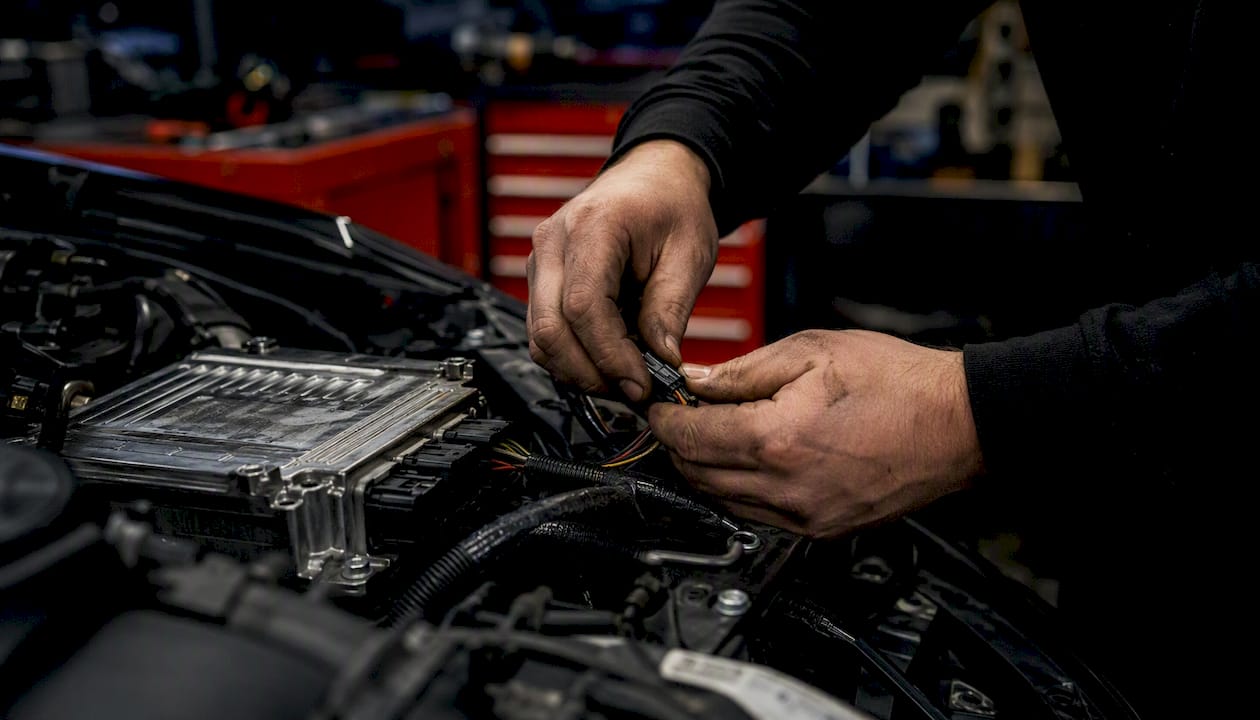
A turbo diesel remap is a software-level edit to your engine control unit (ECU) that recalibrates fuel delivery, boost targets, torque limiters, and injection timing. The result, for most UK diesel owners, is noticeably more torque across the mid-range, sharper throttle response, and often a genuine improvement in real-world fuel economy when driven sensibly. If you want the short version: book a professional remap with a reputable tuner, bring your service history, and expect a measurable difference within an hour or two on the rollers.
What you can realistically expect from a well-executed diesel remap:
More torque, earlier in the rev range — the gain most owners feel immediately
Sharper throttle response — less lag between pedal and power
Potential economy gains of several MPG when you drive in higher gears more often
Better towing and load-carrying capability for vans, pickups, and SUVs
Smoother power delivery with fewer forced downshifts on motorway inclines
Key takeaways
A professional turbo diesel remap delivers more torque, sharper throttle response, and potential economy gains by editing a targeted set of ECU maps — with iterative calibration and dyno validation separating a safe, documented result from a risky one.
Point | Details |
Stage 1 is the safe starting point | Software-only remaps retain factory hardware and emissions systems, with typical gains of 20–30% torque. |
Iterative calibration is non-negotiable | Fuel and boost maps must be revised together; each edit requires EGT and AFR validation before the next change. |
Declare the modification to your insurer | A remap is a modification; failing to declare it can invalidate a claim regardless of who carried out the work. |
Dyno logs are the proof | Before/after dyno plots with boost and EGT traces are what distinguish a professional remap from an unvalidated file change. |
Performancetuningni | Offers custom diesel remaps with written guarantees, dyno logs, and a five-star rating across thousands of UK vehicles. |
Table of Contents
What does turbo diesel tuning actually involve?
“Tuning” covers a spectrum. At one end sits the ECU remap: a technician reads your factory calibration file, edits a targeted set of maps (fuel quantity, boost pressure, torque limiters, injection timing), and writes the revised file back. No parts change hands. At the other end are full mechanical builds — larger turbos, uprated injectors, high-flow fuel pumps — that require hardware to match the software.
Between those two poles you will find plug-in tuning boxes (sometimes called piggyback modules), which intercept sensor signals to trick the ECU rather than editing it directly. They are quicker to fit and easier to remove, but they offer less precise control than a file-level remap and cannot access every map the ECU uses.
The terms you will encounter most often:
Stage 1 remap: software only, factory hardware retained, emissions systems left intact
Stage 2 remap: software changes supported by hardware upgrades (intercooler, turbo, fuelling)
Dyno tune: calibration validated on a rolling road with live data logging
Remote/file remap: calibration carried out off-site using your read ECU file, without dyno validation
What benefits do owners actually get from a diesel remap?
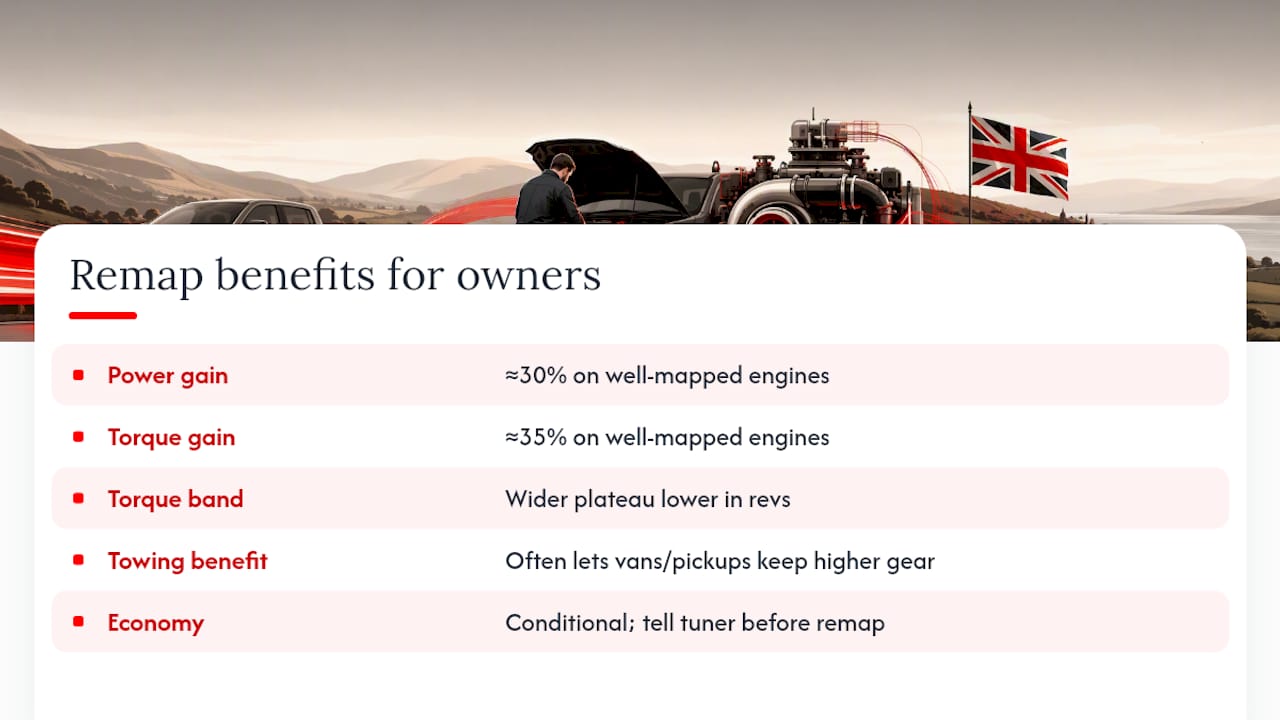
The gains chip-tuned turbo-diesels see are proportionally larger than petrol equivalents, with real-world examples reaching roughly 30% power and 35% torque on well-mapped engines. Those headline figures apply to engines with meaningful factory headroom — a detuned commercial variant of a performance platform, for instance — but even modest diesels typically gain noticeable torque increases from a Stage 1 remap.
The torque increase lands lower in the rev range than most owners expect. Where the factory map might hold peak torque to a narrow band around 1,800–2,200 rpm, a good remap widens that plateau. Pull in fifth at 1,400 rpm on a dual carriageway and the engine responds without hunting for a lower gear. That alone changes how the car feels to drive every day.
Towing and load work benefits disproportionately. A van or pickup that previously needed third gear on a hill can often stay in fourth, reducing drivetrain heat and driver fatigue on long runs.
Economy is the most conditional benefit. A wider torque band lets you drive in higher gears more of the time, which cuts fuel consumption when you let it. Drivers who use the extra power aggressively will see no economy gain at all.
Pro Tip: If economy is your primary goal, tell your tuner before the remap. A map weighted towards torque-band width and low-end response will deliver better real-world MPG than one chasing peak power figures.
What are the stages and types of diesel tuning?
Stage | Hardware required | Typical gain | Best for |
Stage 1 | None (software only) | Typical gains for daily drivers and economy tuning | Daily drivers, towing, economy |
Stage 2 | Intercooler, turbo or fuelling upgrades | Higher torque gains for enthusiasts | Enthusiasts, track use |
Economy remap | None | Modest power with focus on fuel economy | High-mileage commuters, fleets |
Remote file remap | None | Similar benefits to Stage 1 | Owners without local dyno access |
Plug-in tuning box | None (interceptor only) | Variable results, less precise | Temporary or lease vehicles |
Stage 1 is the right starting point for the vast majority of UK road cars. It works within the factory hardware’s limits, keeps emissions systems intact, and carries the lowest mechanical risk. The ECU’s own safety vetoes — temperature limits, rail pressure ceilings, knock detection — remain active.
Stage 2 requires hardware to match the calibration. Running a Stage 2 fuel map through a stock turbo is how turbos fail prematurely. The software and hardware must be developed together.
Economy remaps target a different set of map parameters: the goal is a flatter, earlier torque curve that reduces the need for high-load fuelling events, not peak power. They suit fleet operators and high-mileage commuters more than enthusiasts.
Remote file remaps are convenient but carry a caveat: without dyno validation, the tuner is working from a generic base map adjusted for your engine code rather than live data from your specific vehicle. For critical applications like heavy towing, dyno validation is worth the extra cost.
How does a professional diesel tune work, step by step?
Pre-appointment diagnostic scan — fault codes are cleared or investigated, smoke levels and EGT baseline are noted, and service history is checked. A poorly serviced engine is not a good candidate for more power.
OEM file backup — the original ECU calibration is read and stored. If anything goes wrong, the technician can restore the factory file exactly.
Baseline dyno or road log — stock power, torque, boost, rail pressure, and EGT are recorded under load. This is the “before” data that makes the after comparison meaningful.
Iterative calibration — fuel quantity maps are adjusted first, then boost and VNT targets are revised to match. Diesel boost control is driven by exhaust energy, which is itself a product of fuel delivery, so the two cannot be tuned independently. Each edit is followed by a validation pull.
AFR, EGT and rail pressure checks — safe exhaust gas temperatures and air-fuel ratios are confirmed at each calibration step before the next edit is made.
Final dyno validation — a full power run with the revised map produces the before/after plots. The customer receives both.
Handover and road drive — the technician explains what changed, what to watch for in the first few hundred miles, and any service recommendations.
Pro Tip: Ask for the raw dyno log files, not just a printed graph. A reputable tuner will hand them over without hesitation. If they won’t, that tells you something.
Which vehicles and ECU types are tunable in the UK?
Most modern turbo diesels sold in the UK are strong candidates for remapping. The two ECU families you will hear about most are Bosch EDC16 (common on pre-2008 VAG, BMW, and Ford diesels) and Bosch EDC17 (the dominant platform from roughly 2008 onwards across most European manufacturers). Both are well-understood by professional tuners.
The EDC17’s momental model processes the driver’s throttle request through a torque limiter, then a fuelling management torque controller (FMTC), before arriving at injection duration. A competent Stage 1 remap on an EDC17 targets a small, specific set of maps — torque limiters, injection duration, boost targets — rather than making wholesale changes across hundreds of calibration tables.
VNT/VGT turbos (variable nozzle/geometry turbines) are standard on most modern diesels and give tuners precise boost control across the rev range. A wastegate turbo is simpler but less flexible. VNT maps are a key part of any diesel remap on a modern engine, and VNT behaviour directly affects throttle response and boost build rate.
Before contacting a tuner, have ready: your VIN or registration, engine code, current mileage, any recent hardware changes (injectors, turbo, EGR work), and a note of any warning lights or symptoms.
What are the risks, MOT and insurance implications in the UK?
Diesel remapping carries real risks when done poorly and manageable ones when done correctly:
Excessive EGT from over-fuelling can damage pistons, turbos, and DPF substrates
Turbo over-speed from aggressive boost targets shortens bearing life
DPF loading increases if fuelling is raised without matching airflow
MOT implications — a vehicle that fails the emissions smoke test after a remap will not pass; a responsible tuner will not remap a vehicle with a failing DPF or blocked EGR
A responsible tuner will always discuss your DPF, EGR, and AdBlue systems before touching the calibration. Any permanent changes to emissions equipment must be declared for MOT and insurance purposes in the UK. Keeping those systems functioning is not just good practice — for road-registered vehicles, it is a legal requirement.
Insurance is the obligation most owners overlook. A remap is a modification. Failing to declare it can invalidate a claim. Tell your insurer in writing before the remap is complete. Some specialist insurers treat a professional remap with a written guarantee more favourably than an undeclared one discovered after a claim.
Manufacturer warranty on a new vehicle will typically be voided by a remap. On an older vehicle outside warranty, a written remap guarantee from your tuner is the relevant protection.
Pro Tip: Get the remap guarantee in writing before you hand over the keys. It should specify what is covered, for how long, and what the tuner will do if a fault is traced to the calibration.
What does a turbo diesel remap typically cost in the UK?
Pricing varies by ECU access difficulty, whether dyno time is included, and the complexity of the vehicle:
Stage 1 remap (software only): typically £200–£400 for common platforms
Dyno-validated remap with before/after logs: typically £300–£600
Remote file remap: often £150–£300, though dyno validation is not included
Stage 2 with hardware: £600–£1,500+, depending on parts required
Mobile remap (tuner comes to you): similar to in-shop pricing, sometimes a small travel supplement
The value indicators that separate a good remap from a cheap one: before/after dyno plots, a written guarantee, a post-remap support contact, and a tuner who will discuss your specific vehicle rather than quoting a flat price before asking a single question.
What should you expect after a diesel remap?
The torque curve change is usually noticeable on the first drive. The throttle feels more direct, mid-range pull is stronger, and the engine is less likely to hunt for a lower gear. Some owners describe a short bed-in period of a few hundred miles before the full character of the map settles.
Fuel economy depends almost entirely on how you drive. A well-executed remap can widen the usable torque band enough that you naturally drive in a higher gear more often, which cuts consumption. Drivers who use the extra torque to accelerate harder will see no improvement.
Post-remap maintenance recommendations:
Shorten oil change intervals slightly, particularly on high-mileage engines — more power means more combustion heat
Check turbo oil feed and return lines at the next service; a healthy turbo before the remap stays healthy after it
Monitor coolant temperature for the first few weeks, especially on older engines
Carbon cleaning is worth considering as a bundle — a cleaner combustion chamber responds better to a revised calibration and helps maintain EGT targets over time
Manufacturer warranty on new vehicles is affected by a remap. Outside that window, a written remap guarantee from your tuner is the protection that matters. Ask specifically what it covers: recalibration at no charge if a fault is traced to the map, and a clear process for raising a concern.
How do professional tuners calibrate and test diesel maps?
The calibration sequence on a modern diesel ECU follows the engine’s own logic. As the Bosch EDC17 architecture shows, the ECU converts the driver’s throttle request into a torque demand, passes it through a torque limiter, then through the FMTC, and finally arrives at injection duration. A Stage 1 remap targets that chain at the torque limiter and injection duration maps — the minimum intervention for the maximum safe gain.
Diesel tuning is iterative by design. Fuel quantity determines exhaust energy, and exhaust energy drives the turbo. You cannot raise fuel without revisiting boost targets, and you cannot raise boost without rechecking EGT and AFR. Every edit demands a validation pull before the next change is made.
The practical sequence a competent tuner follows:
Log baseline AFR, EGT, rail pressure, and boost under a full-load pull
Raise injection duration maps incrementally, targeting the torque limiter ceiling
Validate EGT — safe EGT targets are non-negotiable; richening for power at the cost of temperature control is a race-team trade-off, not a road-car one
Revise VNT/boost target maps to match the new fuelling
Recheck AFR and rail pressure; confirm the ECU’s safety vetoes are still active
Final full-load dyno pull for before/after comparison
A trustworthy before/after dyno package includes the raw torque and power curves, a boost trace, and EGT data. A single peak-power number on a printed sheet is not a dyno log.
Real results from UK diesel owners
Performancetuningni has remapped thousands of vehicles across Northern Ireland and beyond, with a five-star Google rating built on consistent, documented results. Common UK platforms that respond particularly well include the 2.0 TDI (VAG group), the 2.0 BlueHDi (PSA), the 3.0 TDCi (Ford), and the 2.0 D4D (Toyota). Owners of these vehicles regularly report the same outcome: the car they thought was adequately powered turns out to have had a significant reserve locked away by the factory calibration.
Fleet operators running Sprinter and Transit vans have found Stage 1 remaps reduce driver complaints about motorway performance while keeping fuel costs manageable. The torque gain at low revs is particularly relevant for loaded commercial vehicles, where the factory map’s conservatism is most noticeable.
The case for responsible diesel tuning
The diesel tuning industry has a credibility problem that well-executed, documented remaps can solve. Too many owners have experienced a cheap remap that delivered a rough idle, a DPF warning light three months later, and a tuner who stopped answering the phone. The antidote is straightforward: iterative calibration, live data validation, written guarantees, and a tuner who explains what they changed and why.
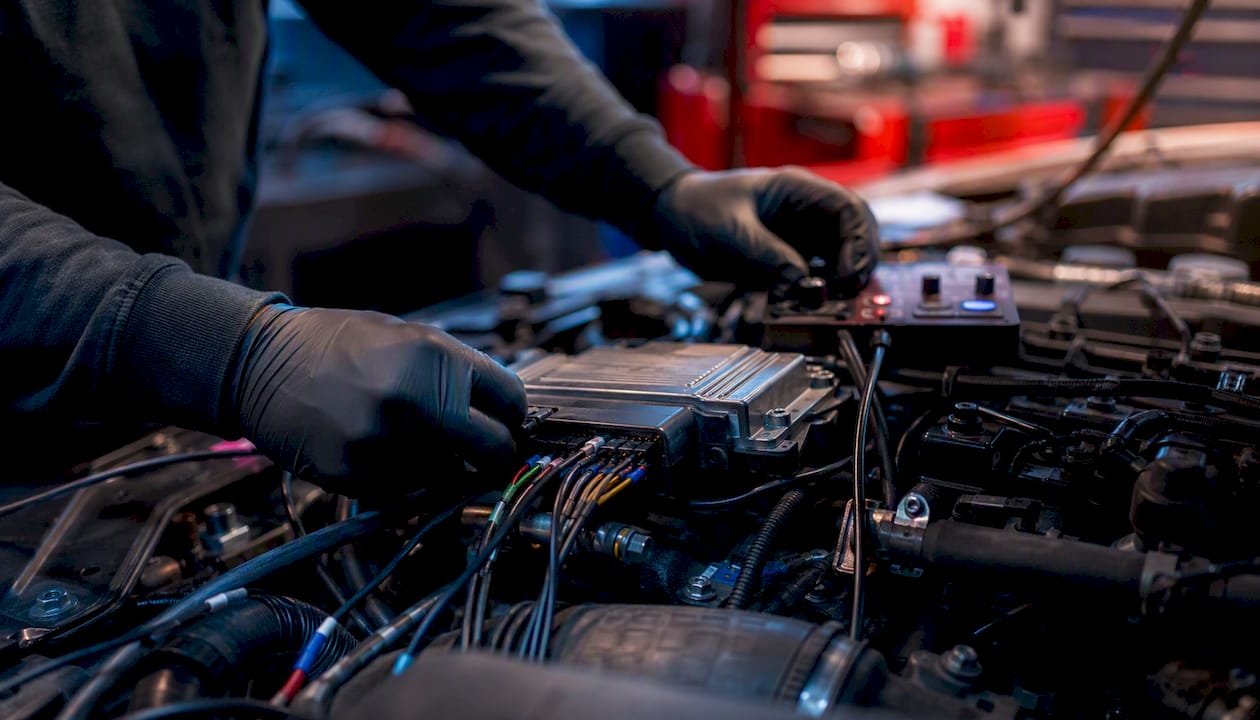
Preserving emissions equipment where legally required is not a compromise on performance — it is the baseline for responsible practice. A Stage 1 remap on a healthy diesel with functioning DPF and EGR systems can deliver genuine gains without touching those components. Owners who want to explore further options should have that conversation openly with their tuner, understanding the legal and MOT implications fully before any decision is made.
The gap between a remap that transforms a vehicle and one that damages it is almost entirely a function of process: did the tuner log baseline data, iterate carefully, validate on a dyno, and hand over documented results? That process is what Performancetuningni delivers on every booking.
Performancetuningni: book your diesel remap in Northern Ireland
Thousands of UK diesel owners have already found that the performance they wanted was already inside their engine, waiting for the right calibration. Performancetuningni delivers custom ECU remapping with dyno before/after logs, a written remap guarantee, and a five-star track record across petrol and diesel platforms. The difference from a budget remap service is documented: you leave with data, not just a feeling.
[
Services available include Stage 1 and Stage 2 remaps, mobile remap appointments, engine carbon cleaning (often bundled with a remap for best results), diagnostic scanning, and AdBlue and EGR support. Bring your VIN, service history, and any fault codes. Use the free remap calculator to check your vehicle’s tuning potential before you call, then book a slot and arrive knowing exactly what to expect.
Sources
Recommended