
Remap risks explained: what NI drivers need to know
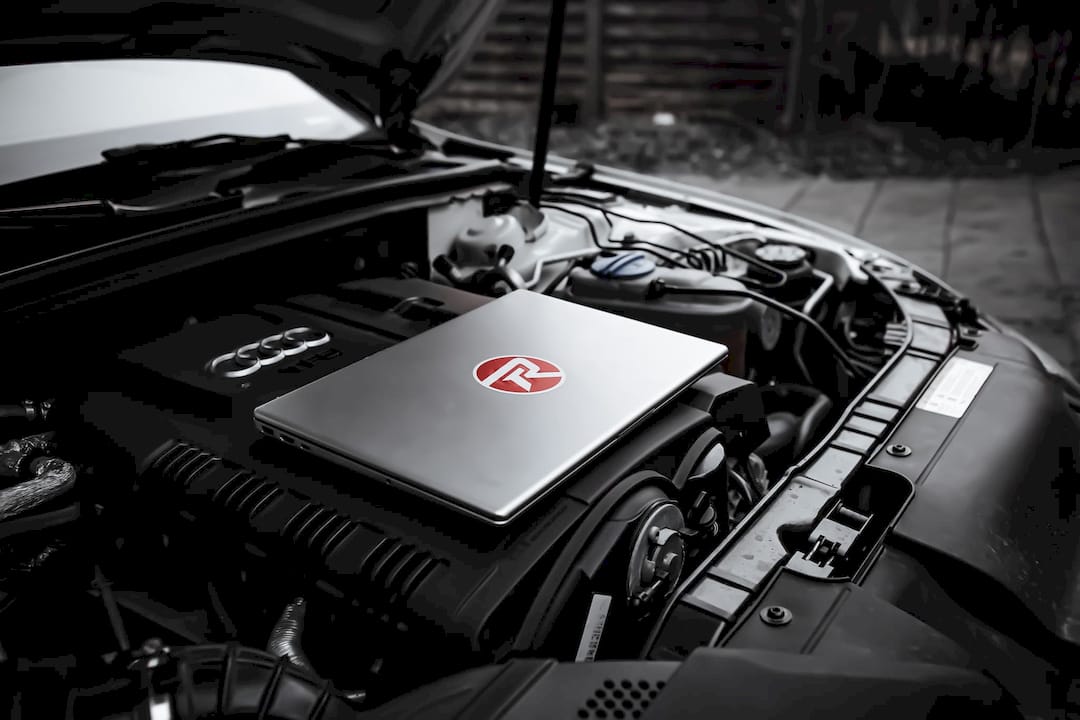
A conservative Stage 1 remap on a healthy, well-serviced car carries little to no risk. The real hazards are not the concept of remapping itself but three specific factors: the condition of the vehicle before tuning, the quality and method of the map, and what company you get to install the map. Get those three right and most remap risks shrink to nothing.
Three steps to reduce your exposure before you book anything:
Get a pre-remap diagnostic health check.
Ask your tuner for custom datalogging rather than a generic off-the-shelf map.
Declare the modification to your insurer before the car leaves the workshop.
Key takeaways
A conservative Stage 1 remap on a healthy, checked car is low-to-moderate risk; the three factors that determine actual risk are vehicle condition, map quality, and how you handle insurance and warranty disclosure.
Point | Details |
Check the car first | A pre-remap diagnostic health check is the single most effective risk control before tuning. |
Declare to your insurer | A remap is a material modification; non-disclosure can void your policy and leave you personally liable. |
Ask for a custom map | Generic maps carry higher risk than bespoke calibrations written from your car’s own datalog. |
Protect your warranty position | Keep a pre-remap health-check report, factory map backup and written tuner guarantee as evidence. |
Performance Tuning NI | Offers custom remaps with pre-remap health checks, datalogging, written guarantee and mobile service across Northern Ireland. |
Table of Contents
How a remap changes engine behaviour and which parts feel the strain
Emissions, MOT and what the law says about remapping in the UK
Can a remap be undone, and how are problems diagnosed afterwards?
How remapping affects fuel economy and the indirect risks that follow
Performancetuningni: pre-remap checks, custom maps and a written guarantee
What ECU remapping is and how stages affect risk
An ECU remap is a software calibration change to your engine control unit. The tuner reads the existing map file, modifies parameters such as torque limits, fuelling targets, boost pressure and throttle response curves, then writes the revised file back to the ECU. The engine hardware does not change; only the instructions it operates by do.
The term “stage” describes how aggressively the calibration departs from factory settings and whether supporting hardware changes are required.
Stage 1 works within the engine’s existing hardware limits and is the entry point for most road cars. Stage 2 typically requires hardware changes such as an uprated intercooler or exhaust, and pushes further beyond factory tolerances. Bespoke or custom maps go further still, written specifically for a single car’s measured data rather than a generic vehicle profile.
Stage 1 is lower risk because it generally stays within conservative limits set by the manufacturer. Engines often have some margin built in for emissions compliance and fuel flexibility, which Stage 1 remaps typically utilise. Stage 2 and beyond start consuming that headroom and require supporting components to be in excellent condition.
Pro Tip: If your car is a daily driver and you want the best balance of performance and reliability, a conservative Stage 1 map focused on torque delivery and economy is the safest starting point.
How a remap changes engine behaviour and which parts feel the strain
A remap raises torque output, adjusts fuelling targets, or increases boost pressure. Each of those changes places additional load on specific components, and that load is the root cause of most post-remap mechanical concerns.
The direct causal links are straightforward:
Higher torque output increases clamping force demand on the clutch; a clutch already near its service limit will slip sooner.
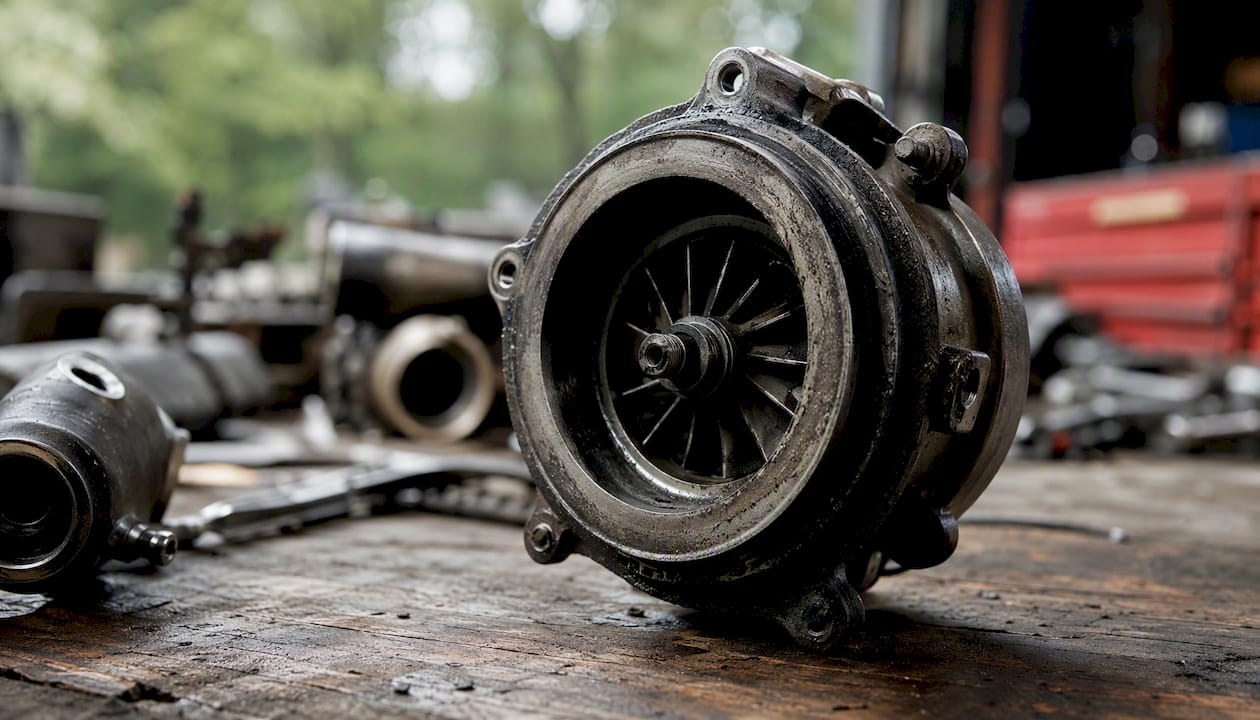
Higher boost pressure increases turbo shaft speeds and bearing loads; a turbo with worn shaft bearings will fail faster.
Richer or leaner fuelling targets change exhaust gas temperatures (EGT) and cylinder pressure; both affect piston rings, injectors and the diesel particulate filter.
Increased power delivery changes drivetrain shock loads, particularly on gearbox synchromesh and driveshaft CV joints.
Consider two scenarios. A conservative Stage 1 on a healthy, well-maintained car with reasonably low mileage and good component condition will likely run for years without incident. The same map on a high-mileage car with worn components and existing faults is more at risk of failure, but that risk stems from the condition rather than the remap itself. Remapping increases mechanical stress on turbo, clutch and drivetrain; most problems trace to pre-existing faults rather than the remap itself.
Pro Tip: Ask your tuner to take a baseline datalog before writing a single line of new calibration. That log shows real-world boost, EGT and fuelling data from your specific car, not a generic profile, and gives both of you a reference point if anything changes afterwards.
Component-specific risks: what can go wrong and why
The components most commonly affected by remapping are the turbocharger, clutch, gearbox, cooling system, DPF and fuel injectors. None of them fail because of remapping alone; they fail because increased operating demands expose existing weakness.
Component | Relative risk level | Primary symptom to watch for |
Turbocharger | High on worn units | Blue smoke, boost lag, shaft play |
Clutch | High on high-mileage cars | Slip under load, burning smell |
Gearbox / drivetrain | Moderate | Crunching shifts, vibration |
Cooling system | Moderate | Rising coolant temperature, leaks |
DPF / exhaust | Moderate on diesels | DPF warning light, excessive soot |
Fuel injectors | Low to moderate | Rough idle, misfires, smoke |
Symptoms worth monitoring after a remap include blue or black smoke on acceleration, clutch slip when pulling away uphill, warning lights for DPF regeneration or boost pressure, and fuel consumption that rises rather than falls. A pre-tune check of turbo shaft play (a physical wiggle test on the compressor wheel) and clutch bite point assessment costs very little and can prevent an expensive post-remap failure.
Pro Tip: Check compressor shaft play before booking a remap. Grip the compressor wheel through the intake and try to move it radially. Any perceptible movement beyond a tiny amount of axial play suggests the turbo bearings are worn and the remap should wait until after a rebuild.
How remapping affects your manufacturer warranty in the UK
UK manufacturers can reject warranty claims if they can demonstrate that a software modification directly caused or contributed to a specific mechanical failure. The key word is “prove.” A blanket voiding of the entire warranty is not the standard outcome; what typically happens is component-specific exclusion for the parts the manufacturer can link to the modification.
That distinction matters practically. If your remapped car develops a faulty window regulator, the manufacturer cannot reasonably argue the remap caused it. If the turbo fails six months after a Stage 2 remap, they have a much stronger case. Warranties are often component-specific exclusions rather than blanket voidances, and reverting to the factory map may not erase all evidence because some ECUs log flash history.
Practical protections to put in place before tuning:
Request a pre-remap health-check report in writing so you have evidence the car was in good condition before the map was applied.
Keep a copy of the original factory map file and confirm your tuner can revert it on request.
Ask for a written remap warranty or guarantee from the tuner covering their workmanship.
Keep datalogging records from before and after the tune as independent evidence of operating parameters.
The burden of proof sits with the manufacturer. They must link the failure to the modification, not simply point to the presence of a remap. A well-documented pre-remap health check and a written guarantee from a reputable tuner give you a defensible position.
Pro Tip: If your car is still within its manufacturer warranty period, consider timing the remap for after the warranty expires, or at minimum confirm in writing with your dealer which components they would exclude before proceeding.
Insurance and remaps in the UK: what you must declare
A remap is a material modification under UK insurance law. The Financial Ombudsman Service confirms that failure to declare a material modification can invalidate your policy entirely, even if the remap played no part in causing an accident. That is not a technicality; it is the basis on which insurers can refuse to pay out on a claim.
Steps to protect yourself:
Call your insurer before the remap appointment and ask specifically whether they cover remapped vehicles.
Get written confirmation from your tuner of the map stage, power targets and any hardware changes.
Compare specialist modified-vehicle insurers if your current insurer declines or quotes an unacceptable premium increase.
Specialist modified-vehicle insurers often provide better terms than mainstream providers for remapped cars. Comparing policies before you tune, rather than after, gives you leverage and avoids the scenario where you are stuck with a mainstream insurer who has already quoted a punitive premium.
Pro Tip: Search specifically for modified-vehicle insurance specialists rather than going back to your existing insurer first. Mainstream insurers often apply blanket loading to any declared modification; specialists price the actual risk more accurately.
Emissions, MOT and what the law says about remapping in the UK
A properly calibrated remap should not automatically cause an MOT failure. The MOT test checks emissions output at the tailpipe, not the ECU calibration itself. A clean, well-written map that keeps emissions within legal limits will pass the same test as a factory car.
The problems arise when tuning goes wrong or when emissions controls are disabled:
Excessive smoke on the smoke opacity test is a common MOT failure trigger after a poorly calibrated diesel remap.
A DPF that has been deleted or disabled will fail the visual inspection under current DVSA rules.
An EGR delete fitted for road use is illegal in the UK and will cause an MOT failure at the emissions check.
Active engine warning lights are an automatic MOT failure regardless of their cause.
The legal position on emissions-related deletes is clear: DPF removal for road use has been illegal in the UK since 2014, and DVSA inspectors are trained to identify missing or bypassed aftertreatment systems. A car that fails on these grounds also faces potential DVLA action and insurance complications.
Do keep all emissions systems operational if the car is used on public roads. Do not fit DPF or EGR deletes for road use regardless of what a tuner offers. A remap that improves performance while keeping the DPF and EGR functioning correctly is achievable and legal; one that bypasses them is not.
How to reduce remap risks before and after tuning
The single most impactful step is a pre-remap diagnostic health check with clear pass/fail criteria. A remap does not create new mechanical weaknesses; it accelerates existing ones. Identifying those weaknesses before tuning is far cheaper than repairing them after.
Pre-remap checklist:
Fault-code scan: no active or pending codes should be present before tuning begins.
Oil condition check: fresh oil with no contamination or unusual colour.
Turbo shaft play assessment: physical check of compressor wheel movement.
Clutch bite point and slip test: assess remaining clutch life under load.
DPF and EGR status: confirm both are functioning and not partially blocked.
Baseline datalog: record real-world boost, EGT, fuelling and timing data before the map is written.
Cooling system check: confirm no leaks, correct coolant level and functioning thermostat.
Questions to ask your tuner before committing:
Is this a custom map written for my specific car’s data, or a generic file?
Will you datalog the car before and after the tune?
Do you use a rolling road (dyno) or road-tune method, and why?
Can you provide a written guarantee covering your workmanship?
Can you revert to the factory map if needed?
For the first 500 miles after a remap, change the oil at 500 miles if the tuner recommends it, watch for any smoke on hard acceleration, and book a follow-up datalog check. An economy remap focused on torque delivery rather than peak power tends to produce the most durable results for daily-driven cars.
Pro Tip: If a tuner cannot or will not provide a baseline datalog and a written guarantee, walk away. Those two things cost the tuner very little and protect you enormously.
What does a remap cost in the UK and how long does it take?
Stage 1 remaps represent the best value proposition for most drivers: meaningful gains in torque and economy for a relatively modest outlay, with no hardware changes required. Bespoke higher-stage work costs more and takes longer because it involves physical modifications and multiple tuning sessions.
Price ranges are indicative based on typical UK market guidance; actual quotes vary by vehicle, tuner and region. Use the Performancetuningni remap calculator to get a vehicle-specific estimate.
A standard Stage 1 appointment takes two to four hours including the health check, baseline datalog, map write and post-tune verification. Bespoke work with multiple dyno runs can take a full day. Mobile call-outs add travel time. What increases cost beyond the base price: hardware work such as intercooler or exhaust fitment, a second tuning session after hardware changes, and specialist vehicles requiring proprietary ECU tools.
Can a remap be undone, and how are problems diagnosed afterwards?
Most remaps can be reverted to the factory calibration. The tuner reads the original ECU file before writing the new map and stores it as a backup. Reverting is then a straightforward write-back of that original file. The complication is that some ECUs log flash history internally, meaning a dealer or manufacturer can identify that the ECU has been written to, even after reversion. Reverting the map does not necessarily erase all evidence of modification.
Diagnostic steps to expect if a fault appears after tuning:
Fault-code read: retrieve all stored and pending codes from the ECU and any relevant module.
Datalog comparison: compare pre-tune and post-tune logs to identify any parameter that changed significantly.
Factory map reversion: restore the original calibration to isolate whether the fault is map-related or hardware-related.
Component testing: physical inspection and bench testing of the suspect component (turbo, clutch, injector).
Reproducible test: confirm whether the fault reproduces under the same conditions with the factory map in place.
Keep your pre-remap health-check report, the baseline datalog and the tuner’s written guarantee. Those three documents are your evidence base if a warranty dispute arises. A manufacturer arguing that a remap caused a failure has a harder case when you can show the component was inspected and passed before tuning.
Pro Tip: Ask your tuner to email you the pre-tune and post-tune datalogs as standard. Most professional tuners do this already; if yours does not, request it explicitly before leaving the workshop.
What Performancetuningni sees in practice
Most post-remap problems that reach a reputable tuner’s attention trace back to one of two root causes: a pre-existing fault that the owner was unaware of, or a generic map applied without any vehicle-specific data. A remap does not manufacture new failures; it increases operating demands and brings latent issues to the surface faster than normal use would.
Performancetuningni applies a diagnostic-first approach across thousands of vehicles tuned, with a five-star Google rating reflecting the consistency of that process. The company will decline to remap a car presenting active fault codes, measurable turbo shaft play, or a clutch showing signs of slip under load. Those are not arbitrary refusals; they are the conditions most likely to produce a post-remap failure that damages both the car and the owner’s confidence in tuning.
Red flags that should delay or cancel a remap booking:
Active or pending fault codes in any powertrain module.
Visible blue or black smoke before tuning begins.
Clutch slip detectable under normal driving conditions.
DPF that is more than 80% full or showing regeneration failure codes.
Turbo with audible bearing noise or measurable shaft play.
Complementary services such as engine carbon cleaning reduce carbon build-up on intake valves and combustion chambers before tuning, which is particularly relevant for petrol direct-injection engines where carbon deposits affect fuelling accuracy and can mask the true gains from a remap.
Pro Tip: If your car has not had a carbon clean in the last 40,000 miles and you drive a petrol direct-injection engine, book the carbon clean first. A remap on a carbon-fouled engine is tuning on a compromised baseline.
Long-term reliability of remapped vehicles in the UK
There is no large-scale, peer-reviewed UK study specifically tracking long-term failure rates of remapped vehicles against unmodified equivalents. What exists is a body of practitioner evidence and insurer data pointing in a consistent direction: vehicles remapped by reputable tuners using custom maps and pre-remap health checks show no statistically significant increase in mechanical failure rates compared to factory equivalents at the same mileage.
The pattern that does emerge from workshop data is that failures cluster around two populations: cars remapped without health checks, and cars given generic maps not calibrated to their specific condition. Both are avoidable with the right process. A car that passes a thorough pre-remap inspection, receives a custom map with datalogging, and is followed up at 500 miles is operating within parameters its hardware can sustain.
AWD vehicles carry an additional consideration. Increased torque output changes the load on the Haldex or similar coupling system, and owners of AWD cars should review common AWD coupling problems before tuning to understand whether their coupling is in good enough condition to handle the additional torque.
How remapping affects fuel economy and the indirect risks that follow
A well-calibrated Stage 1 remap on a diesel can improve real-world fuel economy by allowing the engine to pull higher gears at lower revs, reducing the need to downshift on motorway inclines. The torque increase means the engine works less hard to maintain speed, which translates directly to lower fuel consumption in steady-state driving.

The indirect risks come from driver behaviour. A car that feels noticeably more responsive tends to be driven more enthusiastically, which erodes or eliminates the economy gains. That is not a mechanical risk, but it is a financial one worth acknowledging honestly.
There are also indirect mechanical risks tied to economy-focused remaps. A richer fuelling target at part throttle, used to smooth torque delivery, can increase fuel dilution of engine oil over time if the car is used predominantly on short trips. Regular oil changes at the manufacturer’s recommended interval, or shorter if the car sees a lot of short-journey use, mitigate this. The Performancetuningni blog covers economy remap outcomes in more detail for drivers whose primary goal is MPG improvement rather than outright performance.
Legal liability if an accident involves a remapped car
If you are involved in an accident and your insurer discovers an undeclared remap, the consequences extend beyond a rejected claim. An insurer who voids your policy for non-disclosure leaves you personally liable for third-party claims, which in a serious accident can reach six figures. That liability does not disappear because you were not at fault for the accident itself; the policy void applies regardless of cause.
The legal position in the UK is that driving without valid insurance is a criminal offence under the Road Traffic Act 1988. A voided policy due to non-disclosure of a modification puts you in that position retroactively from the date of the modification. Courts have consistently upheld insurers’ rights to void policies for material non-disclosure, and the Financial Ombudsman Service’s guidance confirms that modifications are material facts that must be declared.
In a civil claim following an accident, a claimant’s solicitor will routinely request ECU data and service records. A remap that was not declared to your insurer, and that your insurer subsequently uses to void your policy, leaves you defending a personal injury or property damage claim without the protection of your insurance. Declaring the remap before tuning costs a premium adjustment. Not declaring it can cost everything.
The case for being conservative rather than clever
Most drivers who ask about remap risks are not asking whether remapping is dangerous in principle. They are asking whether it is worth it for their specific car, their budget and their risk tolerance. The honest answer is that for a healthy, well-serviced car with a reputable tuner and proper insurance disclosure, a Stage 1 remap is one of the lower-risk modifications you can make. The performance gains are real, the economy improvements are measurable, and the failure rate among properly executed remaps is low.
Where I see drivers go wrong is in treating the remap as the decision and treating the health check, the insurance call and the written guarantee as optional extras. They are not optional. They are the conditions under which the remap is a sensible choice. Skip them and you are not taking a calculated risk. You are taking an uncalculated one.
A conservative map on a healthy car, declared to your insurer, with a backup of the factory file and a written guarantee from the tuner, is a defensible decision. Anything less than that is where the remap risks become genuinely significant.
Performance Tuning NI: pre-remap checks, custom maps and a written guarantee
Thousands of vehicles tuned, a five-star Google rating, and a process built around the diagnostic-first approach described throughout this article. Performancetuningni offers custom engine remapping for petrol and diesel vehicles, with pre-remap health checks, baseline datalogging, and the ability to revert to your factory map on request. Every remap comes with a written guarantee covering the tuner’s workmanship, and mobile service is available for drivers who cannot bring the car to the workshop.
[
For drivers concerned about DPF health before tuning, engine carbon cleaning is available as a standalone or bundled service. To see what your specific vehicle could gain and whether it is a suitable candidate, use the free remap calculator or book your remap directly. The pre-remap health check is included as standard, not an add-on.
Sources
Recommended