
Pops vs. Burble: 4 Tuning Inputs Behind Catalyst Wear

A burble is a repeated low-frequency crackle produced on lift-off or overrun, created by retarded ignition timing and extra fuel in the exhaust; a pop is a sharper, single backfire-style report from a richer mixture igniting further down the system. Both are usually deliberate, created through ECU mapping changes, and both appear most often during throttle lift-off, in sport or drive modes, or during gear changes.
TL;DR:
A burble is a low, sustained crackle on lift off, while a pop is a sharper, isolated report that often sounds louder outside the car.
Repeated fuel cut events and heavily retarded ignition can send combustion into the exhaust, increasing catalyst heat and accelerating wear.
For vehicles first used on or after September 1, 2002, missing or modified original emissions equipment causes MOT failure; excessive noise can fail too.
Check the catalyst, sensors, and exhaust before tuning; use a custom map limited to Sport mode, and retain the original file and datalogs.
Table of Contents
What each sound actually is: tone, timing and how drivers describe it
A burble sits low in the chest of the exhaust note. It is a continuous or rhythmic crackle that often shows up as a vibration you can feel through the cabin as much as hear, typically on lift-off or while cruising in a sportier drive mode. A pop, by contrast, is sharper and more isolated: a single report, or a short burst of them, closer to a genuine backfire, and often louder from outside the car than inside it.
In practice, the two terms get used loosely. Forums and owner groups swap “pops and bangs”, “crackle” and “burble” almost interchangeably, which is part of why the distinction matters here. A few cues help separate them:
Burble: low rpm, lift-off or idle-adjacent, felt as a rumble, usually continuous rather than isolated.
Pop: higher-energy, sharper edge, often a single event or short burst, more audible externally than inside the cabin.
Crackle: a rapid-fire version of either, generally grouped with pops in tuning shorthand.
Which one you get depends less on preference and more on what the map and exhaust hardware are actually doing underneath.
How ECU mapping and exhaust hardware create pops, burbles and crackles
The underlying mechanism is the same for both sounds: unburnt or partially burnt fuel finds oxygen somewhere downstream of the combustion chamber and ignites. What changes is where, how much, and how abruptly.
Fuel overrun and extended injection. On lift-off, the ECU can be mapped to keep injecting fuel briefly rather than cutting it, leaving a combustible mixture sitting in a hot exhaust manifold.
Ignition timing retard. Pushing the point of combustion later in the cycle means some of it is still happening, or finishing, once exhaust valves open, which carries flame and heat into the manifold rather than the cylinder.
Sound optimised torque reduction (SOTR) and cylinder cut-offs. Some maps deliberately cut or fade specific cylinders during gear changes or throttle lift, creating the abrupt pressure changes that read as crackles or pops.
Exhaust layout and back-pressure. A catalyst, resonator or particular pipe diameter changes how that combustion event sounds by the time it reaches your ears, muting some effects and amplifying others.
A bespoke map accounts for the specific vehicle’s exhaust geometry, catalyst position and fuelling tolerances. A generic, off-the-shelf aggressive file applies the same fuel-cut and timing logic regardless of what hardware it is firing into, which is a meaningful part of why outcomes vary so much between cars running what is nominally “the same” burble tune.
The wear and compliance side: catalyst ageing, thermal stress and MOT risk
Fuel-cut and SOTR events can contribute to catalyst ageing. Experimental research on fuel-cut and SOTR ageing describes how abrupt fuel-cut characteristics and large ignition retard can move part of combustion into the exhaust manifold, producing higher thermal gradients on the catalyst’s front face. A separate analysis of the same ageing mechanism links thermal shock and oxidative stress to catalyst washcoat degradation.

That matters beyond performance, because it is a legal checkpoint too. The MOT inspection manual states that any original emissions equipment found missing, modified or defective on a vehicle first used on or after 1 September 2002 results in a failure, and testers assess exhaust noise during the emissions check or at a fast idle, failing anything judged unreasonably loud compared with a similar vehicle in standard condition.
Possible signs of a problem include a check-engine light related to lambda or catalyst efficiency, a rattle from the catalyst housing, or reduced emissions performance. Have the vehicle checked if you notice these symptoms.
Getting the effect more safely: a pre-tune checklist
A controlled, reversible approach can help manage risk without giving up the sound entirely.
Check hardware first: catalyst condition, lambda sensor health, exhaust joint integrity and general fuel system condition, before any acoustic mapping is attempted.
Choose a custom, vehicle-specific map that limits how often and how long fuel-cut events run, and gates the effect to a specific drive mode rather than running all the time.
Ask for datalogs, an original-file backup and dyno evidence where available, so the change is documented and reversible.
Start conservative and tune incrementally rather than jumping straight to the most aggressive setting a file offers.
Worth asking any tuner directly: how do you protect the catalyst, can the effect be limited to Sport mode only, and will you provide a fallback file alongside datalogs.
Pro Tip: Avoid pairing an aggressive acoustic map with a straight-pipe or structurally worn exhaust. Fuel-cut events can create additional heat, so have a qualified tuner assess the exhaust and catalyst before making changes.
Getting the balance right between sound and longevity

Given the choice, a light, controlled crackle on lift-off beats a loud, gunshot-style pop every time, both for the car and for how it sits with people around you on the road. The louder, more aggressive end of the pops and bangs spectrum can draw unwanted attention and may add thermal stress to the catalyst.
A responsible approach to mapping starts with checks, makes changes in stages, and backs every change with a datalog or dyno comparison rather than a feeling. That is not about dialling down the enthusiasm. It is about keeping the fun part reversible.
— Mark
How we approach acoustic mapping at Performance Tuning NI
We treat a pops or burble request the same way we treat a power request: with pre-diagnostic checks, a backed-up original file and proof of what actually changed. Our custom remapping work is built around your specific vehicle’s hardware rather than a generic aggressive file.
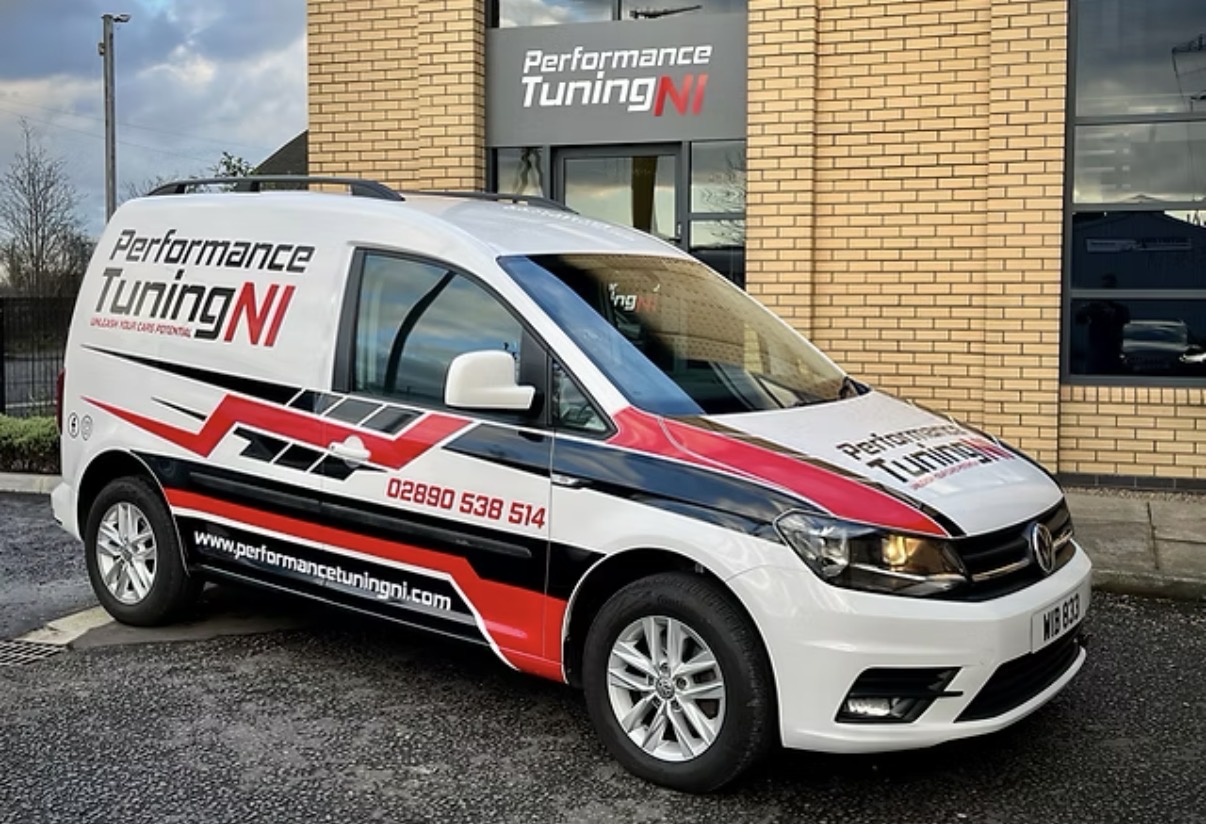
Our approach typically includes:
A pre-tune check of catalyst, lambda sensors and exhaust condition.
An original file backup before any changes are made.
Datalogs or dyno evidence showing what the map actually does.
If you want a tune that sounds right without gambling on your exhaust, get in touch through Performancetuningni and we will start with an assessment.
FAQ
Are burbles good for your car?
A mild, well-controlled burble from a bespoke map is generally lower risk than an aggressive pops-and-bangs file, but neither is risk-free. Repeated fuel-cut events place extra thermal stress on the catalyst, and research on fuel-cut ageing shows this accelerates wear compared with normal driving.
What causes pops and burbles?
Both come from unburnt fuel igniting somewhere in the exhaust rather than the cylinder, triggered by extended fuel injection on overrun, retarded ignition timing, or deliberate cylinder cut-offs. Technical analysis of these control strategies explains how shifting combustion later in the cycle pushes flame and heat into the manifold.
Will pops and bangs fail MOT?
They can, if the exhaust noise is judged unreasonably above a comparable standard vehicle, or if original emissions equipment is found missing or modified. The MOT inspection manual confirms either issue results in a failure on vehicles first used on or after 1 September 2002.
Is it illegal to have a burble tune?
There is no outright ban on a burble effect itself, but the vehicle still has to pass MOT noise and emissions checks and meet road use rules. A custom remap that keeps original emissions equipment intact and avoids excessive noise is the safer route to staying compliant.
How can I reduce the risk of catalyst damage from a burble tune?
Start with a hardware check of the catalyst, lambda sensors and exhaust integrity, then choose a bespoke map rather than a generic aggressive file. Industry commentary on burble tune risks notes that a well-designed custom map considering the vehicle’s own catalyst and exhaust is far safer than an off-the-shelf setting.
Sources
Recommended