
Petrol Remap Gains in NI: Why Turbo Engines Have More Headroom

A petrol remap typically delivers meaningful, verifiable changes: turbocharged engines often see larger percentage gains than naturally aspirated ones, and MPG moves in either direction depending on which map you choose. Before booking, ask for dyno or datalog proof, and check your insurance and warranty position, since a remap counts as a declarable modification.
TL;DR:
A healthy turbo petrol engine may gain roughly 8 to 20% on a conservative Stage 1 map, while naturally aspirated engines usually gain less.
Choose an economy map if fuel savings matter, but gains depend on steady driving, suitable fuel, correct tire pressure, and regular servicing.
Before booking, request before and after dyno figures from the same dyno on the same day, plus real drive logs for boost, fueling, and timing.
Declare the remap to your insurer and confirm coverage in writing; check warranty terms first, and keep the original ECU file for reversal.
Table of Contents
Typical power and torque gains for petrol engines by type
The size of a petrol remap’s gains depends heavily on whether your engine is turbocharged or naturally aspirated. Turbo petrol engines have more headroom because a remap can adjust boost pressure alongside fuelling and ignition timing, giving the calibrator several levers to pull at once. Naturally aspirated engines only respond to fuelling and ignition changes, so the ceiling is lower.
According to RAC Drive, turbo petrol engines generally have more tuning headroom and commonly show larger percentage gains than naturally aspirated petrol engines, partly because boost control gives the calibrator extra scope beyond fuel and ignition adjustments.
Here is a realistic breakdown by engine type:
Turbocharged petrol engines: more power and torque on a Stage 1 map, often translating to a noticeable increase in bhp on a mid-size hot hatch or saloon engine, though the exact bhp figure depends on the base output.
Naturally aspirated petrol engines: smaller gains, usually modest since there is no boost pressure to adjust and the scope is limited to fuel and ignition refinement.
Larger turbo petrol engines (2.0 litre and above): can sometimes see gains at the top end of the typical range or slightly beyond it, because bigger turbos and intercoolers often have more unused capacity from the factory.
Highly stressed small-displacement turbos: sometimes see smaller percentage gains than larger turbo units, since manufacturers have already extracted more of the available performance to meet efficiency targets.
Numbers above these typical ranges usually require supporting hardware changes, such as a larger intercooler, upgraded exhaust or a more aggressive turbo, or a more aggressive map that pushes closer to the engine’s mechanical limits. A tuner offering drastically higher figures on an unmodified, standard engine should be treated with caution, since those claims rarely hold up against measured dyno results.
It’s worth remembering that percentage gains and absolute bhp gains tell different stories. Always ask what the percentage is being calculated from.
How a remap changes ECU parameters and why that matters
A remap works by rewriting the calibration tables inside your engine control unit, adjusting how it responds to the conditions it reads from its sensors. Rather than replacing hardware, the tuner changes the targets and limits the ECU uses when deciding how much fuel to inject, when to fire the spark plug and, on turbo engines, how much boost pressure to allow.
The main parameters altered are:
Fuelling: adjusts the air-fuel ratio across the rev range, often allowing slightly richer mixtures at high load for more power while keeping lean cruise settings for economy.
Ignition timing: changes when the spark fires relative to piston position; advancing timing within safe limits improves combustion efficiency and throttle response.
Boost pressure (turbo engines): raises the target boost the turbo is allowed to produce, which is the single biggest contributor to extra torque on turbocharged petrols.
Throttle mapping: smooths or sharpens how pedal input translates to throttle opening, which is often what drivers notice first as “better response” rather than a raw number.
On naturally aspirated engines, the calibrator has only fuelling and ignition to work with, which explains the lower gains. On turbo engines, boost control adds an extra, more powerful lever, which is why turbo petrols generally have more tuning headroom, as RAC Drive notes.
A proper petrol remap balances performance and safety: calibrators target ignition timing, boost and fuelling to maximise responsiveness within the engine’s mechanical limits, rather than chasing the highest possible peak figure. This is also why a Stage 1 remap, which uses only the factory hardware, is deliberately more conservative than later stages that assume supporting modifications.
Pro Tip: Ask your tuner whether the map has been calibrated specifically for your engine’s variant and mileage, rather than applied as a generic file, since engine wear and factory revisions both affect what’s safe to push.
What changes the size of your gains: factors to check first
Not every car of the same model and engine will see identical results. Several practical factors shift where your car lands within the typical ranges, and checking them before booking helps set realistic expectations.
Age and mileage: older or high-mileage engines may have more carbon build-up, worn components or sensor drift, which can limit how aggressively a calibrator can safely push the map.
Service history: a well-maintained engine with fresh oil, a healthy air filter and no outstanding faults responds more predictably than one with neglected servicing.
Hardware condition: the factory intercooler, turbo, exhaust and intake all have physical limits; a remap cannot exceed what that hardware can safely handle without supporting upgrades.
Fuel quality and octane: higher-octane petrol resists knock better, which can allow a calibrator to run slightly more advanced ignition timing on engines that support it.
Existing modifications: a car with an aftermarket exhaust, intake or intercooler may already have removed some factory restrictions, often allowing a remap to unlock a bit more than on a fully stock car.
ECU software version: different production years of the same engine sometimes run different base calibrations, so the baseline your car starts from affects the achievable gain.
A pre-diagnostic check should cover fault codes, sensor readings and general engine health before any map is written, since an underlying issue can both limit gains and create a false impression of what the remap itself achieved.
Fuel economy and everyday drivability after a remap
A remap changes more than peak power. It also reshapes the torque curve, which affects how the engine feels day to day.
A performance map can see a slight MPG drop, simply because stronger acceleration tends to invite more frequent, harder use of the throttle. Fuel savings reported after a remap hinge heavily on driving style: an economy map only delivers its savings if you avoid using the extra torque as an excuse to accelerate more often. Our own experience with economy maps reflects this pattern, with drivers who maintain steady throttle habits seeing the more consistent savings.
Beyond the headline MPG figure, many drivers notice improved mid-range pulling power and fewer flat spots, which means less need to downshift or floor the throttle to overtake or merge, itself a factor that can support better real-world economy even on a performance map.
Keep tyre pressures correct: under-inflated tyres increase rolling resistance and quietly erode any fuel savings from the remap.
Drive at a steady throttle: smooth, early gear changes preserve economy gains better than short, sharp acceleration bursts.
Service on schedule: a well-maintained engine holds its calibrated efficiency for longer than one running on old oil or a clogged filter.
Pro Tip: If fuel economy is your main goal, ask specifically for an economy map rather than a performance map, since the two are calibrated with different priorities even on the same engine.
Testing and proof: dyno runs, datalogs and before and after metrics
Objective evidence is what separates a credible remap from a marketing claim. A dyno chart shows measured power and torque across the rev range, but the numbers only mean something alongside the ambient conditions on the day, since temperature, humidity and altitude all affect the reading. Reputable tuners provide before-and-after dyno charts and datalogs as the objective evidence behind claimed gains.
Datalogs are often more useful for everyday drivability proof than a single dyno run, since they capture real-world figures such as boost pressure, fuelling and ignition timing as you actually drive, rather than a single controlled pull on rollers.
Before agreeing to a remap, ask for:
Before and after bhp and torque figures, ideally from the same dyno on the same day for a fair comparison.
The RPM bands where the biggest gains occur, since peak figures alone can hide a flat mid-range.
Datalog extracts showing boost, fuelling and timing changes across a real drive, not just a dyno session.
Remember that a percentage gain only means as much as the baseline it’s calculated from, so always ask what the original bhp and torque figures were before the remap.
Insurance, warranty and legal practicalities to check
A remap changes how your engine performs, and that has knock-on effects beyond the car itself. RAC Drive notes that engine remapping needs to be declared to your insurer as a material modification, since failing to declare it can lead to cancelled cover or refused claims when you need them most.
Declare the remap to your insurer: expect a possible premium change, and get written confirmation that cover remains valid.
Check your manufacturer or warranty provider’s position: some warranties exclude engine-related claims after a remap, so confirm this before booking if your car is still under cover.
Keep the original ECU file: a reputable tuner backs up the factory settings, which supports a warranty claim if you ever need to roll back to stock.
Check if your V5C needs updating: Gov confirms that changes affecting details on your registration certificate, such as a change of fuel type, must be notified to the DVLA, though a standard remap that doesn’t alter these details typically doesn’t require this step.
These checks take a few minutes but protect you from a cancelled policy or a denied warranty claim later.
What to expect from a reputable tuner for the best result
A trustworthy remap appointment follows a clear sequence, and knowing what to expect helps you spot a tuner who cuts corners.
Pre-diagnostic check: the tuner scans for fault codes and verifies engine health before writing any map.
Original ECU backup: your factory file is saved so the car can be returned to stock at any point.
Map writing and installation: carried out either at a workshop or via a mobile visit, typically taking one to two hours depending on the vehicle and engine.
Proof of results: expect datalogs or dyno charts showing measured before and after figures, plus advice on how the car should behave during the first few drives.
Pro Tip: Walk away from any tuner who won’t provide a backup file or measured proof. No proof, no backup and unrealistic headline figures on a standard engine are the clearest warning signs.
Common myths and misconceptions about petrol remap gains
A few persistent myths cause unrealistic expectations. The first is that every car of a given model gains the same bhp. In reality, mileage, service history and the specific ECU software version all shift the outcome, so two seemingly identical cars can respond differently.
Another common myth is that bigger percentage claims always mean a better remap. A calibrator pushing numbers beyond the typical conservative range on unmodified hardware is often trading long-term reliability for a headline figure, rather than demonstrating superior skill.
Some drivers also assume a remap always damages fuel economy. As covered earlier, an economy-focused map can improve MPG, while only a performance-focused map tends to trade some economy for stronger acceleration, and even then the effect depends heavily on driving style.
Finally, there’s a belief that remapping is a one-way, risky modification. In practice, a remap is reversible: tuners typically keep an original ECU backup so factory settings can be restored, as RAC Drive confirms, which means a dissatisfied owner isn’t stuck with the change permanently.
Petrol remapping versus hardware performance upgrades
Remapping and hardware modifications solve different problems, and understanding the distinction helps you choose the right starting point. A remap adjusts how the existing engine and hardware are used, recalibrating fuelling, ignition and boost within what the factory components can already handle. It’s generally quicker to fit and lower cost than physical upgrades.
Hardware changes, such as a larger intercooler, upgraded exhaust or bigger turbo, physically increase what the engine is capable of, which is why they’re usually needed before a map can safely exceed the typical conservative gains described earlier. Without supporting hardware, pushing a map beyond those ranges risks running close to or beyond a component’s design limit.
For most petrol owners looking for a noticeable, reliable improvement without altering the car physically, a remap on its own covers the bulk of the available gain. Hardware upgrades make more sense once you’ve already reached the ceiling a map alone can safely deliver, or when you’re building towards a specific, higher target.
Steps in the petrol remapping process from consultation to execution
A typical remap follows a consistent sequence regardless of the engine. It starts with a conversation about your car’s current fuelling, mileage and any existing modifications, along with what you want from the result, whether that’s outright power or better economy.
Next comes the pre-diagnostic check, scanning for fault codes and confirming the engine is in a healthy state to be tuned. The tuner then reads and backs up your original ECU file, giving you a safety net to return to stock at any point.
The calibrator writes a custom map suited to your specific engine, mileage and fuel type, rather than applying a generic file across every car of that model. Once installed, the car is taken for a test drive or dyno run to confirm the map behaves as intended, with datalogs or dyno figures recorded as proof. Finally, you receive guidance on how the car should feel during the first few drives, including any settling-in behaviour to expect.
Aftercare advice to maintain remap benefits and engine health
Keeping the benefits of a remap going requires a little ongoing attention. Stick to the manufacturer’s recommended service intervals, since fresh oil and a clean air filter both support the calibration the tuner has written for your engine.
Pay attention to fuel quality, particularly if your map was calibrated with higher-octane petrol in mind, since consistently using a lower grade can increase the risk of the ECU retarding ignition timing to protect against knock, quietly reducing the gains you’re paying for.
Keep an eye on general engine health between services. Unusual noises, warning lights or a drop in responsiveness are worth investigating promptly, since an underlying mechanical issue can mask itself as a map problem. A clean engine bay also makes it easier to spot leaks or wear early. Diamondbrite’s guidance on engine bay cleaning covers safe methods that avoid damaging sensors or wiring during routine cleaning.
Finally, drive the car normally for the first few journeys after a remap, giving the ECU a chance to adapt its adaptive fuelling trims to the new calibration, and avoid long periods of idling or short journeys that don’t let the engine reach normal operating temperature.

Real customer scenarios and typical gain outcomes
Individual results vary, but a few typical patterns show up repeatedly. A turbo petrol hot hatch in good mechanical condition, with a full service history and no existing faults, tends to land towards the upper end of the typical 8 to 20% range on a Stage 1 map, since there’s no underlying issue limiting what the calibrator can safely do.
A higher-mileage turbo petrol saloon with a patchier service history often lands towards the lower end of that same range, not because the remap is less effective, but because the calibrator is working more conservatively to protect an engine that’s seen more wear.
Naturally aspirated engines show a quieter story: gains are smaller in absolute terms, but owners often report the biggest change is in throttle response and smoothness through the rev range, rather than a dramatic shift in peak figures. Our turbo diesel remap example illustrates how measured before and after figures are typically reported and verified, a format that applies equally to petrol engines, just with different baseline numbers.
What experience with petrol remaps tells us
Across the petrol remaps we’ve carried out, turbo engines consistently show the biggest, most repeatable gains, while naturally aspirated cars benefit more from smoother delivery than headline figures. We always recommend a custom map over a generic file. If you want a feel for your own car’s potential, our remap calculator gives a quick estimate.
— Mark
How Performance Tuning NI can help you get there
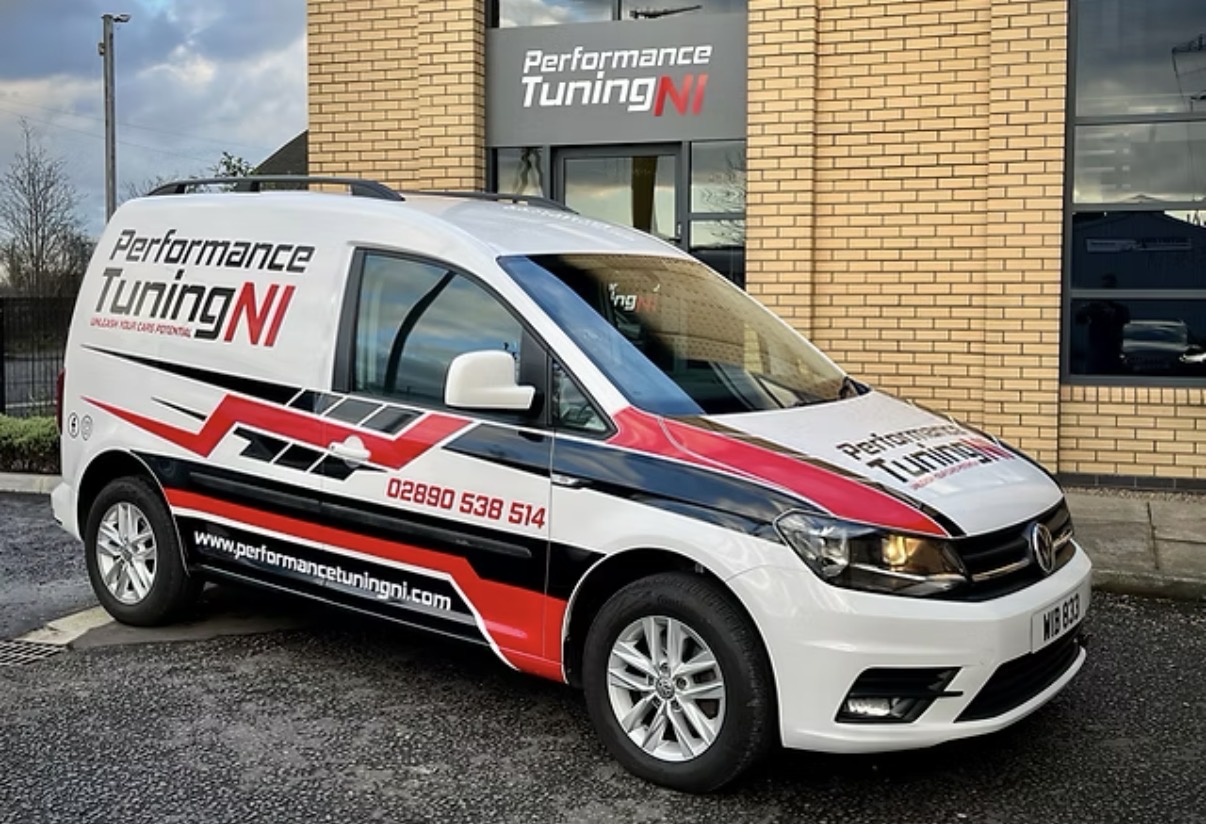
Custom performance and economy remaps for petrol engines are typically tailored to each car’s specific condition rather than applied as a generic file, with options for workshop or mobile appointments. Remapping services usually start with a pre-diagnostic check and an original ECU backup, providing proof of results alongside peace of mind.
Performance remaps: for drivers chasing stronger throttle response and more usable torque.
Economy remaps: for drivers who want fuel savings without changing how the car drives day to day.
Mobile or workshop appointments: fitted around your schedule rather than the other way round.
Use our remap calculator for a quick estimate based on your vehicle, or visit our remapping page to see service options and book an appointment.
FAQ
How long does a car remap last?
A remap is permanent until it’s deliberately changed or reverted, since it’s a software calibration rather than a wearing part. It can be reversed at any time using the original ECU backup your tuner should keep on file, as RAC Drive notes.
Does a stage 1 tune affect MPG?
A Stage 1 tune can affect MPG in either direction depending on which map you choose.
What gains will I get from a remap?
Turbo petrol engines commonly see power and torque uplifts of around 8 to 20% on a conservative Stage 1 map, according to typical ranges reported for turbo petrol tuning.
Will a tuner help with gas mileage?
A tuner can improve fuel economy by writing an economy-focused map rather than a performance one, leaning the fuel mixture during cruising and light-load driving.
Do I need to tell my insurer about a remap?
Yes, a remap needs to be declared to your insurer as a material modification, since RAC Drive confirms that failing to declare it can lead to cancelled cover or refused claims. It’s worth getting written confirmation that your cover remains valid once declared.
Sources
Recommended