
Stop Guessing: 6 Checks UK Garages Want When Glow Plug Light Flashes

A flashing glow plug light usually means the engine management system has detected an active fault rather than the normal preheat cycle finishing. If it comes with heavy smoke, limp mode, overheating or other red warnings, stop safely and call recovery. Otherwise, scan for fault codes and drive cautiously to a repairer rather than ignoring it.
TL;DR:
A flashing glow plug light typically indicates a stored or pending engine fault, not just a cold-start preheat issue, requiring diagnosis rather than immediate repair.
Common causes include glow plug wear, wiring faults, sensor issues, or related systems like the EGR valve and DPF, with symptoms like smoke, power loss, or brake light malfunctions providing clues.
Fault codes from a scan reveal whether the problem involves the glow plugs, control module, wiring, or emission system, guiding targeted repairs over guesswork.
Driving cautiously is usually safe if no smoke or power loss occurs, but heavy smoke, rising temperature, or limp mode necessitate stopping and calling recovery.
Proper diagnosis relies on a systematic scan, live data checks, and visual inspection, avoiding unnecessary part replacements and preventing further engine or emission system damage.
Table of Contents
Normal preheat versus a flashing warning: what’s different
The glow plug light is meant to appear briefly when you turn the key, staying on for a few seconds while the plugs heat the combustion chambers before a cold start. Colder weather extends that preheat period, so a longer glow phase on a frosty morning is normal, not a fault.
Flashing while the engine is running is a different signal entirely. According to Volkswagen UK’s guidance, a flashing or continuously illuminated diesel engine management lamp while driving indicates a fault, and the advice is to drive slowly to an authorised repairer and have the engine checked. The ECU has typically logged a reading it cannot reconcile with expected values, whether that’s a glow plug circuit, a sensor input or something broader in the emissions system.
Not every manufacturer treats the lamp the same way. Some vehicles use a dedicated glow plug icon strictly for preheat and cold-start faults, while others, including several diesel platforms, use the same lamp as a general engine management warning that covers far more than the glow plugs themselves.
Preheat lasts a few seconds and switches off once combustion temperature is reached.
Flashing during or after driving usually means a stored or pending fault code, not a preheat issue.
The owner’s handbook tells you exactly what your model’s lamp is designed to cover, which varies between manufacturers.
Common causes and how to spot them
A flashing lamp rarely has one single cause, so working through the visible clues first narrows things down before any parts get replaced.
White or grey smoke on cold starts often points to a worn or failed glow plug struggling to ignite fuel cleanly.
Power loss or limp mode under load tends to suggest boost, fuel pressure or DPF-related restrictions rather than the glow plugs themselves.
Brake lights not working alongside the warning can indicate a brake-switch or brake-light circuit fault, which some diesel platforms tie directly into the glow plug lamp’s logic.
Rough idling or hard starting in cold weather is a classic sign of one or more failing glow plugs or a faulty control relay.
Intermittent flashing with no other symptoms often traces back to a wiring fault, a corroded connector or a weak battery affecting voltage to the glow plug circuit.
The brake-light connection catches a lot of owners out. On some Volkswagen Group diesels, the glow plug lamp doubles as a general warning that also monitors the brake-switch circuit, according to technical guides on the fault, so a blown brake-light bulb or a failed switch can trigger the same lamp you’d expect to see for a plug fault. Checking whether your brake lights still work is a thirty-second test that can rule out an entire category of causes before you touch anything under the bonnet.
DENSO’s guidance on the warning light notes that the lamp should not be ignored once it stays on or starts flashing, since that behaviour usually means further diagnosis is needed and may point to worn glow plugs or a faulty control module rather than a transient blip.
A flashing glow plug lamp can trace back to several distinct systems working correctly, and the fault might sit in the plugs, the control module, the EGR valve, the DPF or simply a weak battery, according to technical explainers on the fault.
A visual check under the bonnet is worthwhile when you can see an obviously damaged connector, a corroded battery terminal or a loose fuse, but most of the causes above need a scan tool and live data to confirm. Guessing at parts based on symptoms alone is how owners end up replacing glow plugs that were never faulty while the real problem, often in the EGR valve or a wiring fault, goes untouched. If EGR symptoms look familiar from the list above, it’s worth reading up before booking any repair.

What to do the moment the light starts flashing
The first few minutes matter, both for your safety and for giving a technician useful information to work with.
Note exactly when it started flashing, whether that’s at ignition, during acceleration or after several minutes of driving.
Check for other warning lights appearing at the same time, since a combined pattern narrows the diagnosis considerably.
Look for smoke, unusual noises or a burning smell, any of which raise the urgency significantly.
Check whether the car has lost power or entered a reduced-performance mode, often felt as sluggish acceleration or a capped engine speed.
Test your brake lights with someone standing behind the car, given how often a brake-switch fault triggers this same lamp.
Avoid heavy acceleration, towing or motorway driving until you know what’s wrong.
If there’s no smoke, no overheating and no dramatic power loss, a cautious drive to a workshop is generally reasonable. If you see heavy smoke, the temperature gauge climbing or the car losing power dramatically, stop somewhere safe and arrange recovery rather than pushing on, a point echoed in technical guidance on flashing glow plug lamps.
Pro Tip: Resist the temptation to repeatedly switch the engine off and on to “clear” the light. Restarting doesn’t fix the underlying fault, and it can mask the freeze-frame data a scan tool would otherwise capture.
Forcing a DPF regeneration by driving hard when the lamp is flashing for an unrelated reason can also do more harm than good, something worth bearing in mind if you’ve read about driving to trigger regeneration as a fix elsewhere.
How a workshop actually diagnoses the fault
Professional diagnosis starts with a scan, not a parts order. Plugging in an OBD-II reader retrieves stored and pending diagnostic trouble codes, along with freeze-frame data showing the exact conditions, engine speed, coolant temperature and load, present when the fault was logged.
Carista’s technical guide lists P0380 and related cylinder-circuit codes as common findings tied to glow plug warnings, and warns that continuing to drive with the light flashing can hurt fuel efficiency and risk further engine damage over time.
Code range | What it generally points to |
P0380 | Glow plug/heater circuit, bank A, general fault |
P0380 | Individual glow plug circuit faults, cylinder-specific |
P0670 | Glow plug control module and circuit faults |
Once codes are pulled, a technician moves to live data rather than assuming the code names the broken part outright:
Battery and charging voltage, since a weak battery can mimic a glow plug circuit fault.
Individual glow plug current draw, tested with a clamp ammeter to spot a plug drawing too little or too much current.
Fuel pressure and boost readings, checked when the symptoms suggest power loss rather than a pure cold-start issue.
Brake-switch plausibility, confirming whether the brake circuit is feeding the ECU a signal it doesn’t expect.
The recommended order, according to technical diagnostic guidance, is to record how and when the lamp appears, scan for codes and freeze-frame data, inspect the brake-lamp circuit and fuses, confirm the battery and charging system, and only then test individual glow plug circuits before anything gets replaced. Independent diagnostic services, such as the engine diagnostics work described by GarageMap, follow broadly the same scan-first approach across diesel and petrol vehicles alike.
When it points to an emissions fault and what that means for your MOT
A flashing glow plug lamp sometimes traces back to the DPF, EGR valve or associated sensors rather than the glow plugs themselves, and that has consequences of the warning light.
DVSA’s MOT inspection manual requires testers to check the engine malfunction indicator lamp, and a vehicle can receive a major fault for visible smoke or for evidence that a particulate filter has been tampered with. A DPF-related cause behind your flashing light is not just a driving inconvenience, it can be the reason a car fails its MOT outright.
Visible exhaust smoke during the test is grounds for a fail under current guidance.
Evidence of DPF removal or tampering is treated seriously and will fail the vehicle.
A stored emissions fault code, even without visible smoke, can point testers towards a deeper check.
Trying to “drive out” a blocked filter when the real fault lies elsewhere, in the EGR valve or a sensor, tends to load the DPF with more soot rather than clearing it, and DVSA’s own guidance notes that ad hoc driving to force regeneration can increase soot loading and risk component damage. If you recognise the pattern from common DPF blockage symptoms, it’s worth having the EGR and DPF checked together rather than assuming one or the other in isolation. Before assuming a DPF needs replacing outright, it’s worth working through the diagnostic checks that can rule out a full replacement.
What a proper repair looks like and what to expect from it
A reputable workshop follows a consistent order regardless of which system turns out to be at fault: scan for codes, inspect wiring and connectors visually, pull live data, then run targeted bench or clamp tests on the specific component the data points to. Replacing parts before that sequence is complete is how straightforward faults turn into expensive guesswork.
The repair itself depends entirely on what the diagnosis finds:
A single faulty glow plug is usually the cheapest fix, though plugs are often replaced as a set if several are worn to a similar degree.
A failed glow plug control module or relay is a more involved repair, since the module manages timing and current across all cylinders.
Wiring or connector faults can be quick once located, but locating them is the time-consuming part.
DPF cleaning, regeneration or repair varies hugely in scope, from a forced regeneration to a full filter replacement.
EGR valve cleaning or replacement addresses cases where carbon build-up is feeding false readings back to the ECU.
Cost depends on how many cylinders are affected, whether a control module is involved, and local labour rates, so a single figure rarely applies across cases. What stays consistent is the value of a proper diagnostic step before parts are ordered.
Pro Tip: Ask any workshop what diagnostic evidence they’ll give you, whether that’s a fault code printout, freeze-frame data or a datalog, before they book in a repair. It’s the clearest way to tell a targeted fix from a guess.
Why scanning first beats replacing parts first
Most of the expensive glow plug light stories I’ve come across share the same root cause: someone replaced a part based on a hunch rather than a code. Scanning first, even for something as simple as a flashing lamp, saves money and avoids the frustration of fixing the wrong thing twice.
Routine attention to the battery, DPF and EGR valve does more to prevent this warning than any single repair does. A weak battery, a filter overdue for a clean or an EGR valve clogging with carbon are all slow-building problems that eventually surface as a flashing lamp, usually at an inconvenient moment.
The handbook matters more than owners give it credit for. Manufacturers design these lamps differently, and following the specific guidance for your model beats applying generic advice from a forum thread built around a different platform entirely.
— Mark
How Performance Tuning NI can help once the fault’s been found
If your diagnosis points to a clogged EGR valve, a struggling DPF or carbon build-up affecting sensor readings, that’s exactly the territory our EGR Solutions, DPF Solutions and Carbon Cleaning services are built for.
[
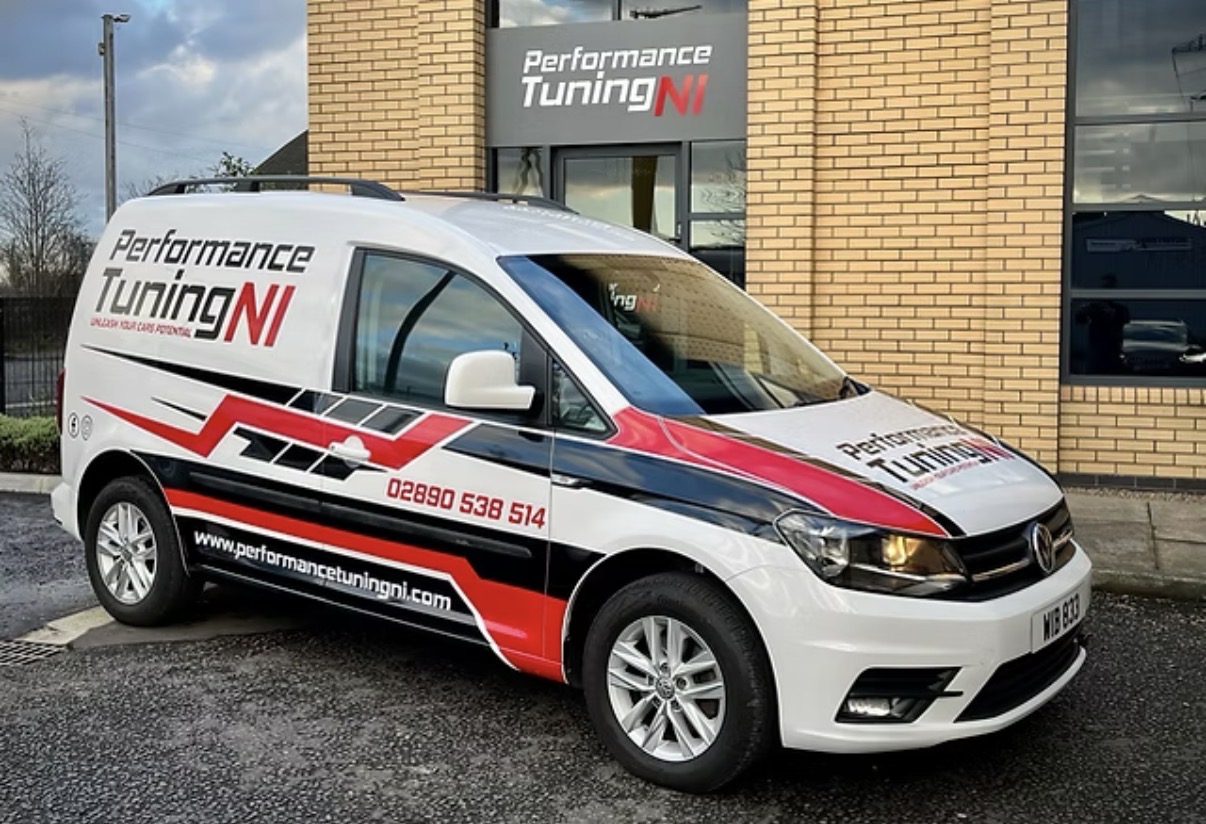
Pre-diagnostic checks before any work starts, giving clarity on what work will be done.
Original file backups kept as standard, providing a fallback and a record of work performed.
Datalogs and reporting to help you understand the work performed and available options.
If a remap is on your radar once the fault is sorted, whether for performance or economy, that sits alongside the same diagnostic approach. Book a slot through our remap calculator or get in touch to talk through what your scan results mean.
Sources
FAQ
Can you drive with a glow plug light flashing?
You can often drive cautiously to a repairer if there’s no smoke, overheating or major power loss, but manufacturer guidance recommends driving slowly and having the engine checked as soon as possible. Stop and arrange recovery instead if you notice heavy smoke, a rapidly climbing temperature gauge or the car entering limp mode.
Why is my glow plug light blinking?
A blinking glow plug light usually means the engine management system has logged a fault, which could involve the glow plugs, the control module, wiring, the EGR valve, the DPF or even the brake-light circuit on some models. The only reliable way to know which is to scan for stored fault codes rather than guess from symptoms alone.
Is a glow plug warning serious?
It should not be ignored, since manufacturer guidance treats a lamp that stays on or flashes as a sign of an active fault needing further diagnosis. It is not always an emergency, but the urgency depends on accompanying symptoms such as smoke, power loss or overheating.
What are the symptoms of a faulty glow plug?
A worn or failed glow plug commonly shows up as white or grey smoke on cold starts, rough idling, hard starting in cold weather and, in some cases, a flashing warning lamp. These symptoms overlap with other causes, such as fuel pressure or EGR faults, which is why a fault-code scan is the standard first step rather than replacing plugs on suspicion.
Recommended