
Save a Deposit: Remap Your Car in the UK and Recoup Costs in a Year
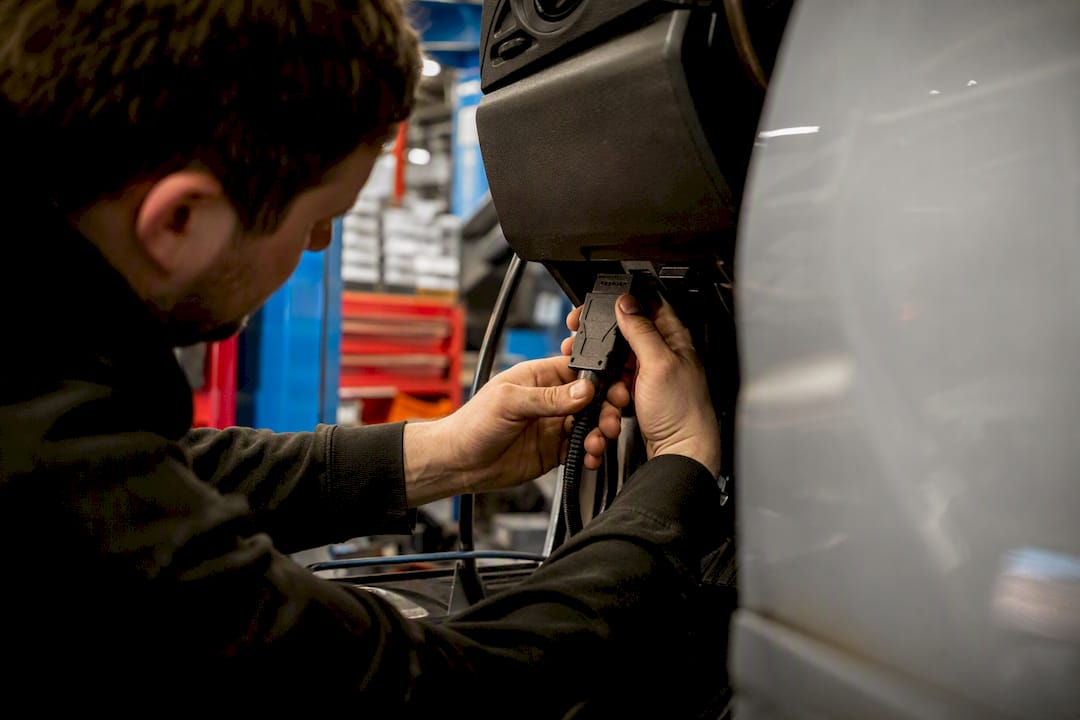
For most owners chasing more power or better fuel economy, a quality remap costs a fraction of a new car and delivers a noticeable, immediate difference. The trade-off is real: RAC guidance and Gov both flag warranty and legal considerations you need to accept first. Done properly, by an experienced tuner like Performancetuningni, it suits drivers who want more from the car they already own rather than a fresh finance agreement.
TL;DR:
A remap can improve turbocharged engines significantly in power and fuel economy, especially when custom-dyno tuned for the specific vehicle.
Warranty claims may be denied if a remap affects engine or transmission components, and it must be declared to insurers to avoid claim rejection.
The cost of a basic remap starts around £250 to £400, which is often cheaper than a deposit for a new car, especially with high-mileage diesel owners.
Legally, remapping is safe if emissions systems are not removed or disabled; illegal modifications risk MOT failure and regulatory penalties.
Proper remapping involves data logging, verification, and guarantees of software rollback, emphasizing the importance of choosing a reputable tuner.
Table of Contents
What engine remapping actually changes
Every petrol or diesel engine runs on a set of instructions stored in its ECU, the small computer that decides how much fuel to inject, when to fire the spark plugs, how hard the turbo pushes and how the throttle responds. Remapping rewrites those instructions. RAC Drive describes it as adjusting the ECU settings to release power the manufacturer left on the table, often for reasons of emissions compliance, market variation, or simple caution.
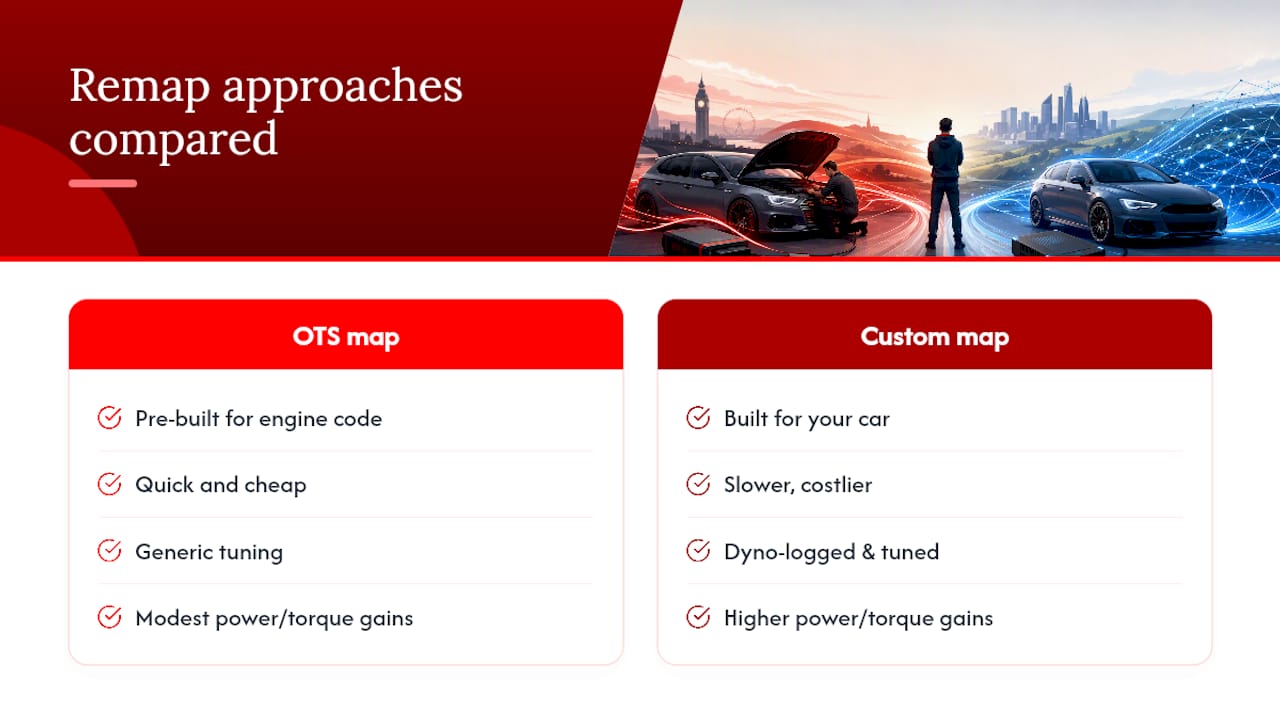
There are two broad approaches. An off-the-shelf (OTS) map is a pre-built file matched to your engine code, quick and cheap but generic. A custom or dyno-tuned map is built around your specific car, logging real data under load and adjusting the map to suit its exact condition. Turbocharged engines respond best, since boost pressure and fuelling both have room to move. Naturally aspirated engines see smaller, more modest gains.
Nothing is permanently altered mechanically. A remap can usually be rolled back to the original software, though the physical stresses it produces during use remain a separate consideration.
The performance and economy case against replacing your car
A turbo diesel typically gains a noticeable increase in power after a well-executed remap, while turbo petrols see a moderate gain, according to figures from a specialist tuning resource. That translates into easier overtakes, less need to work the gearbox on motorway slip roads, and a car that no longer feels breathless with four people and luggage aboard.
Fuel economy can improve too, though the mechanism surprises people. Carwow notes that a remap’s real-world drivability gains often let drivers cruise in taller gears at lower RPM, and ECU tuning research from New Car Future points to earlier upshifts as a pathway to modest MPG gains for high-mileage drivers, not more aggressive acceleration.
Beyond the numbers, remapping offers:
Lower upfront outlay than a deposit on a replacement vehicle
No finance agreement, no new insurance group, no depreciation hit
The ability to keep a car you already know and trust
Pro Tip: A remap only fixes fuelling and timing, not worn components. If the car already feels sluggish, get it serviced first, then remap. Otherwise, you’re just mapping around a fault.
What you risk by remapping instead of replacing
Warranty is the first casualty for many owners. RAC guidance is blunt that manufacturers can refuse warranty claims on components affected by a remap, particularly the engine and transmission, even if the fault seems unrelated. A car still under manufacturer cover needs this weighed carefully against the gains on offer.
Insurance carries its own obligation; for example, approved trackers can lower premiums and are recommended for security, as explained in the car tracker insurance premium benefits guide. Uswitch and Money.co.uk both note that a remap must be declared to your insurer, and premiums can rise as a result. Fail to disclose it, and the Financial Ombudsman Service has repeatedly upheld insurers’ right to reject claims where an undisclosed modification contributed to a loss. That is a bigger financial risk than the remap itself.
Other things worth weighing before you commit:
Increased boost and torque add stress to the clutch, gearbox and cooling system, especially on high-mileage cars
Emissions-related components are covered by strict rules; gov.uk warns against altering systems like the DPF or EGR without understanding the legal implications
A car that fails its MOT on emissions after a poorly judged remap costs more to fix than it saved
What a remap costs versus what a new car costs
Prices vary by engine and tuner quality. Typical UK bands, drawn from industry cost data, run roughly like this:
OTS remap: around £250 to £400 for most mainstream petrol and diesel engines
Bespoke mid-range remap: higher, reflecting the time spent logging and refining the map for your specific car
Full dyno-tuned custom remap: the most expensive route, but the most accurate, especially where hardware changes like an intercooler or exhaust are also fitted
Add-ons: carbon cleaning is often bundled with a remap to clear a blocked EGR or DPF before tuning, rather than mapping around a restriction
Payback depends on how you drive. A high-mileage diesel driver covering 20,000 miles a year on a modest economy remap can realistically claw back the cost within a year through reduced fuel spend, particularly if the current map is conservative from the factory. A performance-focused owner may never “recoup” the cost in fuel savings, but measures the return in drivability and enjoyment instead, which a spreadsheet won’t capture.
Compare that with a replacement car: a deposit alone often exceeds the entire cost of a bespoke remap, before finance interest, higher insurance grouping, and immediate depreciation are factored in.
How to pick a tuner who won’t wreck your engine
Before booking, run through a short checklist. Practical guidance from remapping specialists recommends a full service, checking for boost leaks, and replacing worn coils or plugs first, since a remap will happily amplify an existing fault rather than fix it.
A reputable process looks like this: the tuner reads and backs up your original file, logs data from the car under real conditions, applies the new map, then verifies results on the road or a dyno. Ask for evidence of that process before you pay anything.
Questions worth asking any tuner:
Can you show dyno results or before-and-after data logs, not just marketing claims?
Is there a written guarantee the original software can be restored?
Do you have reviews from owners of a similar make and model?
Walk away from anyone offering a single generic file with no logging, no rollback promise, and no willingness to discuss your car’s specific history.
How Performancetuningni approaches every remap
Performancetuningni builds custom remaps for petrol and diesel engines, covering everything from daily runabouts to performance cars, with a mobile service available for owners who can’t get to a workshop. The company has tuned thousands of vehicles and holds a five-star Google rating, a track record built on repeat local business rather than one-off sales.
What that looks like in practice:
Data logging before and after each remap to confirm real gains, not assumed ones
Custom mapping rather than a generic one-size file, suited to the individual car’s condition
Mobile appointments that fit around your schedule rather than a workshop’s
Owners wanting a quick estimate before booking can start with the free remap calculator to see likely gains for their specific registration.
The one-line verdict
Remap if you want more power or better economy from a car you’re happy to keep; buy new if you need the latest safety tech, a longer warranty, or you’re outgrowing the car itself. Either way, start with a health check and a written remap quote before deciding.
Comparing the environmental footprint of remapping and buying new
A remap changes nothing about the physical car, so its environmental cost is close to zero beyond the software work itself. Building a new car is a different story entirely: raw material extraction, battery or engine manufacturing, and global shipping all carry a substantial carbon cost before the car ever reaches a forecourt. Keeping an existing vehicle on the road for longer avoids that manufacturing footprint altogether, which is why some sustainability arguments favour maintaining older cars over constant replacement cycles.

The counterargument concerns tailpipe emissions. A remap that increases power without careful attention to the emissions map can push a car’s NOx or particulate output higher, and gov.uk’s guidance on modifying emissions systems is explicit that altering emissions-related equipment carries legal exposure precisely because of this risk. A newer car, particularly one meeting the latest Euro emissions standard, will usually produce less pollution per mile than an older remapped one, regardless of how well the tune is done.
The honest middle ground: a competent remap that improves fuel economy through better torque delivery can modestly reduce fuel burned per mile, which has its own emissions benefit. A remap chasing maximum power with no regard for the emissions system does the opposite. The environmental case for remapping rests entirely on how it’s done, not simply on the fact that it avoids building a new car.
Where remapping sits legally, and why it varies by region
Remapping itself is not illegal in the UK. What matters legally is what the remap touches and whether the car remains compliant with the rules that applied when it was built or last tested. Gov.uk’s guidance is direct on this point: altering emissions-related systems can breach both vehicle standards and, in some circumstances, environmental regulations, with penalties attached.
MOT testing is the practical enforcement point most owners will encounter. A car remapped in a way that disables or removes emissions equipment, rather than simply adjusting fuelling and timing within the existing hardware, risks failing its annual test. Testers increasingly check for signs of tampering with systems like the DPF or EGR valve, and a car presenting with one physically removed will fail regardless of how it drives.
Regions and countries differ in how strictly this is enforced and interpreted, and rules on modified vehicles can change with little warning as environmental policy tightens. What holds constant is the principle: adjusting parameters within a system that remains present and functional carries far less legal risk than removing or disabling equipment altogether. Any tuner suggesting the removal of emissions hardware as part of a “remap” is offering something legally riskier than a straightforward ECU adjustment, and that distinction is worth understanding before booking anything.
Reliability and maintenance over the years ahead
A new car’s reliability curve is well understood: low maintenance costs and full warranty cover for the first few years, then a gradual rise in wear-related repairs as it ages. A remapped car follows a similar curve, just shifted by the extra stress the remap introduces on components already working near their designed limits.
Clutches, dual-mass flywheels and gearboxes tend to feel the difference first, particularly on cars where torque has increased significantly. A car doing high mileage with a diesel economy remap, focused on smoother torque delivery rather than outright power, tends to show far less extra wear than one chasing maximum output from a performance-focused tune. The distinction between the two use cases matters more for long-term reliability than the remap itself.
Buying new avoids this consideration entirely for the length of the warranty period, but that protection has an expiry date, and a new car eventually faces the same wear patterns any car does. The real long-term question isn’t remap versus no remap. It’s whether the underlying car was well maintained before the remap went on, and whether the tuner respected the mechanical ceiling of the components involved rather than pushing past it for a bigger number on a spec sheet.
An editorial take on the remap-or-replace decision
The conventional advice on this topic treats remapping as a niche interest for enthusiasts and buying new as the sensible default for everyone else. That gets the framing backwards. For a huge number of owners, particularly those running a diesel doing serious motorway miles, an economy-focused remap is the more rational financial decision, not the riskier one.
Where the conventional wisdom falls short is in lumping every remap into one bucket. A carefully logged, dyno-verified custom map on a well-maintained engine carries a fraction of the risk of a cheap generic file slapped onto a car with an existing fault. Treating “remapping” as a single uniform risk, rather than a spectrum from careful to careless, is the biggest misunderstanding readers bring to this decision.
Prioritise the tuner’s process before the promised numbers. A shop that logs data, shows you before-and-after figures, and guarantees a rollback is offering something categorically different from one quoting a flat percentage gain over the phone. That difference in process, not the underlying technology, decides whether a remap ages well or becomes an expensive mistake.
— Mark
Book a remap instead of a deposit on a new car
Performancetuningni is the practical alternative to a new car finance deal: a bespoke ECU remap costs a fraction of a deposit, keeps you in the car you already know, and can be done at your home or workplace through the company’s mobile service. Every remap is built around data logged from your specific engine, not a generic file, so the gains in power, torque and economy match your car’s actual condition rather than a spec sheet average.
[
If you’re weighing up whether your engine has room to improve, start with the free remap calculator to see likely gains for your registration. From there, book a health check and a written quote through the engine remapping and ECU tuning service before you spend a penny on a replacement car.
Sources
Recommended