
Uneven power delivery: diagnosis and fixes for car owners
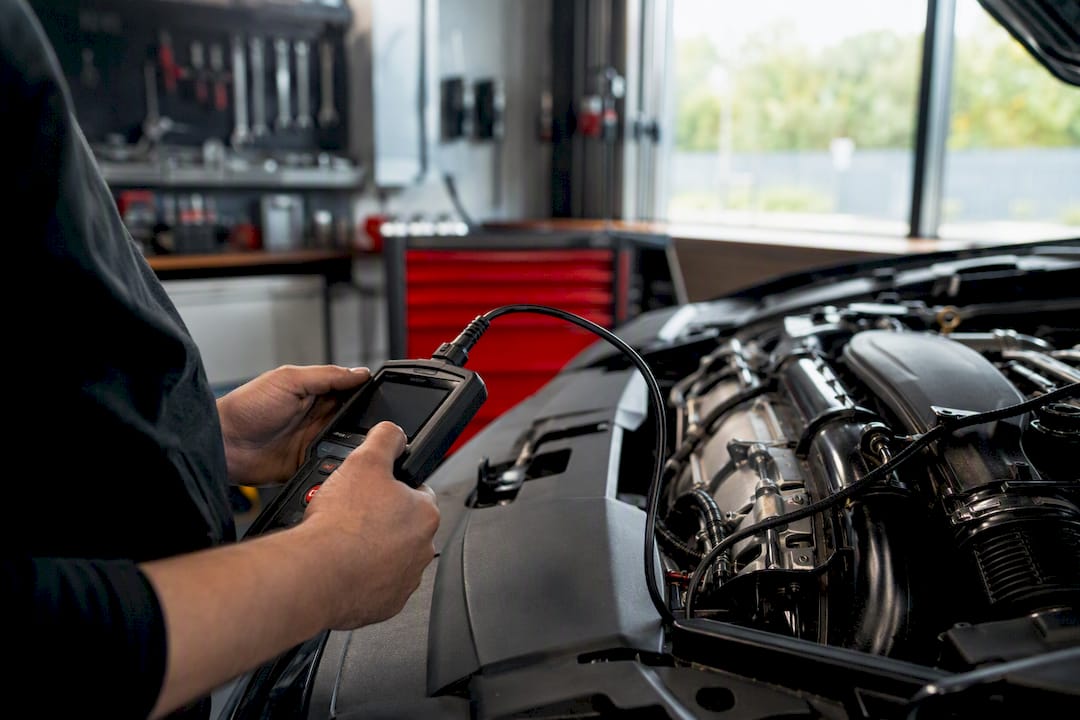
Uneven power delivery is your engine failing to produce steady thrust when you ask for it. Stop driving if the surging is severe, paired with warning lights, or feels like a sudden loss of power. A milder version of the problem can usually wait for a booked appointment, provided you drive gently on the way there.
Before booking anywhere, gather evidence. It costs nothing and saves hours of guesswork at the workshop.
Pull fault codes first with any OBD-II reader, even a basic one.
Film a short road test under load, timestamped, so a mechanic can see exactly when the fault appears.
Note what you hear and feel: a knock, a hesitation, a smell of fuel, a warning light flickering on and off.
Most uneven power delivery traces back to one of four systems: fuel supply, ignition, air metering and sensors, or turbo boost control. Rarely is it one dramatic failure. Usually it’s one component quietly underperforming until load exposes it.
Key Takeaways
Uneven power delivery almost always traces to fuel, ignition, air metering, or boost control, and the fastest fix comes from logging live data under load before replacing any parts.
Point | Details |
Safety comes first | Stop driving if you smell fuel, see heavy smoke, or the car enters limp mode. |
Capture evidence before repairs | Pull fault codes and film a road test under load so a garage has reproducible data. |
Cheap checks first | Air filter, MAF cleaning, and hose inspection often rule out common faults for little cost. |
Specialist tests for hidden faults | Fuel-pressure traces, boost gauges, and smoke tests catch what a basic scan tool misses. |
Fix hardware before tuning | Performancetuningni diagnoses the root cause first, then applies remapping once mechanical faults are resolved. |
Table of Contents
What does uneven power delivery feel like, and what pattern tells you what’s wrong?
What causes uneven power delivery? Common root causes by system
What should you test first when diagnosing power delivery issues?
When does uneven power delivery need a garage rather than DIY?
Can ECU remapping fix uneven power delivery, or does it mask the problem?
How Performancetuningni diagnoses and fixes uneven power delivery for good
What does uneven power delivery feel like, and what pattern tells you what’s wrong?
Surging feels different depending on where it happens, and that location is diagnostic gold. A hesitation on a gentle pull-away points somewhere different to a lurch at 70mph on the motorway.
Watch for these patterns:
Surging at steady cruise — often fuel delivery or a vacuum leak disrupting the mixture.
Hesitation on initial throttle — frequently a throttle position sensor or a dirty MAF sensor giving the ECU bad data.
Power waves under sustained load (hill climbs, overtaking) — classic sign of a boost leak or weak fuel pump struggling to keep up.
Lurching that mimics engine surging but isn’t — could be a slipping clutch or torque converter, especially in an automatic.
Faults often stay hidden at low revs and light throttle, then show themselves the moment you demand real power. Mechanics see this constantly: a car that feels fine around town suddenly surges the second it climbs a hill under load.
Pro Tip: Do a short road test that includes a steady 30mph cruise, a firm acceleration from 20 to 50mph, and one longer pull uphill if you can find one nearby. Three different load conditions in ten minutes tells you more than a week of normal commuting.
What causes uneven power delivery? Common root causes by system
Uneven power delivery rarely has one single cause. It’s usually one weak link in a chain of systems that all need to agree with each other before the engine can deliver steady thrust.
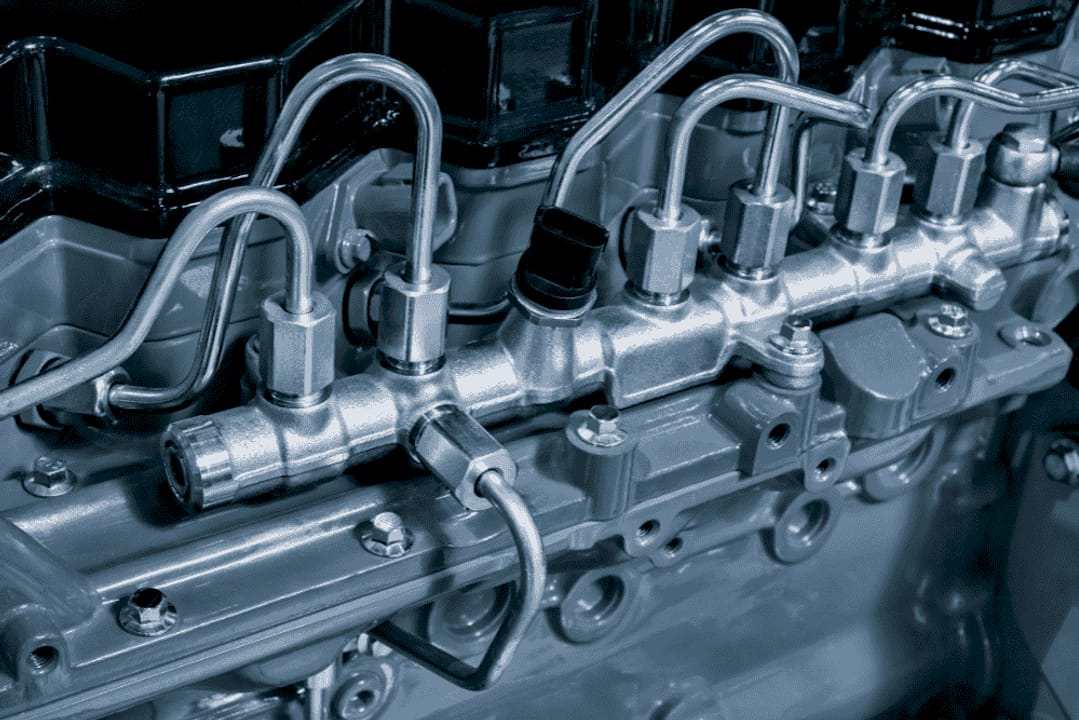
Fuel system. A weak fuel pump can’t maintain pressure once demand rises, which is exactly why the surge often only appears under load. A clogged fuel filter starves the engine gradually rather than all at once, and sticking injectors deliver fuel unevenly cylinder to cylinder. Rail pressure shortfalls, where actual pressure lags behind what the ECU requests, are one of the clearest signals a workshop will look for.
Ignition. Worn spark plugs and failing coils cause intermittent misfires that feel like a stumble rather than a clean loss of power. Under load, a marginal coil that copes fine at idle can start dropping cylinders entirely, and that’s when uneven power delivery turns into a proper misfire.
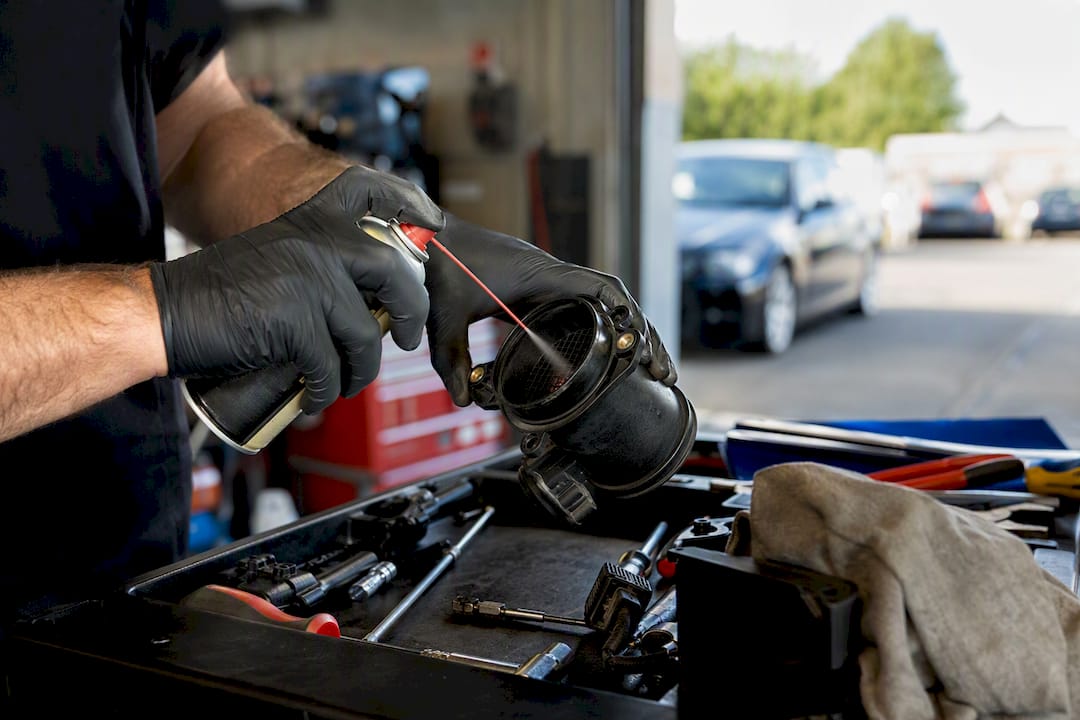
Air metering and intake. A dirty or failing MAF sensor sends delayed or plain wrong data to the ECU, so the computer miscalculates how much fuel to inject. A blocked air filter restricts flow gradually. Vacuum leaks from cracked hoses or a perished intake gasket let unmetered air into the system and throw off the air-to-fuel ratio the ECU thinks it’s controlling.
Turbo and boost control. Boost leaks between the turbo and the intake manifold, often at intercooler pipe joints, bleed off pressure exactly when you need it most. Wastegate or actuator faults and a failing boost-control solenoid produce the same symptom from a different angle: requested boost and actual boost stop matching.
Exhaust and emissions hardware. A sticking EGR valve upsets combustion timing unpredictably. A restricted DPF creates backpressure that saps power specifically under load, which is why DPF problems often masquerade as fuel or turbo faults.
Throttle and sensors. A sticky throttle body or a faulty throttle position sensor gives inconsistent readings that the ECU can’t reconcile with driver input, producing the classic on/off surge.
Transmission and driveline. Torque converter or clutch slip mimics engine surging convincingly. The distinguishing sign: engine revs rise without a matching increase in road speed, whereas a genuine fuel or ignition fault usually shows revs and speed rising together, just unevenly.
What should you test first when diagnosing power delivery issues?
Work through this in order rather than jumping straight to parts.
Scan for fault codes. A quick OBD-II scan is free and immediate. Note that intermittent faults may not always set a stored code, so absence of a code doesn’t mean absence of a fault.
Provoke the fault under load. If nothing shows at idle, take the car surging under load on a short, safe road test that includes a hill or a firm acceleration, and watch live data as it happens.
Log the priority data points while driving, ideally with a phone-based OBD-II app connected to a Bluetooth adapter.
Check basics with hand tools if you have them: battery voltage, ground connections, and a visual check of hoses and clamps.
Capture video evidence of the dashboard or a data-logging app during the exact moment the surge happens, with a visible timestamp.
The table below lists what actually matters when you’re logging live data, and what a mismatch usually means.
Reading | What normal looks like | What a mismatch usually indicates |
MAF/MAP airflow | Smooth, proportional rise with throttle input | Erratic or flat reading points to a dirty or failing sensor |
Requested vs actual boost | The two values track closely together | A growing gap suggests a boost leak or failing actuator |
Fuel rail pressure (desired vs actual) | Actual pressure keeps pace with demand | Actual lagging desired points to a weak pump or blocked filter |
Misfire counters | Zero or near zero across all cylinders | Counts rising on one or two cylinders point to plugs, coils or injectors |
Throttle angle vs road speed | Angle and speed increase together predictably | Angle changing with no matching power response suggests drivetrain slip |
Multimeter: checks battery voltage and ground integrity in minutes.
Fuel pressure gauge: confirms whether the fuel system can hold pressure under demand.
Smoke machine: pinpoints vacuum leaks that are otherwise near-impossible to find by eye.
Boost gauge or logger: shows whether requested and actual boost genuinely match.
Pro Tip: Screen-record your OBD app during the road test instead of just glancing at numbers while driving. You cannot safely watch live data and drive at the same time, and a recording gives the garage the exact moment things went wrong.
Which DIY checks can fix uneven power delivery yourself?
A surprising number of surging complaints resolve with checks that cost little more than time. Work through these before you spend money on parts you haven’t confirmed are faulty.
Check the air filter. A visibly dirty or clogged filter restricts airflow and is the cheapest thing to rule out.
Clean the MAF sensor with a proper MAF-safe cleaner, never anything abrasive or solvent-based.
Inspect intake and vacuum hoses visually for cracks, and give suspect joints a gentle squeeze to check for splits.
Check boost and intercooler pipework for splits, particularly at jubilee clip joints; a temporary clamp can confirm a leak before you commit to a permanent hose.
Inspect spark plugs and coil packs for wear, carbon fouling, or visible arcing.
A good injector cleaner can help with mild injector fouling, but it won’t fix a genuinely sticking injector or a failing pump.
Fuel filter history matters: if nobody knows when it was last changed and the car has covered tens of thousands of miles since, that’s worth checking regardless of other symptoms.
Leave fuel-pump replacement, injector flow testing, and anything involving an oscilloscope to a workshop with the right equipment.
The order matters as much as the checks themselves. A recommended sequence is codes first, then visual inspection, then low-cost cleaning, and only specialist testing once the cheap options are exhausted.
When does uneven power delivery need a garage rather than DIY?
Certain faults need equipment you almost certainly don’t own, and certain symptoms need attention now rather than after you’ve finished the school run.
A workshop will typically run: a fuel-pressure trace under load to see if pressure holds up when it matters, a boost-pressure trace with a proper gauge, an injector balance test to spot a cylinder pulling more or less fuel than its neighbours, a smoke test for vacuum leaks that are invisible by eye, a DPF back-pressure check, and an oscilloscope trace on the ignition system to catch a misfire that a scan tool alone would miss — detailed engine diagnostics and performance services like these are key to pinpointing the problem.
Stop driving or drive minimally: fuel leaks, persistent misfires, limp mode, heavy smoke from the exhaust, or sudden severe power loss.
Book soon but keep driving gently: mild surging with no warning lights and no smell of fuel.
Timelines vary by the fault. A dirty MAF sensor or a loose hose clamp is often sorted in an hour or two. Fuel-pump replacement or turbo-related repairs can run to a full day or more once parts are sourced. Transmission or clutch work is the outlier, sometimes stretching to several days.
If you smell fuel at any point, that overrides every other item on this list. Stop and get the car checked immediately.
Can ECU remapping fix uneven power delivery, or does it mask the problem?
Remapping adjusts fuel and boost targets, torque management, and throttle mapping inside the ECU. Done properly, it can genuinely smooth throttle response and remove some of the on/off feel that a poorly calibrated factory map creates. What it cannot do is repair a broken part.
Remapping tends to help when:
The factory map is overly conservative and creates flat spots in the delivery curve.
Throttle mapping itself causes abrupt on/off behaviour rather than a linear response.
Boost control calibration needs adjusting after a mechanical fix, such as a new turbo actuator, to match the hardware properly.
Remapping will not help when the actual cause is mechanical or electrical:
A failing injector needs replacing, not recalibrating around.
A leaking intake or boost hose needs sealing before any tune will hold properly.
A faulty MAF sensor or ignition coil needs fixing first, because a remap built on bad sensor data only compounds the problem.
A remap should always follow a full diagnostic, never replace one, and any reputable installer will flag warranty and emissions considerations before touching your car’s ECU tuning settings.
What should you tell the mechanic before you arrive?
Send this ahead if you can: when the surge happens (cold start, motorway, hills), any warning lights, a short road-test video, OBD fault codes if you’ve pulled them, and whether you smelled fuel at any point. Drive gently on the way in and avoid hard acceleration.
An editor’s view on prioritising the checks
If it were my car, I’d triage by safety first: fuel smells and warning lights get seen immediately, everything else waits. After that, sensors and intake checks come next because they’re cheap and rule out a lot fast. Fuel and ignition follow, then turbo and transmission last, since those are the expensive ones to get wrong. Log data before you replace anything. Parts swapped on a guess rarely fix a fault that a fifteen-minute road test would have pinned down.
How Performancetuningni diagnoses and fixes uneven power delivery for good
Chasing a surge with guesswork gets expensive fast. Performancetuningni’s approach starts with proper diagnosis, not a parts-cannon, so you only pay for what your car actually needs.
[
The process runs in a clear sequence: a pre-check to understand when and how the fault shows up, live-data capture under load to see exactly where fuel, boost, or sensor readings diverge from what the ECU expects, and a workshop diagnosis that pinpoints the real cause before any calibration work begins. Where the fault turns out to be a mechanical or sensor issue, that gets fixed first. Where the ECU map itself is the problem, whether it’s a flat throttle response or boost control that needs recalibrating to match repaired hardware, engine remapping smooths it out and gets verified with a proper road test afterwards. If injector fouling or intake buildup is part of the picture, carbon cleaning restores flow before any tune is applied. Curious what a remap could realistically do for your car? Run your registration through the free remap calculator and see where you stand.
Frequently asked questions about uneven power delivery
Is it safe to keep driving with uneven power delivery? Mild surging without warning lights or a fuel smell is usually safe for a short, gentle drive to a garage. Stop immediately if you notice heavy smoke, a fuel odour, or the car enters limp mode.
Can a dirty MAF sensor really cause surging? Yes. A dirty or failing MAF sensor sends inaccurate airflow data to the ECU, which then miscalculates the fuel needed, producing exactly the kind of inconsistent throttle response drivers describe as surging.
Why does my car only surge under load or on hills? Marginal components, a weak fuel pump, a small boost leak, a borderline ignition coil, often perform fine at low demand but fail to keep up once you ask for real power, which is why load exposes faults that light driving hides.
Will an ECU remap fix uneven power delivery? Only if the cause is genuinely a poorly calibrated map. Remapping cannot repair a faulty injector, a leaking hose, or a failing sensor. Those need fixing first.
How long does it take to diagnose uneven power delivery? A straightforward sensor or hose issue can be diagnosed in an hour with the right live-data checks. More complex faults involving fuel pressure traces, boost testing, or injector balance checks can take longer, and repairs like fuel-pump or turbo work often add a day or more.
Sources
Recommended