
How to improve throttle response: the Northern Ireland driver's guide
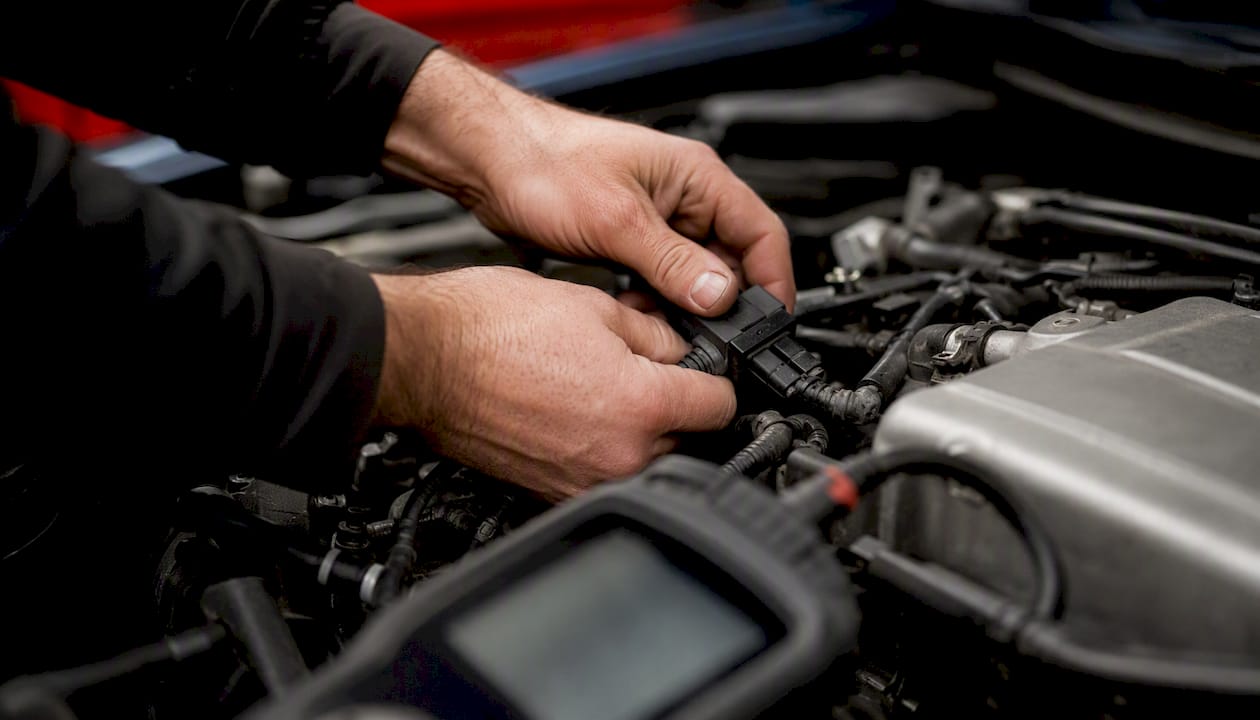
Start with maintenance and diagnostics. If the car checks out mechanically, choose a pedal module for a quick, reversible feel improvement or book a professional ECU remap for the cleanest, most lasting result. That is the short version. Everything below tells you how to work through it.
Quick checklist you can do today:
Check the air filter — hold it up to the light; if you cannot see through it, replace it
Scan for fault codes with an OBD-II reader (a Bluetooth dongle and a phone app costs under £20)
Do a visual inspection of all vacuum hoses and intake pipes for cracks or loose clips
Run a simple pedal-to-throttle correlation test: at idle, press the pedal to 25%, 50%, and 75% and watch the throttle plate percentage in a live data app
Check the MAF sensor reading at idle and under light load against your vehicle’s spec
If you have a diesel, check whether the DPF warning light is on or a regeneration cycle is overdue
The single most common reason for sluggish throttle response is a maintenance item that has been overlooked, not a software limit. Fix the car first. If it passes a clean bill of health and the lag is still there, then a pedal controller or a bespoke ECU remap from a specialist such as Performancetuningni will give you a genuine, measurable improvement.
Key takeaways
A maintenance-first approach to throttle response improvement resolves the majority of cases before any electronic fix is needed; where calibration work is required, a bespoke ECU remap produces the cleanest and most lasting result.
Point | Details |
Start with maintenance | Check air filter, MAF sensor, spark plugs, and vacuum hoses before buying any device or booking a remap. |
Log pedal vs throttle plate | An OBD-II log comparing pedal percentage and throttle plate percentage proves whether the lag is calibration or mechanical. |
Controller for quick feel | A pedal module (£60–£150) is reversible and immediate but does not alter fuelling, boost, or ignition. |
Remap for lasting results | A bespoke ECU remap addresses transient enrichment and throttle mapping for clean, coherent response across the rev range. |
Performancetuningni | Offers mobile and workshop diagnostics, carbon cleaning, and bespoke remaps across Northern Ireland with before-and-after data logs. |
Table of Contents
What is throttle response and why does your car feel slow off the pedal?
Throttle response describes how quickly the engine delivers torque after you move the accelerator pedal. On older cable-throttle cars the link was mechanical and almost instant. On every modern car built since roughly the mid-2000s, the connection is entirely electronic: a position sensor on the pedal sends a voltage signal to the ECU, which then commands a small electric motor to open the throttle plate. This architecture is called drive-by-wire (DBW), and it introduces a layer of software between your foot and the engine.
That software layer is where most perceived lag originates. Factory throttle maps are deliberately conservative, calibrated to satisfy emissions targets, protect the drivetrain, and keep the car manageable for the widest possible range of drivers. Press harder and the plate catches up quickly, which can feel like a sudden surge rather than a smooth, linear pull.
Turbo lag is a separate issue. When a turbocharged engine spools its turbocharger from low boost pressure, there is an unavoidable delay while exhaust gas accelerates the turbine. That is a physical constraint, not a software one. DBW lag and turbo lag often occur together, which makes the combined effect feel worse than either alone. Separating them matters because the fixes are different: software and calibration work addresses DBW lag; hardware and fuelling changes address turbo spool.
The key components involved are the MAF (mass airflow) sensor, the throttle body and its position sensor, the ECU’s torque-request logic, and the transient enrichment tables that govern how much extra fuel the engine receives during rapid pedal inputs. Tuning DBW systems properly means adjusting spring and friction compensators and PID control parameters to linearise throttle plate movement and remove dead zones without causing overshoot or instability. That level of calibration is what separates a quality remap from a generic one.
What symptoms tell you your throttle response needs attention?
The most common complaint is a “dead pedal” at low speeds: you press the accelerator and nothing happens for a beat, then the car lunges forward. Related symptoms include uneven pull-away from junctions, a flat spot in the mid-range that resolves itself after a second or two, and a noticeable surge when the throttle finally catches up with your input. On turbocharged cars this can feel like the turbo is either absent or suddenly all there at once.
These symptoms can come from either a mechanical problem or a calibration issue, and telling them apart before spending money is the whole point of diagnostics.
Quick in-garage checks:
Read fault codes first. A P0101 (MAF range/performance), P0171/P0174 (lean mixture), or any throttle-body position code points directly at a hardware or sensor issue
Log pedal percentage versus throttle plate percentage simultaneously using an OBD-II dongle. This pedal-vs-throttle-plate log is the single most revealing metric for deciding whether the lag is electronic or mechanical
Check MAF voltage or grams-per-second reading at idle and at 2,000 rpm under light load; compare against your vehicle’s published spec
Inspect all vacuum hoses and intake ducting visually for cracks, splits, or loose jubilee clips — an air leak downstream of the MAF will cause lean running and sluggish response
If competent, do a quick fuel pressure check at idle and under load; low fuel pressure mimics throttle lag convincingly
Pro Tip: Pair a cheap ELM327 Bluetooth dongle with an app such as Torque Pro or OBD Fusion. Record a short log of pedal position percentage and throttle body position percentage during a gentle 20–60 mph pull. If the throttle plate lags the pedal by more than a second or two at the same percentage, the issue is calibration. If they track each other but the engine still feels slow, look at fuelling, airflow, or ignition.
Neglected maintenance items — clogged filters, fouled MAF sensors, worn spark plugs — are a frequent cause of poor throttle response and should be eliminated before buying any controller or booking a remap.
Maintenance fixes that often restore throttle response
The correct sequence is: service items first, then airflow restoration, then fuel and ignition checks, then exhaust and backpressure checks. Working in this order means you are not tuning a sick engine, which wastes money and produces inconsistent results.
Throttle body clean. Carbon deposits on the throttle plate and bore cause erratic idle and a sticky, non-linear response. A can of throttle body cleaner and 20 minutes of work often produces an immediate improvement. On direct-injection petrol engines, carbon builds up on the intake valves too, which a throttle body clean will not reach — that requires an engine carbon clean.
MAF sensor clean or replacement. A contaminated MAF sensor under-reports airflow, causing the ECU to run lean and pull timing. Spray MAF cleaner (not brake cleaner) on the sensing wire and allow it to dry fully before restarting. If the reading is still out of spec, replace the sensor.
Air filter replacement. A blocked air filter restricts airflow and reduces the engine’s ability to respond to pedal inputs. Paper panel filters are cheap and should be replaced every 12,000–15,000 miles or annually, whichever comes first.
Fuel filter replacement. A partially blocked fuel filter reduces rail pressure under load, causing a lean stumble that feels like throttle lag. On many modern cars the filter is inside the tank and is a workshop job; on older vehicles it is an accessible inline item.
Spark plugs and ignition system. Worn plugs increase misfire probability under load and reduce combustion efficiency. Iridium or platinum plugs at the correct gap restore ignition energy and can noticeably sharpen response on high-mileage engines.
Vacuum and boost leak repair. Any unmetered air entering after the MAF sensor confuses the fuelling calculation. On turbocharged cars, a split boost hose causes a dramatic loss of response under load. Check every silicone hose, intercooler pipe, and inlet manifold gasket.
DPF check for diesels. A diesel particulate filter that is partially blocked increases exhaust backpressure and triggers driveline protection modes that limit torque. If the DPF warning is on, address it before any other work.
A healthy engine responds noticeably better to both a pedal controller and a remap than a tired one. A maintenance-first workflow gives the most consistent outcome; remaps written for a mechanically sound vehicle are more predictable and avoid masking underlying faults.
Typical timelines: a throttle body clean takes 20–30 minutes as a DIY job. Spark plugs on an accessible four-cylinder take an hour; on a V6 with rear plugs buried under the inlet manifold, budget a half-day at a workshop. Carbon cleaning is a 45–90 minute workshop or mobile service procedure.
Electronic fixes: pedal controllers versus an ECU remap
Once the car is mechanically healthy, two electronic routes are available: a plug-in pedal module (often called a throttle controller) or a professional ECU remap.
How pedal controllers work
Pedal controllers intercept the accelerator signal between the pedal sensor and the ECU, reshaping the throttle curve so that available power appears earlier in pedal travel. They do not alter fuelling, ignition timing, or boost pressure. The engine produces the same peak power; the controller simply makes the ECU request it sooner. Installation is a plug-and-play swap of the pedal connector, taking 10–15 minutes with no tools beyond a trim removal clip.
Pros for UK owners:
Fully reversible: unplug and the car returns to factory behaviour
No effect on the ECU’s stored calibration, so no warranty or MOT implications from the device itself
Immediate improvement in perceived response for daily driving
Typical UK cost: £60–£150 for a quality unit
Cons:
Aggressive settings make smooth driving harder and can cause jerky behaviour in low-traction conditions; moderate daily settings are strongly recommended
Does not address turbo lag, fuelling, or any underlying mechanical issue
The improvement is perceptual, not a genuine power gain
How an ECU remap works
A remap rewrites the calibration tables stored in the engine control unit: throttle mapping, torque request curves, fuelling, ignition timing, and on turbocharged engines, boost pressure. Transient enrichment tuning and a correctly calibrated base fuel table are essential to achieving crisp, predictable throttle response; a remap that only raises peak numbers without addressing transient behaviour will feel flat in normal driving. A quality remap addresses both.
Pros:
Addresses the root calibration cause of DBW lag, not just the symptom
Can simultaneously improve torque delivery, fuel efficiency, and turbo response on boosted engines
Results are coherent across the full rev range, not just at the pedal tip-in
Cons:
Typically costs £200–£400 for a standard remap; more for a custom dyno-developed map
Should be disclosed to your insurer (failure to do so can void a claim)
A poorly executed remap on a vehicle with hidden faults can cause drivability problems
Pro Tip: Before booking a remap, ask the tuner whether they address transient enrichment tables and throttle-request mapping specifically, not just peak torque and power figures. A tuner who only talks about bhp gains is not thinking about the part of the rev range you use every day.
Factory throttle calibration is a compromise between emissions compliance, drivetrain protection, and drivability. Shifting that balance is exactly what a quality remap does, and it is why the result feels so different from a pedal controller alone.
For MOT purposes, a remap that keeps the vehicle within its original emissions limits will not cause an MOT failure on the emissions test. However, any modification that affects emissions output could theoretically be flagged. Using a reputable tuner who understands UK emissions standards is the safest route.
Hardware upgrades that can genuinely affect throttle feel
Physical modifications can support throttle response improvement, but their effect on a stock, healthy engine is often smaller than owners expect. The gains are most meaningful where the factory system is genuinely restrictive or where the engine has been significantly uprated.
Upgrades worth considering:
Induction kit or performance air filter: A freer-flowing intake can improve throttle feel by improving engine breathing, though benefits vary and are most notable where the stock system is restrictive. On a standard engine, the difference is modest. On a turbocharged car running more boost after a remap, a less restrictive intake becomes more relevant.
Reduced exhaust backpressure: A less restrictive exhaust allows spent gases to exit faster, which helps the turbo spool more quickly and reduces the pumping losses the engine works against. The effect on a naturally aspirated engine is small; on a turbocharged one it is more useful.
Intercooler and boost pipework: Upgraded silicone boost hoses and a larger intercooler reduce charge temperature and pressure drop between the turbo and the intake manifold. Cooler, denser charge air means the engine can accept more fuel and produce torque more readily.
Lighter rotating components: Lighter pulleys and a lighter flywheel reduce rotational inertia, allowing the engine to rev more freely. The effect on throttle feel is real but subtle on a road car.
Hardware upgrades work best as part of a package, not in isolation. Fitting a loud induction kit to a standard engine rarely produces a measurable improvement in response — it mostly produces noise. The same kit fitted to a remapped turbocharged engine with upgraded boost pipework is a different story. Sequence matters: sort the calibration and the maintenance first, then consider hardware.
A caution on cheap kits: generic induction kits that position the filter near a heat source (the engine bay rather than a cold-air feed) can actually worsen response by feeding the engine hot, less dense air. Check fitment and heat shielding before buying. Any modification that alters the emissions system — removing a catalyst, for example — will cause an MOT failure and is illegal for road use in the UK.
How long does it take and what does it cost in the UK?
Understanding throttle and ECU relearn
After a throttle body clean or replacement, most modern ECUs need to relearn the throttle plate’s closed position. On many vehicles this happens automatically over one or two drive cycles. On others a forced relearn is required: a specific ignition-on, engine-off sequence described in the vehicle’s workshop manual or via a diagnostic tool. Skipping this step can leave the idle hunting or the throttle feeling worse than before the clean.
After a remap, the ECU does not need a relearn in the same sense, but the vehicle benefits from a few hundred miles of normal driving for the adaptive fuel trims to settle around the new calibration. Avoid hard acceleration for the first 50 miles.
UK cost and time guide
These are ballpark figures for the UK market. Prices vary by vehicle, region, and tuner. Always get a written quote before booking.
A note on fuel economy: a remap that improves throttle response and torque delivery often allows drivers to use less throttle to achieve the same pace, which can improve real-world fuel economy. The economy remap approach specifically targets this balance. A pedal controller, by contrast, does not change fuelling and has no meaningful effect on consumption.
How do you decide between DIY, a pedal module, and a professional remap?
The right answer depends on what your diagnostics found, how the car is used, and what you want to spend.
Decision criteria
Fault codes present: If the OBD scan returned any codes, fix those first. No controller or remap should go on a car with active faults.
Pedal vs throttle plate log shows calibration lag: The throttle plate is tracking the pedal accurately but the engine still feels slow. This points to fuelling or turbo issues that a remap addresses better than a controller.
Pedal vs throttle plate log shows a dead zone: The plate lags the pedal noticeably in the first 20–30% of travel. A controller fixes this quickly; a remap fixes it more cleanly and permanently.
Vehicle use: Daily commuting with occasional motorway runs — a controller is fine. Towing, track days, or a heavily modified engine — a remap is the correct tool.
Budget: Under £150 and want a reversible change today — controller. £250+ and want the best long-term result — remap.
Red flags that need a professional
Stored fault codes relating to the throttle body, MAF, fuel system, or boost control
DPF regeneration issues or a DPF warning light
Inconsistent MAF readings or sensor voltages outside spec
Driveline protection modes active (limp mode, reduced power warning)
Any symptom that appeared suddenly rather than gradually
Questions to ask a tuner before booking
Do you read and log the vehicle before starting?
Do you address transient enrichment and throttle-request mapping, not just peak figures?
Will you provide a before-and-after data log?
Is the remap reversible to the original file?
Do you carry insurance for the work?
A tuner who answers yes to all five is worth booking. One who cannot answer the second question clearly is probably selling a generic off-the-shelf file.
How Performancetuningni approaches throttle response work
Performancetuningni’s process starts before any calibration work begins. The first step is a diagnostic log: pedal position, throttle plate position, MAF reading, fuel trims, and boost pressure (on turbocharged vehicles) are all recorded during a standard road test. This log establishes a baseline and identifies whether the issue is mechanical, sensor-related, or calibration-based.
If the diagnostic log reveals maintenance items, those are addressed first. For direct-injection petrol engines and high-mileage diesels, an engine carbon clean is often recommended before remapping, because a clean intake and combustion chamber allows the new calibration to work as intended rather than compensating for carbon restriction.
Once the vehicle passes its health check, the bespoke remap is written and loaded. Post-remap, the same parameters are logged again: pedal vs throttle plate, fuel trims, torque delivery across the rev range. The before-and-after comparison is the proof of work, not just a claimed power figure.
The difference between a good remap and a great one is what happens in the first 30% of throttle travel. Peak power figures are easy to improve. Getting the engine to respond cleanly and predictably from a light cruise to a firm press — that is where the calibration skill shows. Transient enrichment and torque-request tuning are what produce that result, and they are the focus of every remap Performancetuningni produces.
Performancetuningni offers both mobile and workshop appointments across Northern Ireland, covering petrol and diesel vehicles including turbocharged cars, vans, and light commercial vehicles. The service includes standard remaps, economy-focused remaps, and carbon cleaning as a standalone or bundled option.
Pro Tip: If you are unsure whether your vehicle is a good remap candidate, use the free remap calculator on the Performancetuningni website. Enter your registration and it will show the expected gains for your specific engine before you commit to a booking.
An expert view on maintenance, controllers, and remaps
Most throttle response complaints I see written about online skip straight to the gadget. Someone fits a pedal controller, the car feels sharper for a week, and then they notice the underlying hesitation is still there under hard acceleration. The controller masked the symptom; the fouled MAF or the carbon-clogged intake was still doing its damage.
The maintenance-first rule is not conservative caution. It is the only logical sequence. A remap written for a healthy engine is a different product from one written for a tired one. The calibration can be tighter, the transient enrichment more aggressive, the torque delivery more linear — because the tuner is not working around a variable that should not be there.
Controllers have a genuine place. For a driver who wants a sharper feel on a well-maintained standard car without touching the ECU, a quality pedal module on a moderate setting is a sensible, reversible choice. The mistake is using it as a substitute for diagnostics rather than as a complement to a clean bill of health.
The remap is the better long-term answer for most turbocharged cars, particularly if the owner also wants improved fuel economy or is planning any hardware changes. The remap benefits extend well beyond throttle feel — but throttle feel is usually the first thing drivers notice, and it is the most immediate proof that the calibration is working.
Performancetuningni: diagnostics, carbon cleaning, and bespoke remaps
Thousands of cars tuned, a five-star Google rating, and a process that starts with a diagnostic log rather than a sales pitch. That is the short version of what Performancetuningni offers drivers who want genuine throttle response improvement rather than a quick fix that wears off.
[
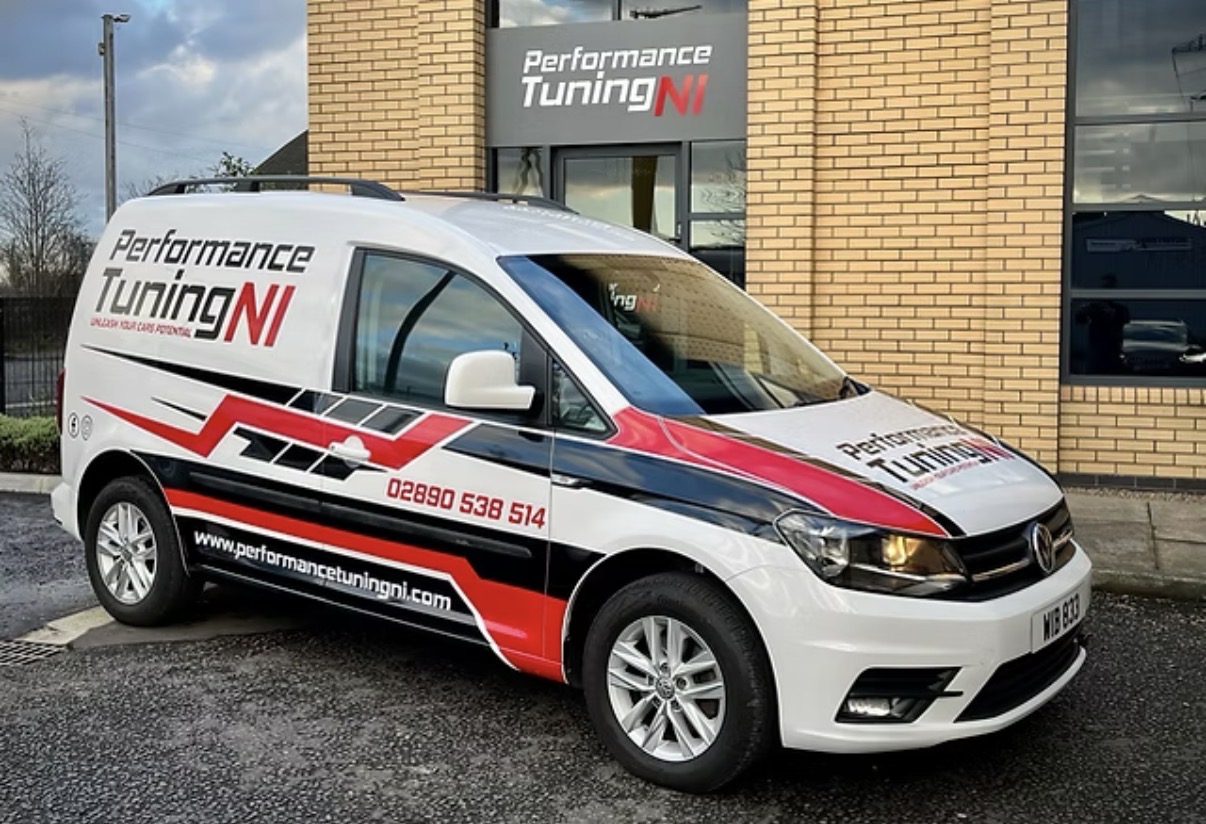
The service covers mobile diagnostics, engine carbon cleaning, and bespoke ECU remaps for petrol and diesel vehicles across Northern Ireland, with both mobile and workshop appointments available. Whether the car needs a carbon clean before a remap or a standalone tune on a healthy engine, the workflow is the same: log first, fix what needs fixing, then remap and log again. Every customer receives a before-and-after data comparison, not just a power figure.
To find out what your specific engine can achieve, use the free remap calculator or book a diagnostic or remap appointment directly. If you want to read more about the process before committing, the Performancetuningni blog covers ECU tuning, carbon cleaning, and real-world case studies in detail.
Sources
Recommended