
Save Around 10% on Fuel: Improve Fuel Economy for Northern Irish Drivers

Change how you drive and keep up with basic maintenance, and you’ll see the biggest, fastest gains in fuel economy for the least effort. Smoother acceleration and correct tyre pressure alone can shift your mpg noticeably within a week. Combined driving and maintenance changes commonly add up to average improvements of around 10% for most drivers. Only once those basics are sorted is it worth thinking about a professional remap.
TL;DR:
Consistently gentle acceleration, early gear shifting, and anticipation of traffic can improve fuel economy by at least 10% through better driving habits.
Modern drive slowing features like stop-start systems and eco modes can save around 3% to 10% if used correctly and left enabled.
Small, cumulative adjustments, such as smooth driving and proper maintenance, have a stronger impact than advanced remapping or hardware modifications.
A baseline mpg log for two weeks before any upgrades provides a clear measure of real benefits once changes are implemented.
Table of Contents
Which driving habits improve fuel economy the most?
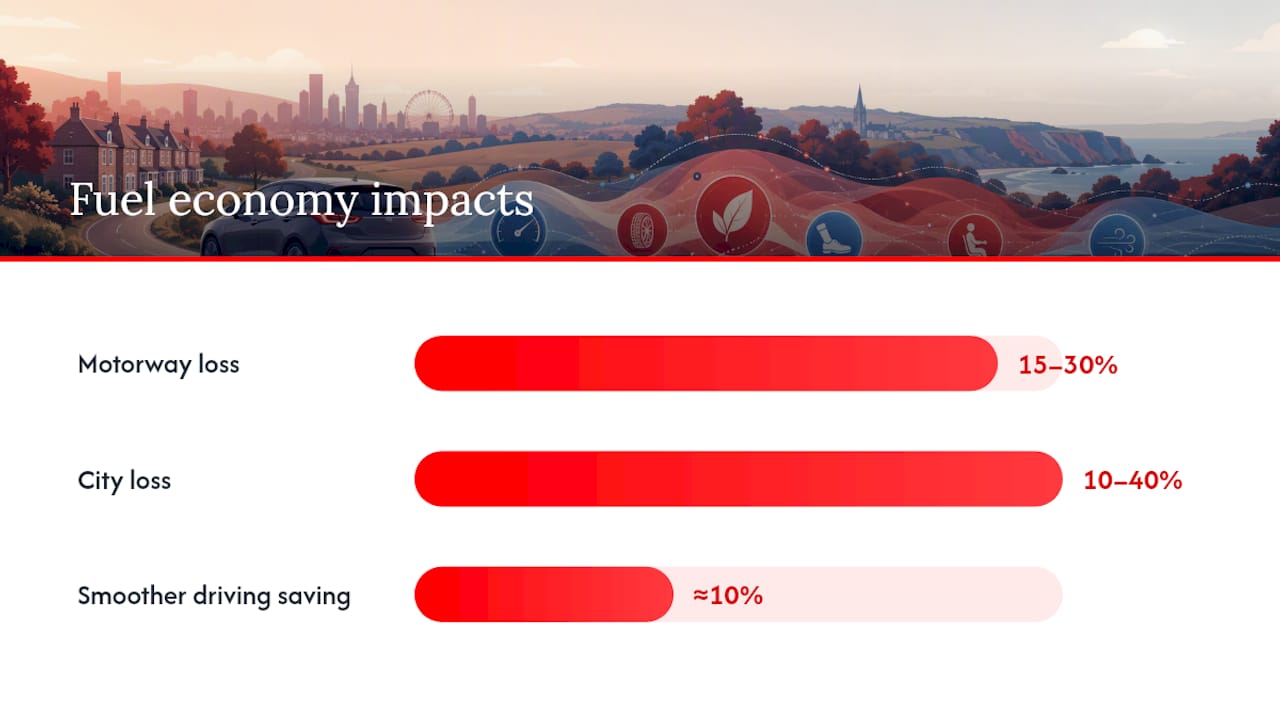
Your right foot matters more than almost anything else under the bonnet. Aggressive driving, meaning harsh acceleration, late braking and speeding, can cut fuel economy by 15% to 30% at motorway speeds and 10% to 40% in stop-start city traffic. That’s not a rounding error. It’s the difference between a tank lasting five days or seven.
The mechanics behind this are simple. Every hard acceleration burns disproportionately more fuel than a gentle one, and every hard brake throws away kinetic energy you paid for at the pump. Smooth driving keeps your engine working in its efficient range instead of yanking it between extremes.
Here’s what changes in practice, not theory:
Accelerate gently from a standstill, treating the throttle like there’s an egg under it rather than a brick.
Shift up early in a manual, usually somewhere around 2,000 to 2,500rpm on a petrol engine, since higher revs burn more fuel for the same speed.
Maintain momentum rather than speeding up only to brake for a junction you could see coming from 200 metres away.
Anticipate traffic by reading brake lights and roundabouts ahead, easing off early instead of coasting hard then braking hard.
Skip unnecessary overtakes on single carriageways where you’ll be back behind the same queue two minutes later.
Use cruise control on flat, open motorway stretches, where it holds a constant speed better than most drivers can manage by feel.
None of this requires driving like you’re trying to set a fuel economy world record. Sensible driving habits such as anticipating traffic and avoiding hard braking deliver most of the benefit without any of the risk that comes from extreme hypermiling tricks like drafting lorries or coasting in neutral down hills.
Try this for a week: keep a simple mpg diary using your trip computer or a phone note, logging one figure each time you fill up. Pick a single regular journey, your commute or the school run, and drive it deliberately smoothly for five days running. Compare the readout against your usual week. Most drivers are surprised by how much a single habit change moves the number.
Pro Tip: Pick one behaviour to fix at a time; rather than trying to overhaul your entire driving style overnight, spend a week on smooth acceleration alone, then a week on early anticipation. It sticks better than trying to change everything at once.
What this adds up to: driving style changes alone can realistically shave 10% or more off your fuel bill, based on how far aggressive driving pulls economy down in the first place. Combined with basic maintenance, many drivers land close to that broader 10% average improvement DOE researchers report across mixed habit and upkeep changes.
Do tyre pressure and maintenance really affect mpg?
Yes, and the checks cost nothing but ten minutes. Here’s the priority order for anyone trying to squeeze more miles from a tank without spending money on parts.
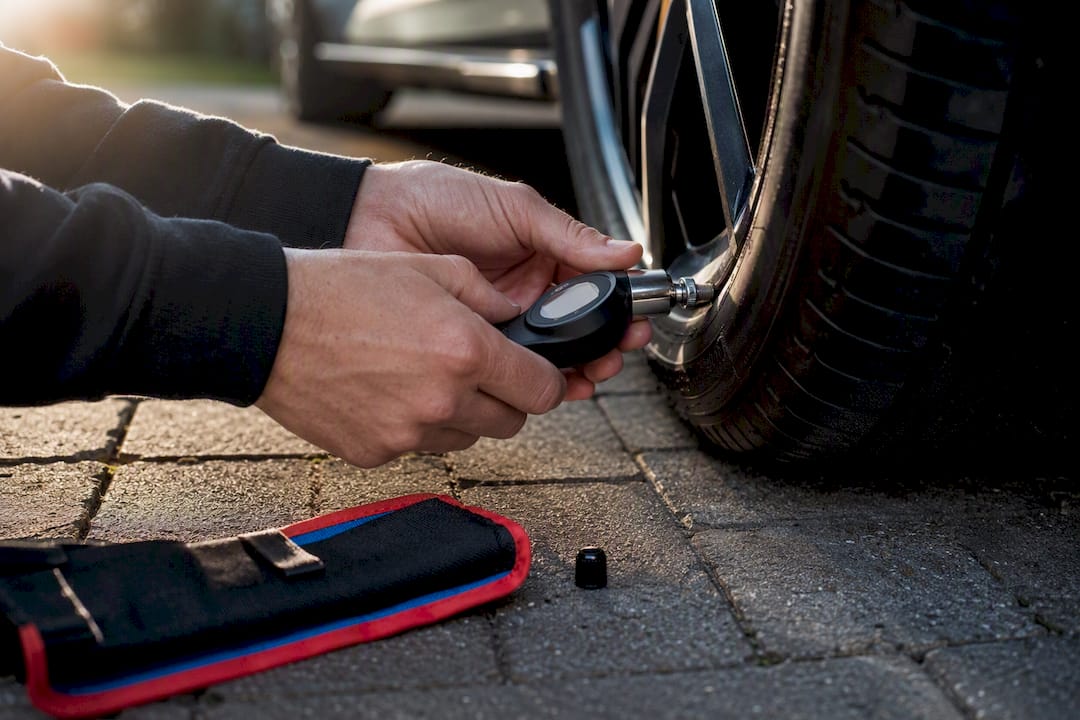
Check tyre pressure monthly. The correct figures are on a sticker inside the driver’s door frame or fuel filler flap, not the number moulded onto the tyre sidewall itself, which is the tyre’s maximum rating, not your car’s recommendation. Correctly inflated tyres improve fuel economy by around 0.6% on average, and up to 3% in some cases. Underinflated tyres also wear unevenly and increase your braking distance, so this is a safety check as much as an economy one.
Use the recommended oil grade. Your handbook specifies a viscosity, commonly something like 5W30 for modern petrol engines. Using that grade, particularly one labelled ‘Energy Conserving’ on the API label, can improve economy by roughly 1% to 2%. It sounds small until you realise it costs nothing extra at your next service.
Don’t expect miracles from a new air filter. On a modern, fuel-injected petrol engine, a clogged air filter usually hurts acceleration rather than fuel economy. It’s still worth replacing on schedule for performance and engine health, but don’t buy one expecting a dramatic mpg jump unless your car is old enough to run a carburettor.
Leave spark plugs to your service schedule. Worn plugs cause misfires and rough running that waste fuel, but replacing healthy plugs early won’t move your mpg noticeably. Follow the manufacturer’s interval rather than guessing.
Skip premium fuel unless your engine calls for it. Higher-octane petrol only helps engines specifically designed with higher compression ratios that need it. If your handbook doesn’t ask for it, you’re paying more per litre for no measurable benefit.
When you do book a service, tell the garage you’re chasing economy, not just a clean bill of health. Ask them to prioritise anything affecting the fuel and ignition system: plugs, coils, oxygen sensors, and any warning lights that might be quietly richening the fuel mixture. A fault code you’ve been ignoring for months could be costing you more at the pump than any driving habit ever will.
Pro Tip: Check tyre pressures when they’re cold, ideally before the car has driven more than a couple of miles. Warm tyres read higher than they actually are, which can leave you slightly underinflated without realising it.
How much fuel does a roof box or extra weight really cost you?
Drag punishes you far more than weight does, and the effect grows sharply with speed. An empty roof rack can add around 16% extra drag at 75mph, and a loaded roof box can push that penalty up to roughly 39%. At motorway speeds, that’s a genuinely large chunk of your fuel bill for something that might sit on the roof unused for eleven months of the year.
The fix is straightforward:
Take roof racks and boxes off when not in use, rather than leaving them fitted “just in case.”
Clear unnecessary weight from the boot. A rough rule of thumb is around a 1% mpg loss for every 45kg carried, so golf clubs, tools, and that bag of decorating supplies from three months ago are quietly working against you.
Choose windows over air conditioning at low speeds, since AC draws power from the engine, while open windows only really cost you extra drag once you’re above roughly 50mph.
Store seasonal kit properly in the garage or loft rather than the car, and only fit roof equipment for the trip that actually needs it.
None of this is dramatic, but stacked together with driving changes, it closes the gap fast.
Which car tech features actually save petrol?
Modern petrol cars come loaded with systems designed specifically to cut fuel use, yet plenty of drivers switch them off out of habit or minor annoyance.
Leave stop-start systems switched on. They’re engineered to save fuel by cutting the engine at standstill rather than idling it, which matters most in stop-start city traffic and queuing school runs.
Use eco mode when it’s available, since it typically softens throttle response and adjusts gear-change points to favour economy over acceleration.
Pay attention to gear-shift indicators on manuals; they’re calibrated for your specific engine, not a generic guess.
Use fuel-efficient satnav routing where available, since it can route around congestion and steep gradients that quietly drain a tank.
The common thread is small purchases and free settings, not big spending.
When does a remap or carbon clean actually help fuel economy?
For most petrol drivers, driving style and maintenance come first. Engine remapping and carbon cleaning are a second step, worth considering once the basics are already dialled in, and results genuinely vary by model, mileage and how the car is driven.
A well-executed economy-focused remap adjusts fuelling and ignition timing to run more efficiently rather than simply chasing more power, and it tends to suit high-mileage motorway commuters more than short-trip city drivers. Carbon cleaning addresses a different problem: deposits building up on intake valves and injectors over years of short journeys, which can quietly drag down both performance and economy on direct-injection petrol engines.
Before booking anything, a trustworthy tuner should offer:
Before and after mpg logs, ideally from your own trip computer over a comparable set of journeys, not a single best-case tank.
Measured results, whether from a rolling road or real-world logged data, rather than vague promises.
Clear advice on warranty and emissions implications specific to your make and model.
Appointments typically run from an hour or two for a standard remap to half a day for combined remap and carbon cleaning work, with costs varying by vehicle and the service booked. Ask for a quote specific to your car rather than relying on a generic figure quoted elsewhere.
Pro Tip: Log your mpg for two weeks before any paid work, using the same mix of journeys each time. Without a genuine baseline, you can’t tell whether a remap actually moved the number or whether you just had an easier driving week.
Guides to how remapping affects power and fuel economy and realistic mpg gains from an economy remap explore what a measured economy remap looks like.
What’s the fastest way to start improving your mpg?
Break it into three timeframes and you’ll actually stick with it, rather than trying to fix everything on a single Sunday afternoon.
This week: check and correct tyre pressures, clear unnecessary weight from the boot, and drive one regular trip deliberately smoothly to see what changes.
This month and quarter: confirm your oil is the correct grade at your next service, check the air filter, and address any dashboard warning lights you’ve been putting off.
Seasonally: get the air conditioning serviced before summer (a poorly charged system works harder and burns more fuel), and do a winter check on tyres and battery health before the cold sets in.
Track progress with a simple mpg note at each fill-up rather than obsessing over daily readouts, and aim for a modest, realistic target rather than expecting overnight transformation.
Timeframe | Action | Typical benefit |
This week | Correct tyre pressure, remove excess weight | Up to 3% mpg improvement |
This month | Confirm correct oil grade at service | 1% to 2% improvement |
Ongoing | Smoother driving style | Reverses 10% to 40% urban penalty from aggressive driving |
Seasonal | AC service, winter tyre/battery check | Avoids hidden efficiency losses |
What do the numbers actually mean for your driving?
The gap between the best-case and worst-case figures in this guide is wide because driving style genuinely varies that much between drivers. Two people in identical cars, covering identical mileage, can see noticeably different fuel bills purely down to how they use the accelerator and brake.
What surprises most people isn’t any single tip. It’s how much stacking three or four small changes together compounds. Correct tyres plus smoother acceleration plus clearing boot clutter doesn’t just add up arithmetically. It tends to compound, because each change makes the engine work in a slightly more efficient range more of the time.
Test one change for a fortnight before adding the next. Jumping straight to a remap without first fixing tyre pressure and driving style is like buying new running shoes before you’ve addressed your stride. It might help eventually, but you’re leaving easier gains on the table first.
— Mark
How can Performancetuningni help once the basics are covered?
Engine remapping and carbon cleaning are next steps once driving style and maintenance are sorted and you want more from the tank, particularly if you’re a high-mileage commuter, a fleet driver, or someone seeking smoother, more responsive power delivery alongside better economy.
[
At a typical appointment, the team discusses your driving pattern and goals before carrying out a tailored remap or carbon clean, with measured results rather than guesswork behind the changes made. Everyday drivers with heavy carbon build-up from short urban trips often benefit from the carbon cleaning service, while those covering longer motorway mileage tend to see more from ECU tuning and remapping focused on efficiency rather than outright power. Get in touch to ask about realistic mpg examples for your specific model, and to book a slot that fits around your week.
Sources
Recommended