
How Car Engine Remapping Can Boost Power and Fuel Economy
- 2 days ago
- 9 min read
A modern engine is controlled as much by software as by metal. The engine control unit, or ECU, decides how much fuel to inject, when to ignite it, how much boost a turbo should make, and how the car responds when the accelerator is pressed. Engine remapping changes that software so the engine works closer to its potential.
Done well, a remap can make a car feel stronger, smoother, and more flexible. It can also help fuel economy, especially on turbocharged diesel and petrol engines, where extra torque means the engine does not need to work as hard in normal driving.
Done badly, it can cause flat spots, smoke, clutch slip, warning lights, poor cold starts, and expensive mechanical stress. The difference comes down to the quality of the map, the health of the car, and the goal of the tune.

What engine remapping actually changes
Engine remapping means altering the calibration inside the ECU. The factory map is designed to suit many conditions, including different fuel quality, climates, emissions rules, engine tolerances, service habits, and driver expectations.
A remap adjusts those settings for a more specific result. Common areas include:
Fuel delivery
Ignition timing on petrol engines
Turbo boost pressure
Throttle response
Torque limits
Rev limits in some cases
Gearbox torque requests on some automatic cars
Exhaust gas recirculation behaviour where legal and suitable
Cooling fan and protection strategies, depending on the vehicle
The best remaps do not simply turn every value up. They reshape how the engine delivers torque and power while keeping temperatures, fuelling, and boost within safe limits.
That matters because engines need balance. More boost without enough fuel can raise temperatures. Too much fuel can create smoke and soot. Aggressive torque at low revs can strain a clutch, dual-mass flywheel, gearbox, and driveshafts.
A good tuner looks at the whole car, not just the headline power figure.
Why manufacturers leave performance on the table
Car makers often sell the same engine in several power outputs. The hardware may be very similar, while the ECU map creates the difference between models. That gives manufacturers a way to meet price points, insurance groups, emissions targets, and market needs.
They also build in a safety margin. A car must cope with:
Poor-quality fuel
Missed services
Hot weather and cold starts
High-mileage use
Towing
Drivers who use full throttle often
Different rules across countries
That margin is one reason remapping car engines can release extra performance without changing major parts. The map can be changed to suit a well-maintained car using good fuel in typical UK conditions.
Still, that does not mean every engine has the same safe headroom. A small turbo petrol engine already running near its thermal limits may have less room than a detuned turbo diesel. A high-mileage car with weak injectors or a tired turbo may need maintenance before tuning, not more boost.
How a remap can increase power
Most power gains come from better control of air, fuel, and timing. On a turbocharged engine, the remap usually raises boost pressure and adjusts fuelling to match. That allows the engine to burn more air and fuel, which produces more torque.
Torque is what most drivers feel first. It is the shove in the back when accelerating from low or mid-range revs. More torque can make the car easier to overtake in gear and less dependent on downshifting.
On naturally aspirated engines, the gains are usually smaller. Without a turbo or supercharger, there is less spare airflow to use. A remap may still sharpen throttle response, smooth delivery, and improve drivability, but it is unlikely to transform the car unless paired with hardware changes.

Why torque matters more than peak horsepower
Peak horsepower sounds good in adverts, but mid-range torque is often more useful on the road.
A car with stronger torque from 1,800 to 3,500 rpm can feel far quicker in normal driving than one that only makes extra power near the redline. This is especially true for motorway joining, hill climbs, towing, and overtaking on A-roads.
A smooth torque curve also feels better than a sudden spike. Big low-rev torque may look impressive on a graph, but it can be hard on the clutch and tyres. The best maps deliver power progressively.
How remapping can improve fuel economy
A remap does not create free energy. If a car makes more power and the driver uses that power often, it will burn more fuel. The economy benefit comes from efficiency and driving style.
A well-calibrated economy-focused or balanced remap can improve fuel use by giving the engine more useful torque at lower revs. That means the car may hold a higher gear more easily, need less throttle on inclines, and accelerate with less strain.
This is most noticeable in steady, real-world driving. For example, a turbo diesel used for motorway miles may feel more relaxed after a remap because it can maintain speed with less throttle input. A small turbo petrol might feel less laboured around town if the map improves low-end response.
Fuel economy gains are not guaranteed. They depend on:
Engine type
Vehicle weight
Driving style
Tyre pressures
Fuel quality
Service condition
Journey type
Whether the map is built for power, economy, or a balance of both
Short urban trips with a cold engine rarely show much benefit. Longer journeys at steady speed are more likely to show improvement.
The biggest economy gain often comes from using the extra torque gently, not from chasing the extra power.
Power maps and economy maps work in different ways
Not every remap has the same aim. A tuner should ask how the car is used before choosing a calibration.
Map type | Main aim | Best suited to | Trade-off |
Economy map | Lower fuel use in steady driving | High-mileage drivers, motorway use, light vans | Smaller power gain |
Performance map | More torque and horsepower | Drivers who want stronger acceleration | Higher fuel use when driven hard |
Balanced map | Better response, more torque, sensible efficiency | Everyday road cars | Not the maximum possible power |
Custom map | Tailored to the vehicle and modifications | Modified cars or unusual setups | Costs more and takes longer |
A balanced map is often the best choice for a road car. It gives a clear performance lift without turning the car into something difficult to live with.
What happens during a proper remap
A careful remap starts before anyone changes the ECU file. The car should be checked for faults first. Tuning a car with existing problems can make those problems worse.
A typical process looks like this:
Health check
The tuner checks for fault codes, boost leaks, smoke, poor servicing, worn clutches, and other obvious issues.
Baseline run
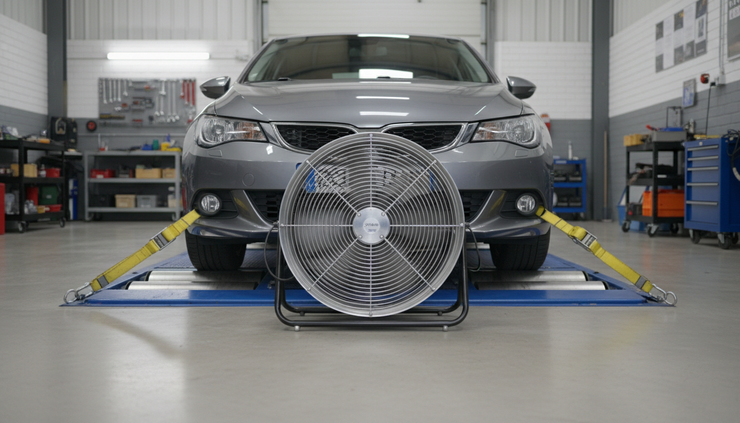
On a rolling road, the car is tested in standard form. This shows current power, torque, boost behaviour, and any weak spots.
ECU read
The original ECU file is read and saved. This matters because the car can be returned to standard if needed.
Map adjustment
The tuner modifies the calibration to suit the engine, fuel, gearbox, and goal.
Testing and logging
The car is driven or tested on a dyno while data is recorded. Boost, fuelling, temperatures, and torque delivery are checked.
Refinement
The map is adjusted again if the data shows rough delivery, excessive smoke, clutch slip, or unsafe conditions.
Final report
A good tuner explains what changed, how the car performed, and what to watch for afterwards.
A generic file loaded quickly may still work, especially on a common standard vehicle, but testing and logging give more confidence. Custom mapping is the safer route for modified cars.
Stage 1, Stage 2, and Stage 3 remaps explained
The word “stage” is common in tuning, but it is not a legal or universal standard. One tuner’s Stage 1 may not match another’s. Still, the terms are useful.
Stage 1 is software for a standard car
Stage 1 usually means an ECU remap for a mechanically standard car, or a car with only minor changes such as a panel air filter. It aims to stay within the limits of the factory turbo, injectors, intercooler, clutch, and exhaust.
This is the most common choice for daily road cars.
Stage 2 needs supporting parts
Stage 2 usually assumes hardware upgrades. These might include a better intercooler, freer-flowing exhaust parts where legal, uprated intake components, or a stronger clutch.
The map is then written to make use of those parts. Without them, the car may run too hot or fail to deliver the expected gains.
Stage 3 is a larger mechanical build
Stage 3 often means a bigger turbo, fuel system changes, engine strengthening, or major supporting modifications. At this level, reliability depends heavily on parts quality, installation, mapping skill, and maintenance.
For most road drivers, Stage 1 or a mild custom map makes far more sense.
The risks of engine remapping
A remap changes how hard the engine and drivetrain work. That means there are risks, especially if the map is too aggressive or the car is not in good condition.
Common risks include:
Clutch slip after a torque increase
Extra wear on the turbocharger
Higher exhaust gas temperatures
More soot on diesel engines if fuelling is poor
Engine warning lights
Poor cold starting
Reduced reliability if service intervals are ignored
Gearbox strain on high-torque cars
Warranty issues
Insurance is another key point. In the UK, a remap is a modification and should be declared to the insurer. Not declaring it can cause problems if a claim is made.
Warranty cover may also be affected. Manufacturers and dealers can often detect that ECU software has changed, even if the original map is later restored.
MOT and emissions rules matter too. A legal remap should not remove or disable emissions equipment required for road use, such as a diesel particulate filter. Removing or bypassing required systems can make the vehicle illegal on public roads.
Which cars benefit most from remapping
Turbocharged diesel engines often respond well because they usually have spare torque capacity and are built for high load. Many turbocharged petrol engines also gain well, especially modern direct-injection units.
Cars that tend to benefit most include:
Turbo diesel hatchbacks and saloons
Turbo petrol hot hatches
Vans used for heavy loads
Detuned engines shared with higher-output models
Cars with healthy service history and no existing faults
Cars that may see smaller gains include naturally aspirated petrol engines, older engines with worn components, and vehicles already tuned close to their limit.
Automatic cars need extra care. The gearbox may have torque limits and shift logic that affect how the remap feels. Some cars benefit from gearbox software calibration as well as ECU tuning.
How to choose a safe remap
The right tuner should be willing to say no if your car is not ready. That is a good sign.
Look for these signs of a careful approach:
They ask how the car is used
They check for fault codes before mapping
They explain realistic gains without wild promises
They keep the original ECU file
They offer before and after testing where possible
They understand your engine and gearbox
They discuss insurance, warranty, and emissions
They do not suggest illegal emissions deletes for road use
Be cautious if a tuner promises huge gains for every car, refuses to explain the process, or treats smoke as a badge of performance. A fast car that runs badly is not a good result.

What to do before booking a remap
A remap works best on a car that is already healthy. Before booking, it makes sense to deal with basic maintenance.
Check these items first:
Fresh engine oil of the correct grade
Clean air filter
Good spark plugs on petrol engines
Healthy fuel filter on diesel engines
No boost leaks
No coolant loss
No unresolved warning lights
Tyres in good condition
Clutch that does not slip
Brakes suitable for the extra performance
A remap can expose weak parts. If a clutch is already near the end of its life, extra torque may make it slip. If a turbo has worn bearings, higher boost may bring the fault forward.
Good maintenance is not exciting, but it is what makes tuning last.
The real result to aim for
The best remap is not always the one with the highest dyno number. For a road car, the goal should be a better drive.
That means:
Stronger pull without harsh spikes
Smooth throttle response
Safe temperatures and boost levels
No smoke or rough running
Better flexibility in higher gears
Sensible fuel use when driven gently
Clear guidance on maintenance afterwards
Power and economy can improve together when the map is designed with balance in mind and the driver uses the extra torque sensibly. If the car is driven flat out more often, fuel use will rise. That is simple physics.
For everyday use, a well-written Stage 1 or custom remap can make a car feel like a better version of itself. It can pull harder, cruise more easily, and respond with less effort. The safest path is to start with a healthy car, choose a tuner who tests rather than guesses, and pick a map that suits how the vehicle is actually driven.