
6–12 Month Payback: Fleet Remapping Benefits for Fleet Managers
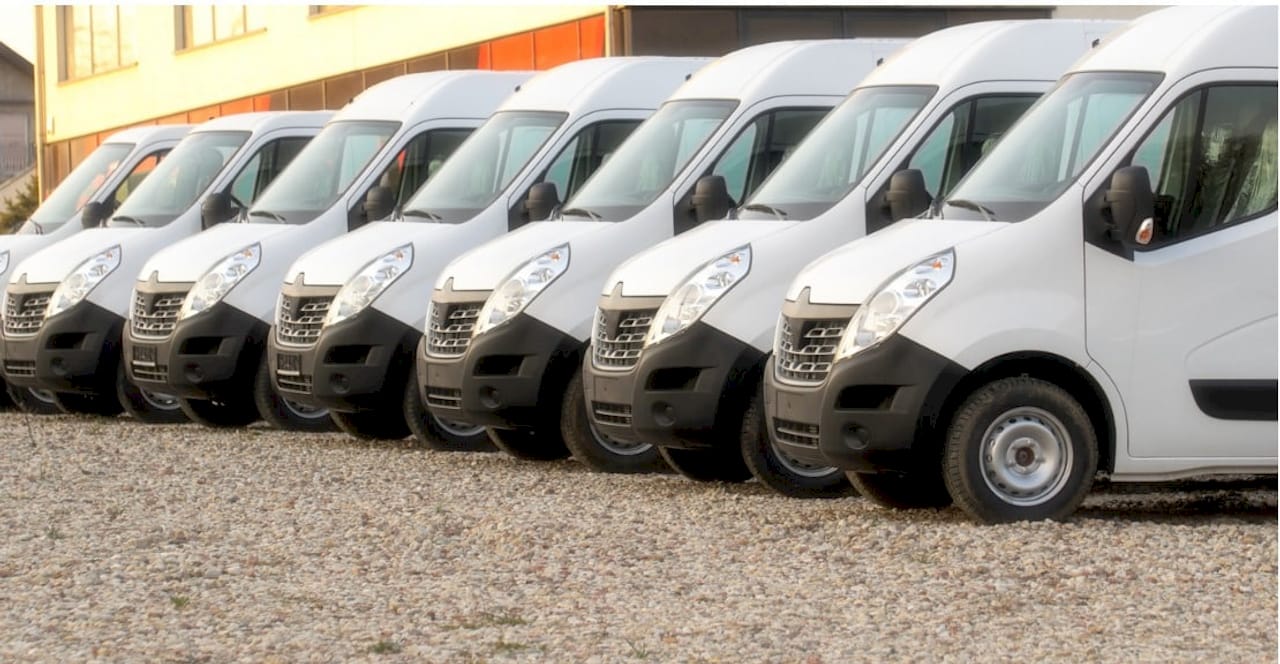
Payback usually falls within several months for higher-mileage vans, sometimes faster. The catch is that those numbers only hold up when fleets validate results properly and choose calibration providers who prioritise economy over raw power.
TL;DR:
Fuel savings from remapping typically range from 8 to 15 percent for turbocharged diesel vans, with urban routes showing smaller gains due to less cruising.
A large fleet like BT Group’s achieved annual savings of over £4 million and reduced CO2 emissions by roughly 20 percent after remapping 24,000 vans.
For a mid-sized van fleet, payback on remapping usually occurs within six to twelve months, especially for vehicles with high annual mileage.
Proper pilot testing and tracking fuel, DPF regenerations, and driver feedback are essential before scaling remapping across the entire fleet.
Safe calibration and provider experience are critical to avoid risks like engine knock and to ensure long-term durability and performance benefits.
Table of Contents
Fleet remapping benefits: fuel economy, torque and drivability
The core mechanism behind fleet remapping benefits is torque, not top-end power. A remap that adds usable torque lower in the rev range means a driver needs less throttle to maintain motorway speed or pull away from a junction, and the gearbox (or driver, in a manual) shifts up sooner. Fewer revs, less fuel burned per mile. That’s the whole trick, and it’s why it works so consistently across diesel vans and HGVs doing repetitive route work.
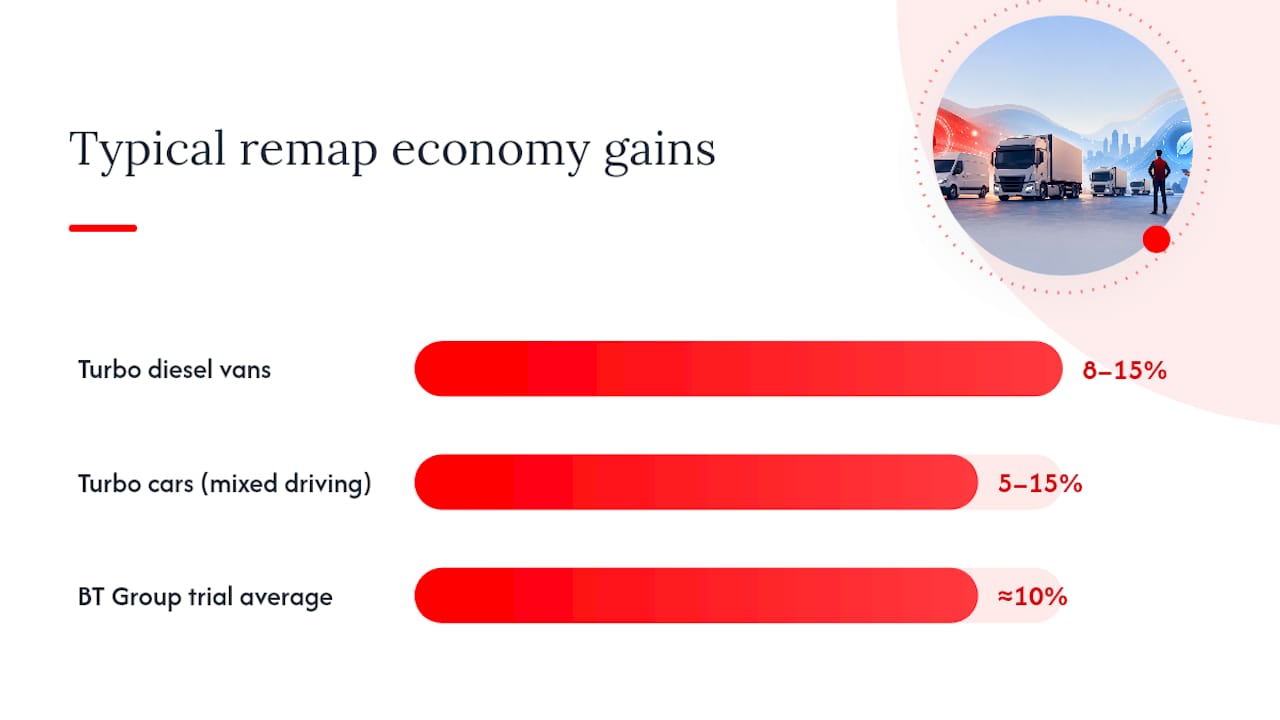
Fuel-saving ranges vary by platform. Stage 1 remaps commonly return 8 to 15% economy gains on turbocharged diesel vans, with mixed-driving turbocharged cars sitting closer to 5 to 15%. Petrol engines, lacking the same turbo lag characteristics, tend to see smaller gains. Route profile matters just as much as engine type: motorway and A-road heavy fleets typically see the clearest improvements, while dense urban stop-start work blunts the effect because there’s less sustained cruise time for the new torque curve to earn its keep.
There’s a driver-side benefit that rarely makes the spreadsheet but matters operationally: less throttle effort and smoother power delivery reduce fatigue on long shifts, and vans towing or fully loaded feel noticeably less strained on hills.
BT Group’s fleet trials cut fuel costs by around 10%, saving more than £4 million annually while reducing CO2 emissions by roughly 20%, after remapping 24,000 vans following successful pilot trials that reported 11 to 16% consumption reductions depending on vehicle type. That’s still one of the most cited large-scale case studies in UK fleet management, precisely because it shows the savings survive contact with a genuinely huge, mixed fleet rather than a handful of test vehicles.
Fleet operators considering a rollout should note two things before committing:
Economy gains compound across a fleet in a way they never do on a single car, because fuel is usually the largest controllable cost line after wages.
Drivability improvements (smoother throttle, better hill performance) tend to reduce driver complaints and turnover-adjacent friction, even though nobody puts that on an invoice.
How fleet remapping works: what actually changes in the ECU
Remapping fleet vehicles is a software adjustment. The ECU’s factory calibration, deliberately conservative for emissions compliance and warranty margins across every market it’s sold into, gets recalibrated for the vehicle’s actual duty cycle. The parameters that typically change include fuel injection timing and duration, boost pressure management, torque delivery maps, and, on automatics, the shift strategy that decides when to change gear.
Turbocharged diesels respond best because there’s more slack between what the factory map allows and what the hardware can safely deliver. A Stage 1 remap, software-only with no physical parts changed, works within the engine’s existing hardware limits. That’s the ceiling for most fleet applications, and it’s the reason a competent Stage 1 map is a low-risk, high-repeatability change rather than a gamble.
Maintenance, DPF behaviour and long-term running costs
A well-calibrated economy remap tends to reduce soot production, which means fewer active DPF regenerations over the vehicle’s life. Regenerations burn fuel and add heat cycles to an expensive component, so cutting their frequency is a real secondary saving that rarely gets mentioned alongside the headline MPG figure. TDI vans in particular show both improved economy and reduced regeneration frequency after a properly executed Stage 1 map.
Correctly mapped vehicles can also see reduced drivetrain stress, since less throttle input for the same job means less wear accumulating over thousands of miles. The flip side matters just as much: aggressive or poorly judged tuning can raise thermal and mechanical stress on the turbo, clutch, and injectors. Safe calibration, not maximum calibration, is what protects the maintenance budget.
Calculating ROI: a repeatable method for fleet remapping benefits
Guesswork doesn’t survive contact with a finance director, so use a measurement method that produces defensible numbers. Full-tank-to-full-tank fuel logging over a consistent route and payload profile, corroborated with telematics and fuel-card data, isolates the remap’s effect from driver behaviour and seasonal variance.
A worked example for a mid-sized van fleet:
Baseline: 12,000 miles a year per van at 35 MPG, diesel at £1.55 a litre, costs roughly £2,320 in fuel annually per vehicle.
Post-remap: a 10% economy improvement lifts that to roughly 38.5 MPG, cutting annual fuel spend to around £2,110, a saving of about £210 per van per year.
Remap cost: a typical fleet-rate remap runs a few hundred pounds per vehicle, meaning payback often lands inside a year on higher-mileage vans.
TDI van case studies show payback windows of roughly 6 to 12 months for high-mileage vehicles, with sensitivity driven mainly by fuel price, annual mileage, and how much motorway running the vehicle actually does. A van doing 20,000 miles a year on trunk routes pays back faster than one doing 8,000 miles around a city centre.
Rolling out fleet remapping: pilot, measure, then scale
Don’t remap the whole fleet on day one. A structured pilot protects budget and credibility with senior management.
Pick a representative sample: 5 to 10 vehicles covering your main route types and payloads, not just the newest vans in the yard.
Run full-tank-to-full-tank checks for at least two to four weeks, matching routes and loads as closely as possible before and after the remap.
Schedule the remap alongside a planned service or MOT visit rather than as a standalone appointment, since professional remaps typically take around an hour per vehicle when carried out by a trained technician, and slotting it into existing downtime avoids adding a new maintenance event to the calendar.
Track fuel per kilometre, DPF regeneration events, and driver feedback across the pilot, and cross-reference against telematics data rather than relying on driver-reported figures alone. A good telematics setup makes this step far less painful.
Pro Tip: Keep one or two pilot vehicles unmapped as a control group running the same routes. It’s the fastest way to prove the savings weren’t just a quieter week on the road.
Once the pilot numbers hold up over a full billing cycle, scale to the next tranche of vehicles using the same map and measurement discipline.
Risks, warranties and insurance: what to check first
Poor tuning is the main risk, and it usually comes from providers pushing timing or boost beyond safe limits to chase power figures nobody in a fleet actually needs. Aggressive ignition timing changes beyond safe thresholds risk detonation and sudden engine failure under load, which is exactly the outcome a fleet manager can’t afford across dozens of vehicles.
Choose a provider with a track record on your specific make and engine, not a generic one-size-fits-all map.
Ask for an economy-biased calibration rather than a power-focused one; some tuners offer maps that improve torque delivery without raising peak power, which sits more comfortably with insurers and fleet policy.
Disclose the remap to your insurer where required, since diagnostics can reveal a modified ECU during a claim investigation.
Keep backup original maps, stage the rollout, and get written guarantees covering the work before committing the whole fleet.
What Performancetuningni brings to a fleet remapping project
The company has extensive experience tuning petrol and diesel vehicles and has a strong reputation based on economy and drivability work rather than headline power figures. For fleet operators, that experience translates into practical support: mobile or in-workshop remaps that can slot into existing service schedules, and guidance on setting up before-and-after measurement for a pilot batch.
Readers wanting more technical depth before booking anything can read the ECU remapping benefits breakdown or the van-specific remap guide, both useful groundwork before raising a fleet pilot with management.
Compatibility across vehicle models and manufacturers
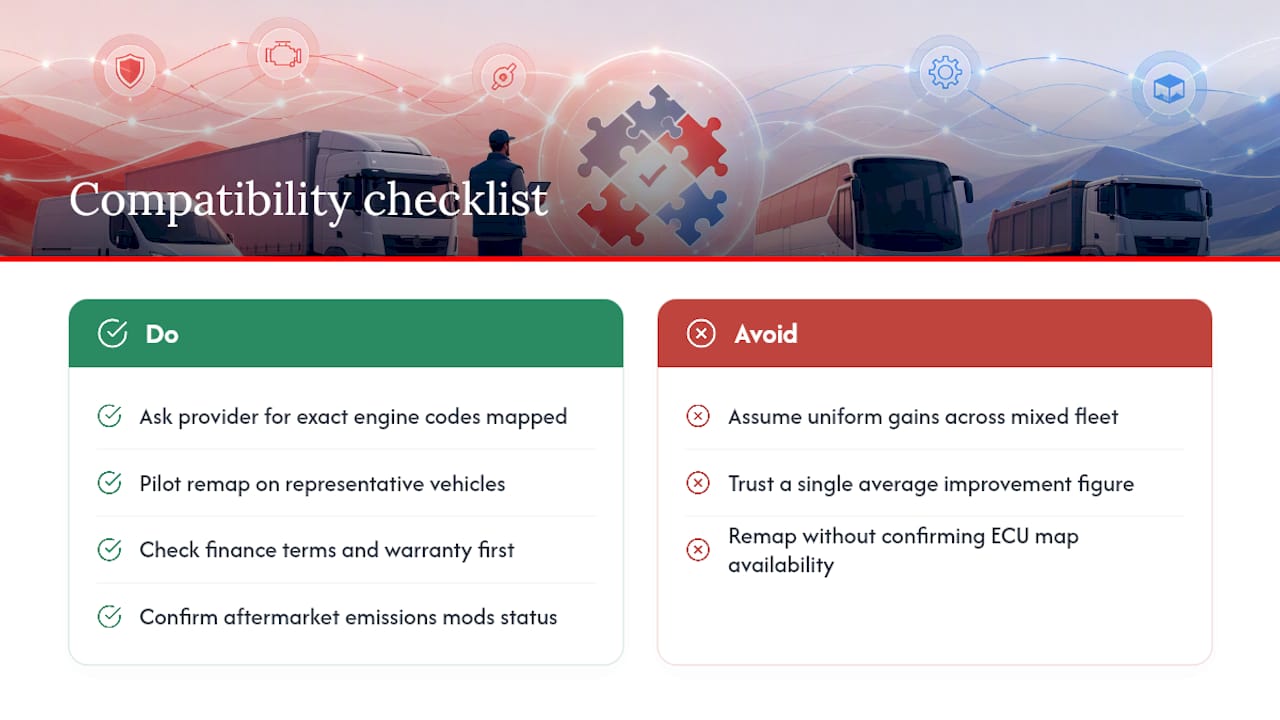
Not every van or truck responds to remapping the same way, and assuming uniform gains across a mixed fleet is the most common planning mistake. Common commercial platforms from manufacturers like Ford, Volkswagen, Mercedes-Benz and Vauxhall are well-established remap candidates because their ECUs have been mapped thousands of times, giving tuners a reliable baseline calibration to work from.
Older or less common engine and ECU combinations carry more uncertainty. A rare engine variant or a facelift model with a revised ECU might have no proven map available yet, meaning a tuner has to build one from scratch rather than adapt an existing file. That’s not a reason to avoid remapping, but it is a reason to ask a provider directly whether they’ve mapped your exact engine code before, not just your model name, since the same badge can carry two or three different engines across a production run.
Euro 6 and Euro 6d-compliant vehicles, increasingly the bulk of UK commercial fleets, generally respond well to economy-focused remaps because the factory calibration already has emissions headroom built in for market variation. Mixed-fleet operators running several makes should expect variable percentage gains vehicle to vehicle, which is precisely why a pilot across representative vehicles matters more than trusting a single average figure.
Vehicles already fitted with aftermarket emissions modifications, or those on finance agreements with usage restrictions, need a separate conversation before any remap goes ahead. Check the finance terms and manufacturer warranty position for each vehicle type before assuming the same approach applies fleet-wide.
Getting drivers used to a remapped vehicle
A remap changes how a vehicle feels within the first few miles, and drivers who aren’t told what to expect sometimes assume something’s wrong. Extra low-rev torque means the van pulls away with less pedal input than before, and some drivers initially over-rev out of habit before adjusting.
A short briefing, five minutes, covers most of what’s needed: explain that the vehicle needs less throttle for the same result, that early gear changes are now normal rather than the van struggling, and that fuel savings depend partly on drivers actually using the new torque delivery rather than driving exactly as they did before. Fleets that skip this step sometimes see smaller-than-expected fuel savings simply because drivers keep flooring it out of old habit.
It’s worth pairing the remap rollout with light driver coaching on smooth acceleration and early upshifts, since the fuel benefit from remapping and the fuel benefit from better driving style stack rather than compete. Fleets running telematics can usually spot which drivers adapted fastest within the first couple of weeks, based on fuel-per-kilometre trends per vehicle. That data is also useful evidence if a driver disputes that the remap has changed anything, since the before-and-after comparison is right there in the logs.
Managing remap updates and resets at scale
Once a fleet grows past a handful of remapped vehicles, version control becomes a real management task rather than an afterthought. Different vehicles may be running slightly different map revisions if they were remapped at different times, especially if a tuner has refined the calibration since the pilot phase.
Keep a simple record per vehicle: registration, engine code, map version, date remapped, and baseline fuel figures before the change. This matters most when a vehicle needs an ECU reset for a warranty claim, a software update from the manufacturer, or a dealer diagnostic session, since a reset wipes the custom map and the vehicle needs remapping again afterwards to keep delivering the same savings.
Larger fleets replacing or rotating vehicles regularly should build remapping into the vehicle onboarding process rather than treating it as a one-off project. New vehicles entering the fleet should get scheduled for a remap at their first planned service, keeping the whole fleet on a consistent calibration standard rather than a patchwork of mapped and unmapped vehicles. Working with one provider who keeps records of every vehicle’s map and revision history makes this far easier to manage than switching providers between rollouts, since the map file and any performance notes carry over cleanly.
A practical closing thought on fleet remapping
Pilot first, measure honestly, then scale. Booking remaps around scheduled servicing is the single easiest way to capture these gains without adding a day of downtime anywhere in the calendar.
— Mark
Book a fleet remap with Performance Tuning NI
Fleet operators can access mobile or workshop-based remaps scheduled around existing service calendars, with a focus on before-and-after measurement discipline to track results.
[
Beyond the remap itself, fleets running mixed diesel vehicles often bundle in engine carbon cleaning at the same visit, since it addresses the soot buildup that heavy urban routes leave behind and pairs naturally with a maintenance-timed remap appointment. If you’re weighing up a pilot batch, get in touch to discuss a fleet appraisal and a quote for a small sample of vehicles before committing further. That’s the surest way to see whether the numbers in this guide hold up on your own routes before scaling to the rest of the fleet.
Sources
Recommended