
5 Checks Before a Remap in Northern Ireland: Avoid Masking Faults
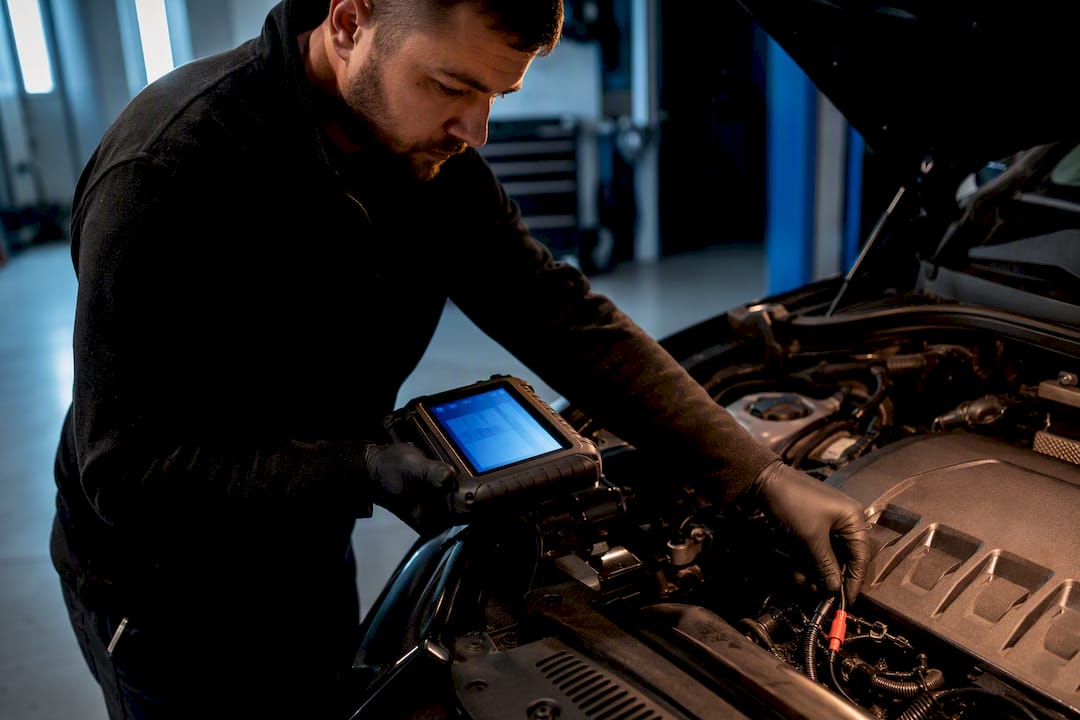
A remap can fix genuine software or calibration faults, such as poor throttle mapping, flat spots, or overly conservative factory settings, but it cannot fix any mechanical issues. If your car has a worn turbo, failing injectors, or a boost leak, remapping will not repair it and may make the fault worse. The sections below explain what a remap actually changes, what it cannot touch, what a proper diagnostic looks like, and how to decide whether to repair or tune first.
TL;DR:
Remapping cannot fix mechanical issues such as worn turbochargers, failing injectors, or boost leaks, and may worsen failures if hardware is already compromised.
A proper diagnosis includes fault code checks, live data logging, visual inspection, and drive testing before any calibration work begins.
Quick, off-the-shelf flashes without diagnostics can overlook underlying faults, risking further damage and unreliable results.
Mechanical repairs and routine servicing should be prioritized over remapping if warning lights, fault codes, or performance drops are present.
Reputable tuners document findings, keep original files, and advise declaring remaps to insurers to protect warranty and reliability.
Table of Contents
What remapping changes in the ECU (and what it can genuinely fix)
A remap alters the values your engine’s software uses to decide how much fuel to inject, when to fire the spark, how much boost to allow, and where torque limits kick in. Think of the factory ECU as a cautious accountant, budgeting for the worst fuel quality, the hottest climate, and the least mechanically sympathetic driver on earth. A remap rewrites that budget for your actual car.
That rewrite can genuinely fix symptoms that look mechanical but aren’t:
Throttle lag or hesitation caused by an overly cautious factory throttle map.
Flat spots in the mid rev range where fuelling or timing is poorly calibrated for real world driving
Weak boost delivery at certain revs due to conservative turbo control, not turbo failure
Harsh or jerky power delivery from crude torque limiting rather than any component fault
It’s worth separating two types of remap here. A performance remap pushes power and torque upward, sometimes significantly. A solution remap, often the more relevant one for a fault led enquiry, corrects poor driveability or restores smoothness without necessarily chasing extra horsepower. Both rely on the same principle: tuned calibrations can improve throttle response, drivability and even economy in specific circumstances, but only when the engine underneath is mechanically sound. Software cannot compensate for a part that has physically worn out.
Common mechanical faults a remap will not fix
Here is the list that matters most if you’re hoping a remap will solve your problem: a remap cannot fix mechanical failures such as worn turbochargers, failing injectors, boost leaks, or slipping clutches. It’s a software optimisation, not a spanner in the hand.
Other faults that fall into the same “software cannot help” category:
Low compression from worn rings or valve issues
Faulty sensors (MAP, MAF, lambda) feeding bad data to the ECU
A blocked or failing DPF
Boost leaks in intercooler pipework or clamps
Pushing more fuel, boost, or torque through an engine that already has a marginal part doesn’t just fail to fix the problem, it accelerates it. Many tuners warn that remapping can speed the failure of components like clutches, gearboxes, and turbos that were already close to their limit.
Pro Tip: If you’re getting intermittent misfire codes, spotting oil in your intercooler pipework, or noticing a clear drop in boost pressure that wasn’t there a month ago, get that diagnosed before you book any remap. A tuner worth using will ask about these symptoms before they touch your ECU.
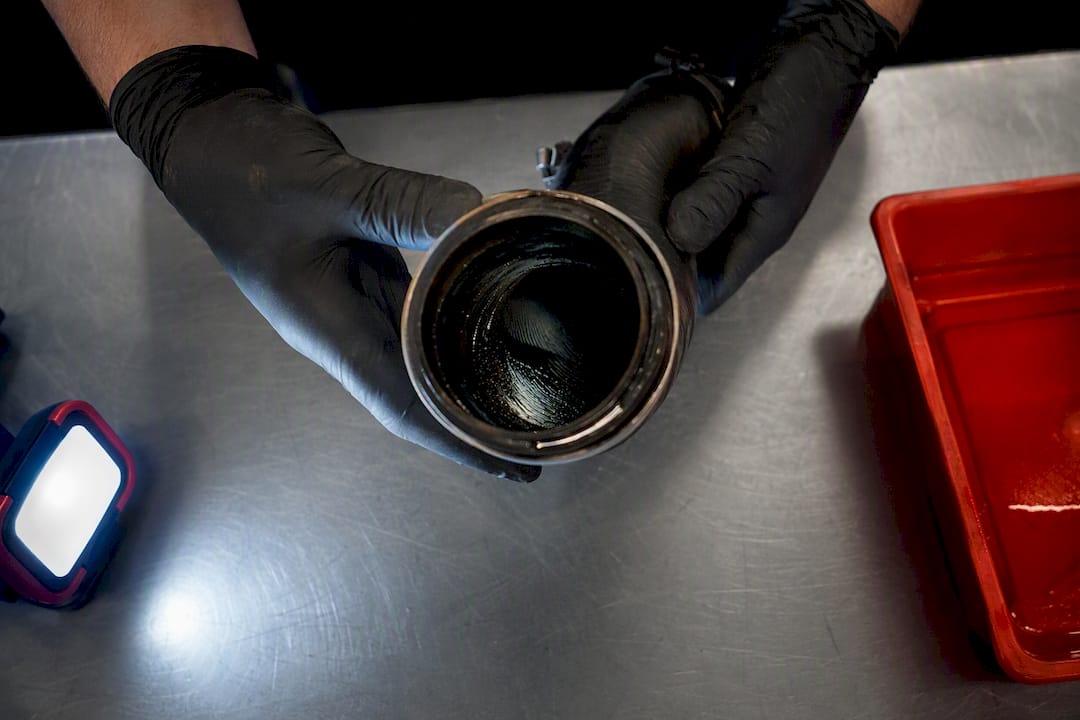
How a reputable tuner diagnoses your car before touching the ECU
A proper remap doesn’t start with a laptop plugged into the OBD port. It starts with finding out whether your car is actually fit to be tuned.
Full diagnostic scan — checking stored and pending fault codes, live sensor data, and service history
Visual inspection — looking for obvious leaks, worn hoses, or signs of prior mechanical issues
Live logging or dyno testing — recording how the engine actually behaves under load, not just what the codes say
Calibration and iteration — adjusting the map, retesting, and refining until the delivery is clean across the rev range
If a car shows boost loss, logging MAP pressure, rail pressure, and lambda across a real drive tells a tuner far more than an intermittent fault code ever could. That’s the difference between guessing and diagnosing.
Timings vary a lot depending on what’s involved. A straightforward OBD flash can take a relatively short amount of time, while a full custom calibration with proper testing can run to several hours, sometimes needing a return visit for fine-tuning once you’ve driven the car and reported back.
Warranty, insurance, and reliability risks worth knowing
Manufacturers generally treat a remap as a modification, and that can affect your warranty position. Remapping is something you should typically declare to your insurer too, since undeclared modifications can affect a claim and may nudge your premium.
Reliability is a genuine trade-off, not a scare story. Manufacturers deliberately detune many engines to cope with poor fuel, extreme climates, and years of neglect. A tuned map rebalances that headroom, and choosing the right map for how you actually use the car matters more than chasing the biggest number a tuner will quote you.
Practical steps that reduce the risk on your side:
Ask your tuner to keep a backup of your original ECU file
Get diagnostics and any dyno or road-log results documented, not just verbal reassurance
Choose a conservative map if the car is a daily driver rather than a track toy
Tell your insurer before, not after, something goes wrong
Decision checklist: repair first, or remap now?
Run through these checks before you book anything:
Any warning lights currently on? If yes, get them diagnosed first.
Any stored fault codes, even intermittent ones? Codes need investigating, not clearing and ignoring.
Noticeable boost loss or power drop-off? That’s a mechanical red flag, not a tuning opportunity.
Clutch slipping under load? Fix or replace before adding more torque.
Is a major service overdue? Filters, plugs, and fluids should be current before any tune.
If you answered yes to any of those, get the fault repaired first. If everything’s clear, bring your service history, any stored codes, and a description of the symptom to your tuner. That evidence lets them tune with confidence rather than guessing.
How Performance Tuning NI approaches cars with problems
Performance Tuning NI works on a diagnostic-first basis rather than jumping straight to a flash. That means checking a car properly before any calibration work begins, and it’s why carbon cleaning is often recommended as a precursor for engines showing sluggishness that turns out to be carbon build-up rather than a calibration issue. Mobile appointments are available too, so the diagnostic step doesn’t mean an extra trip to a workshop.
Improved throttle response and smoother power delivery can result from a car being properly assessed and tuned rather than just flashed blind.
What matters | Why it counts |
Diagnostic scan before any remap | Confirms the car is mechanically fit to tune |
Live data and road logging | Distinguishes calibration issues from mechanical ones |
Carbon cleaning as a precursor | Fixes sluggishness that isn’t a software problem |
Mobile service option | Diagnostics and tuning without a workshop visit |
Diagnostic-first policy before any calibration work
Carbon cleaning available where build-up is the real culprit
Mobile service for on-site diagnostics and remapping
Reported improvements in throttle response and power delivery
Typical time and cost for a proper custom remap
A basic OBD flash using an existing file is quick, often done within the hour. A genuine custom calibration is a longer job, because it involves the diagnostic checks, live logging or dyno time, and often a follow-up adjustment once you’ve driven the car for a few days and reported how it feels.
Costs vary by vehicle, the scope of work, and whether you’re after a simple economy tune or a full custom performance map with supporting checks. Rather than quote a single figure that won’t hold true across every make and model, the more useful approach is to get a specific estimate for your registration rather than relying on a generic industry number that may not reflect your engine, gearbox, or intended use.
What should worry you more than the price is what’s included in it. A cheap flash with no diagnostic check and no follow-up is a different product entirely from a custom calibration backed by logging and iteration, even if both get called “a remap” by the person selling them.
How to choose a reputable remap provider or tuner
The single best filter is whether they want to diagnose your car before they tune it. A tuner who’s happy to flash a file onto your ECU within minutes of you turning up, with no scan, no questions about symptoms, and no interest in your service history, is not someone protecting your engine.
Look for these signs of a properly run operation:
They run a full diagnostic scan and check fault codes before quoting a price
They use live data, road logging, or a dyno rather than a single generic off-the-shelf file
They’ll refuse or delay work if they find an unresolved mechanical fault, rather than tuning around it
They keep and hand over your original ECU file so you can revert if needed
They’re upfront about how the remap affects your warranty and what you should tell your insurer
Good tuners document their findings and keep your original file precisely so you have a way back if something doesn’t suit you. That willingness to be reversed is a genuine marker of confidence in their own work, not a weakness in the sales pitch.
Alternative solutions to remapping for fixing car problems
If your problem turns out to be mechanical, remapping was never the answer, and there are established alternatives depending on what’s actually wrong.
Replacing worn parts directly, injectors, turbo components, clutch assemblies, addresses the fault at its source rather than working around it. A carbon clean can resolve sluggish response and rough idling caused by carbon build-up on valves and injectors, which gets mistaken for a calibration problem more often than you’d think. Routine servicing, fresh filters, spark plugs, fluids, sorts out a surprising number of “my car feels flat” complaints without touching the ECU at all.
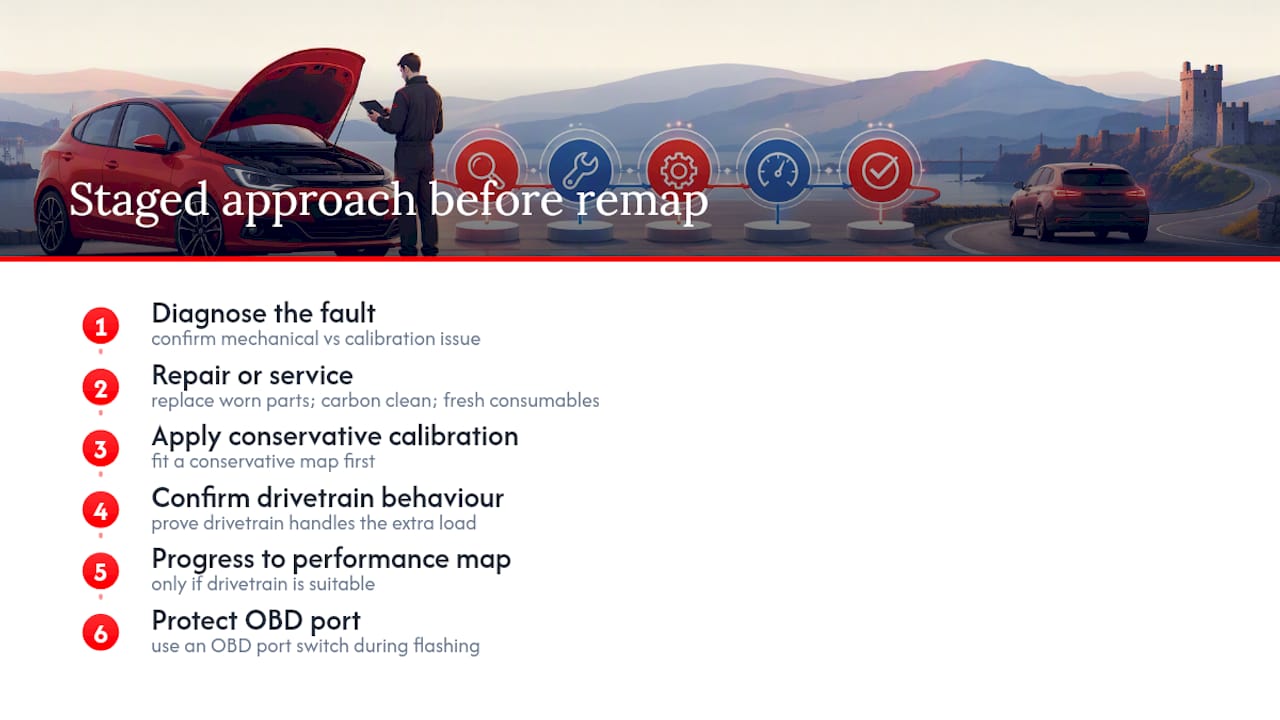
For borderline cases, a staged approach tends to work best: address mechanical wear or consumables first, then apply a conservative calibration, and only move to a performance map once the drivetrain has proved it can handle the extra load. That sequencing avoids the classic mistake of tuning a car that was never mechanically ready for it. Diagnostic tools like an OBD port switch can also help protect the port itself during repeated flashing sessions, a small detail but one that matters if you’re having work done regularly.
Why the diagnostic step gets skipped, and why that’s the real problem
Most of the disappointment people feel after a remap has nothing to do with the tune itself. It’s down to expecting software to fix a part that was already failing.
The conventional advice online tends to focus on horsepower gains and dyno graphs, which is exactly backwards for someone whose car is already misbehaving. If you’ve got a symptom, the question isn’t “how much power can I gain,” it’s “is this calibration or is this mechanical.” Skipping that question is how people end up blaming a remap for a turbo that was already on its way out.
What the evidence actually supports is unglamorous: diagnose first, log the data, fix anything mechanical, and only then calibrate. That order rarely gets skipped by accident, it gets skipped because a diagnostic scan takes time and a flash doesn’t. A tuner who insists on the scan anyway is protecting you from your own impatience as much as from their liability.
If there’s one thing worth prioritising above all else, it’s resisting the urge to remap your way past a fault code. Clear the actual fault. Then, and only then, worry about the tune.
— Mark
Book a diagnostic-led remap with Performance Tuning NI
If your car’s flat, hesitant, or just not delivering power the way it should, and you’ve ruled out anything mechanical, a proper custom remap from Performance Tuning NI is built around exactly that diagnostic-first approach rather than a blind flash off a generic file.
[
Every job starts with checking the car is actually fit to tune, using live data and road testing rather than guesswork, so you’re not paying for a calibration that’s fighting a fault underneath it. If you’re not sure where your car stands, try the free remap calculator with your registration for an instant idea of what’s possible, or head straight to the remapping service page to book a diagnostic and get a proper answer instead of a guess.
Sources
Recommended